
Harpalus katiae
F.Battoni, 1985
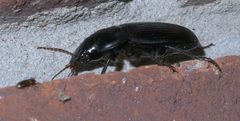
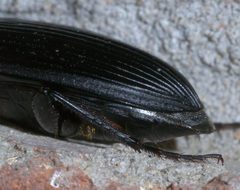
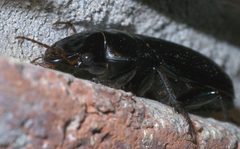
Harpalus katiae is a of ground beetle in the Harpalinae, described by F. Battoni in 1985. It belongs to the large Harpalus, which contains numerous ground beetle species distributed across multiple continents. As with most members of this genus, it is likely a inhabiting open, dry , though specific details about its remain poorly documented.
Pronunciation
How to pronounce Harpalus katiae: /ˈhɑːr.pə.ləs ˈkæt.i.eɪ/
These audio files are automatically generated. While they are not always 100% accurate, they are a good starting point.
Identification
Identification to level requires examination of genitalic characters and other subtle morphological features. The species can be distinguished from by the original description (Battoni 1985), which likely details specific features of the , pronotal shape, and elytral . Without access to the original description or , precise diagnostic characters cannot be stated.
Images
Habitat
Specific preferences are undocumented. Members of the Harpalus typically inhabit open, dry habitats including grasslands, agricultural fields, and disturbed areas. Given the distribution records from the southwestern United States and Middle America, it likely occurs in arid or semi-arid environments.
Distribution
Recorded from the United States (southwestern region) and Middle America. The GBIF distribution records indicate presence in USA, Middle America (PRESENT), and North America (PRESENT). The iNaturalist observations count of 27 suggests it is infrequently encountered.
Seasonality
Activity patterns are undocumented. Most Harpalus are spring-fall active in temperate regions, with peak activity varying by local climate conditions.
Ecological Role
As a ground beetle, it likely functions as a of small and possibly as a granivore, contributing to pest control and seed in its . These roles are inferred from the known of .
Human Relevance
No specific documented interactions. Ground beetles in the Harpalus are generally considered beneficial in agricultural contexts due to their predatory and granivorous habits.
Similar Taxa
- Harpalus affinisSimilar general and preferences; distinguished by specific genitalic and external characters detailed in taxonomic revisions
- Harpalus pensylvanicusCommon North American with overlapping distribution; distinguished by body size, coloration, and male genitalia
- Other Harpalus speciesThe contains numerous similar requiring careful examination of and other fine structural characters for accurate identification
More Details
Taxonomic History
Described by F. Battoni in 1985. The specific epithet 'katiae' presumably honors an individual, though the etymology is not documented in available sources.
Research Needs
Basic biological information including preferences, seasonal activity, diet, and reproductive are entirely unknown. The would benefit from focused field studies in the regions where it has been recorded.
Collection Records
The 27 iNaturalist observations and GBIF records suggest the is genuinely rare or under-collected, rather than being a common but overlooked species.
Sources and further reading
- BugGuide
- Wikipedia
- GBIF taxonomy match
- iNaturalist taxon
- NCBI Taxonomy
- Beneficial Beetle Diversity Blooms on Strip-Tilled Farms
- T.G.I.Flyday—Black horse fly (Tabanus atratus) | Beetles In The Bush
- November | 2012 | Beetles In The Bush | Page 2
- conservation | Beetles In The Bush
- Carabidae | Beetles In The Bush
- Bug of the Week