Harpalus fuscipalpis
Sturm, 1818
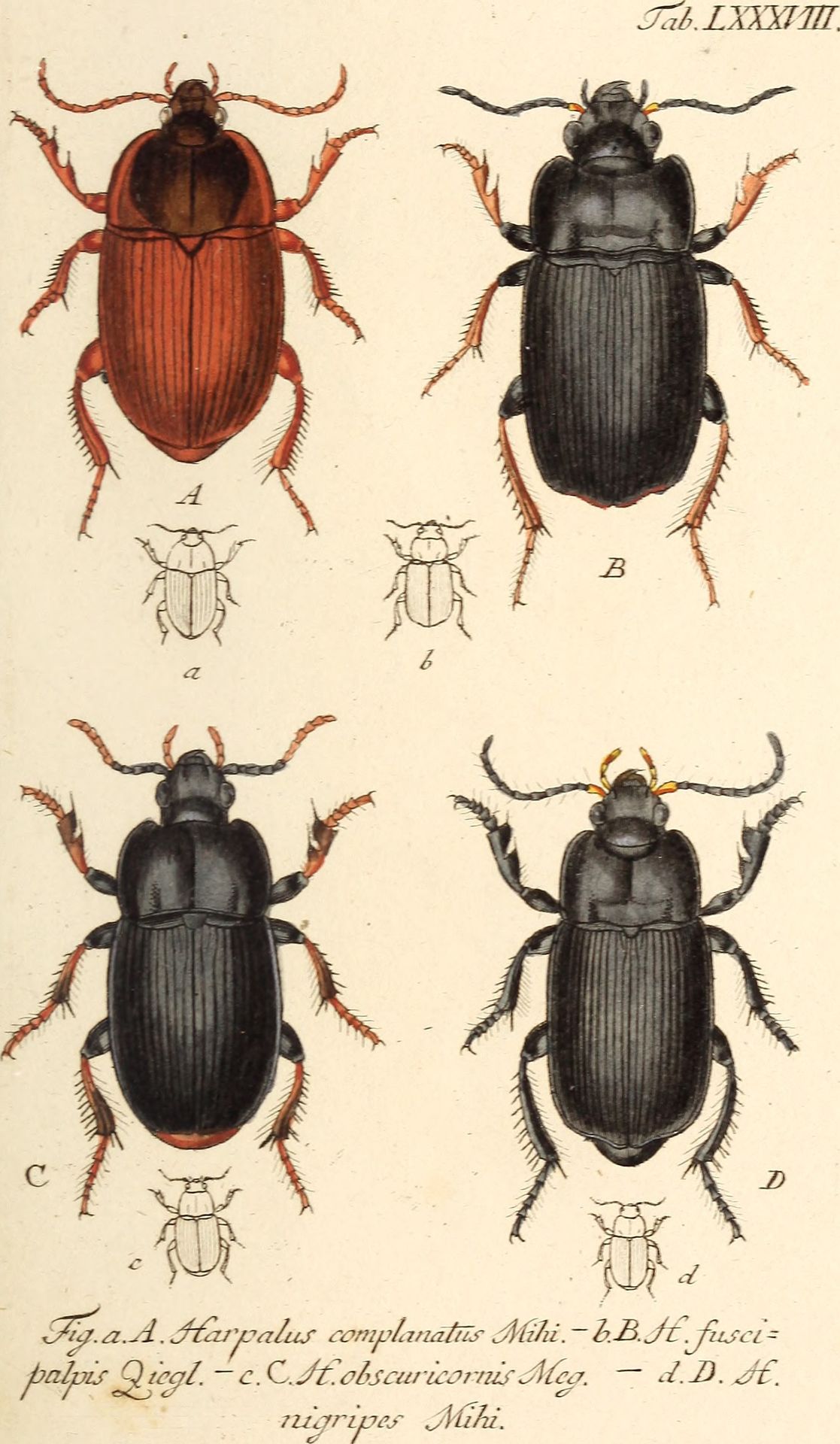
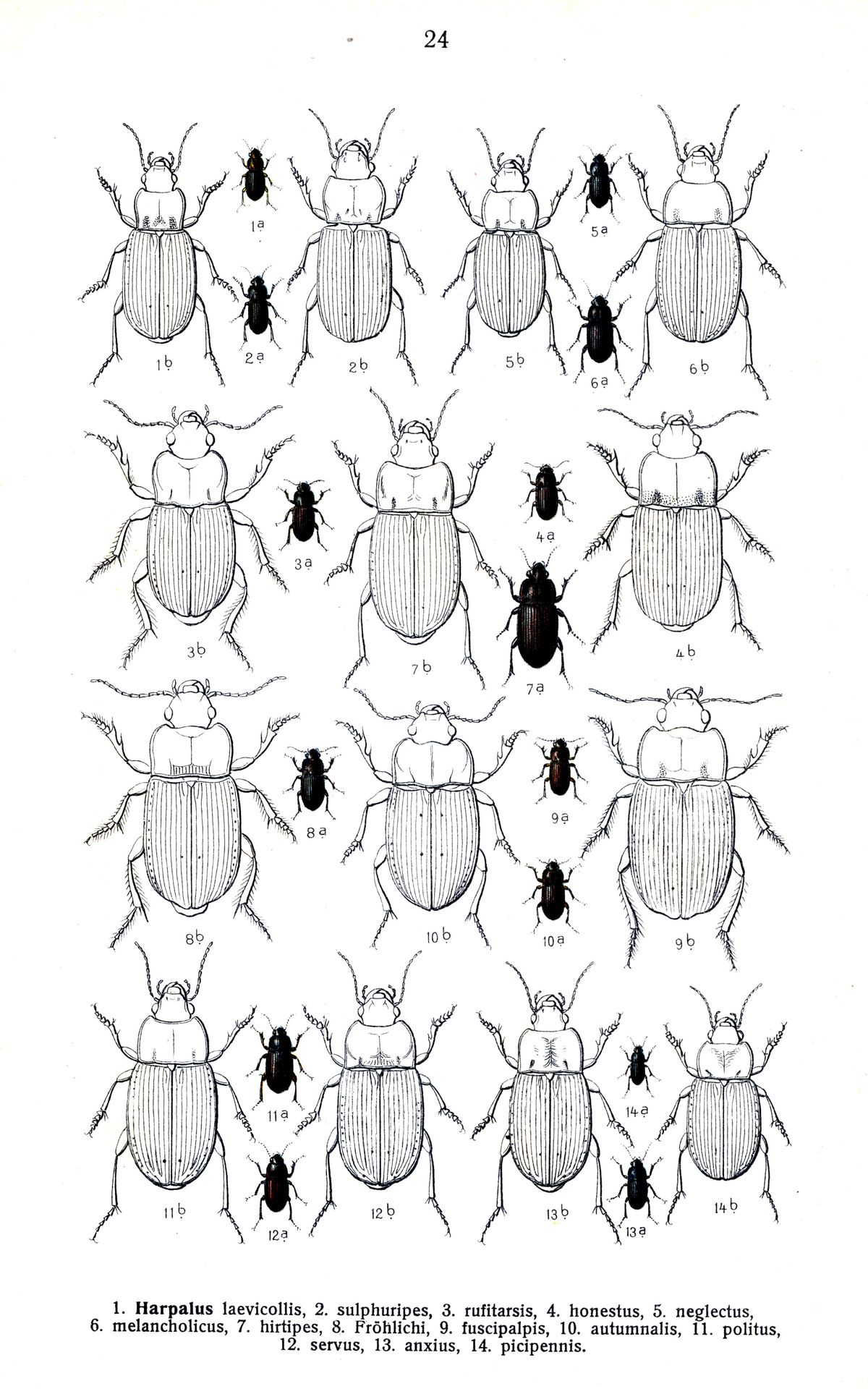
Harpalus fuscipalpis is a of ground beetle in the Harpalinae, described by Sturm in 1818. It belongs to the Harpalus, one of the largest genera of ground beetles. The species has a Holarctic distribution, with records from Alaska, Armenia, Austria, and Azerbaijan. As a member of the Carabidae , it is likely a predatory , though specific ecological details remain poorly documented.
Pronunciation
How to pronounce Harpalus fuscipalpis: //ˈhɑːr.pə.ləs ˌfjuː.sɪˈpæl.pɪs//
These audio files are automatically generated. While they are not always 100% accurate, they are a good starting point.
Identification
Harpalus fuscipalpis can be distinguished from other Harpalus by its dark, fuscous (dusky brown to blackish) palps, as indicated by the specific epithet 'fuscipalpis' meaning 'dark-palped.' The Harpalus is characterized by medium-sized, somewhat flattened body form, , and typically dark coloration. Species-level identification within Harpalus requires examination of genitalic structures and detailed morphological characters; the dark palps serve as a key diagnostic feature for this species.
Images
Distribution
Holarctic distribution. Documented from Alaska (United States), Armenia, Austria, and Azerbaijan. The appears to have a wide but patchy distribution across northern temperate regions.
Similar Taxa
- Harpalus serripesHarpalus fuscipalpis has been treated as a synonym of H. serripes in some taxonomic treatments (Catalogue of Life), though GBIF and other sources maintain it as a valid . Both share similar body form and dark coloration typical of the .
- Other Harpalus speciesMany Harpalus are superficially similar in appearance, requiring careful examination of palpal coloration, pronotal shape, elytral striation, and male genitalia for accurate identification.
More Details
Taxonomic Note
There is some taxonomic uncertainty regarding this . The Catalogue of Life treats Harpalus fuscipalpis as a synonym of Harpalus serripes serripes, while GBIF and NCBI maintain it as an accepted valid species. The authorship is also cited differently in sources: Sturm (1818) per GBIF and NCBI, versus Stephens (1828) per Catalogue of Life. This reflects historical complexities in early 19th century .
Data Availability
Very limited biological or ecological information is available for this in published literature. Most records are based on specimen databases and taxonomic catalogs rather than field studies.
Sources and further reading
- BugGuide
- Wikipedia
- GBIF taxonomy match
- iNaturalist taxon
- NCBI Taxonomy
- Catalogue of Life
- Beneficial Beetle Diversity Blooms on Strip-Tilled Farms
- T.G.I.Flyday—Black horse fly (Tabanus atratus) | Beetles In The Bush
- November | 2012 | Beetles In The Bush | Page 2
- conservation | Beetles In The Bush
- Carabidae | Beetles In The Bush
- Bug of the Week