
Harpalus amputatus
Say, 1830
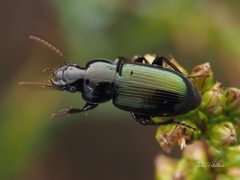
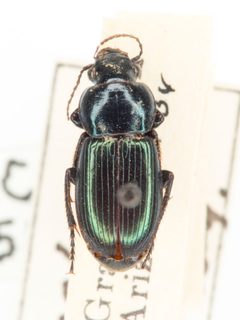
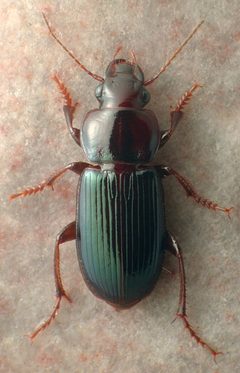
Harpalus amputatus is a ground beetle in the Carabidae, described by Thomas Say in 1830. It belongs to the Harpalinae and is one of numerous species in the large Harpalus. The species exhibits a transcontinental distribution spanning northern Asia and North America, with recognized in Russia, China, Mongolia, and North America. Like other Harpalus species, it is a ground-dwelling typically found in open, dry where it hunts small and scavenges opportunistically.
Pronunciation
How to pronounce Harpalus amputatus: //ˈhɑːrpələs ˌæmpjʊˈteɪtəs//
These audio files are automatically generated. While they are not always 100% accurate, they are a good starting point.
Identification
Harpalus amputatus can be distinguished from similar Harpalus by examination of genitalic characters and subtle differences in elytral microsculpture and setation patterns. The specific epithet "amputatus" refers to a characteristic reduction or modification of a body part, likely the or , though precise diagnostic features require reference to original description and subsequent taxonomic revisions. are distinguished primarily by geographic origin and minor morphological differences: H. a. amputatoides (Russia), H. a. amputatus (United States, Canada, Alaska, Mexico), H. a. inschanicus (China), and H. a. obtusus (China, Russia, Mongolia).
Images
Distribution
Harpalus amputatus occurs across a broad transcontinental range spanning northern Asia and North America. In Asia, it is documented from China, Russia, and Mongolia. In North America, it occurs from Alaska and Canada south through the contiguous United States to Mexico. The disjunct distribution suggests either ancient trans-Beringian or in similar temperate .
Similar Taxa
- Harpalus pensylvanicusSimilar size and general appearance as a common North American Harpalus , but distinguished by different elytral markings and male genitalic structure
- Harpalus caliginosusAnother large North American Harpalus with which it may co-occur, requiring careful examination of tarsal and genitalic characters for separation
More Details
Subspecies
Four are recognized: Harpalus amputatus amputatoides Mlynar, 1979 (Russia); Harpalus amputatus amputatus Say, 1830 (United States, Canada, Alaska, Mexico); Harpalus amputatus inschanicus Breit, 1914 (China); and Harpalus amputatus obtusus (Gebler, 1833) (China, Russia, Mongolia). The subspecies reflect geographic variation across the ' wide range, with the nominate subspecies occupying North America and the other three distributed across Asia.
Sources and further reading
- BugGuide
- Wikipedia
- GBIF taxonomy match
- iNaturalist taxon
- NCBI Taxonomy
- Catalogue of Life
- Beneficial Beetle Diversity Blooms on Strip-Tilled Farms
- The Best Look Yet at the Tiny Fungus Storage Units Inside Ambrosia Beetles
- T.G.I.Flyday—Black horse fly (Tabanus atratus) | Beetles In The Bush
- November | 2012 | Beetles In The Bush | Page 2
- conservation | Beetles In The Bush
- Carabidae | Beetles In The Bush