
Elaphrus lapponicus
Gyllenhal, 1810
Northern Peacock Beetle
Species Guides
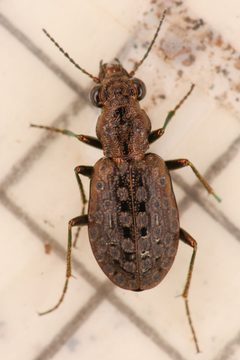
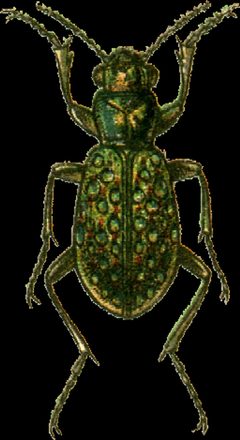
1Elaphrus lapponicus is a ground beetle in the Elaphrinae, described by Gyllenhal in 1810. It belongs to a known for species that closely resemble tiger beetles (Cicindelinae), often leading to misidentification by collectors. The species has a Holarctic distribution, occurring across northern regions of North America and Eurasia. Like other members of Elaphrus, it likely inhabits moist, open near water.
Pronunciation
How to pronounce Elaphrus lapponicus: /ɛˈlæfɹəs læpˈpoʊnɪkəs/
These audio files are automatically generated. While they are not always 100% accurate, they are a good starting point.
Identification
Members of the Elaphrus are frequently mistaken for tiger beetles due to their similar body shape, large , and fast-running . They can be distinguished from true tiger beetles by their placement in the ground beetle Elaphrinae rather than Cicindelinae. Specific characters distinguishing E. lapponicus from are not documented in available sources. The genus is characterized by a somewhat flattened body form and metallic coloration typical of the group.
Images
Distribution
Holarctic. Recorded from Alaska, Canada, Finland, Great Britain, and Latvia. The distribution pattern indicates a northern temperate to range across both North America and Eurasia.
Behavior
The Elaphrus is known for fast-running that contributes to their resemblance to tiger beetles. Specific behavioral observations for E. lapponicus are not documented.
Similar Taxa
- Tiger beetles (Cicindelinae)Elaphrus share large , elongated legs, fast-running , and overall body form with tiger beetles, leading to frequent collector confusion. They differ in placement (Elaphrinae vs. Cicindelinae) and associated morphological details.
- Elaphrus cupreusAnother Holarctic Elaphrus with overlapping northern distribution and similar peacock .
More Details
Taxonomic note
The Catalogue of Life lists Elaphrus lapponicus lapponicus as an accepted with the same authority and date, suggesting potential intraspecific variation across the wide Holarctic range.