Brachinus tenuicollis
LeConte, 1844
Narrow-necked Little Bombardier Beetle
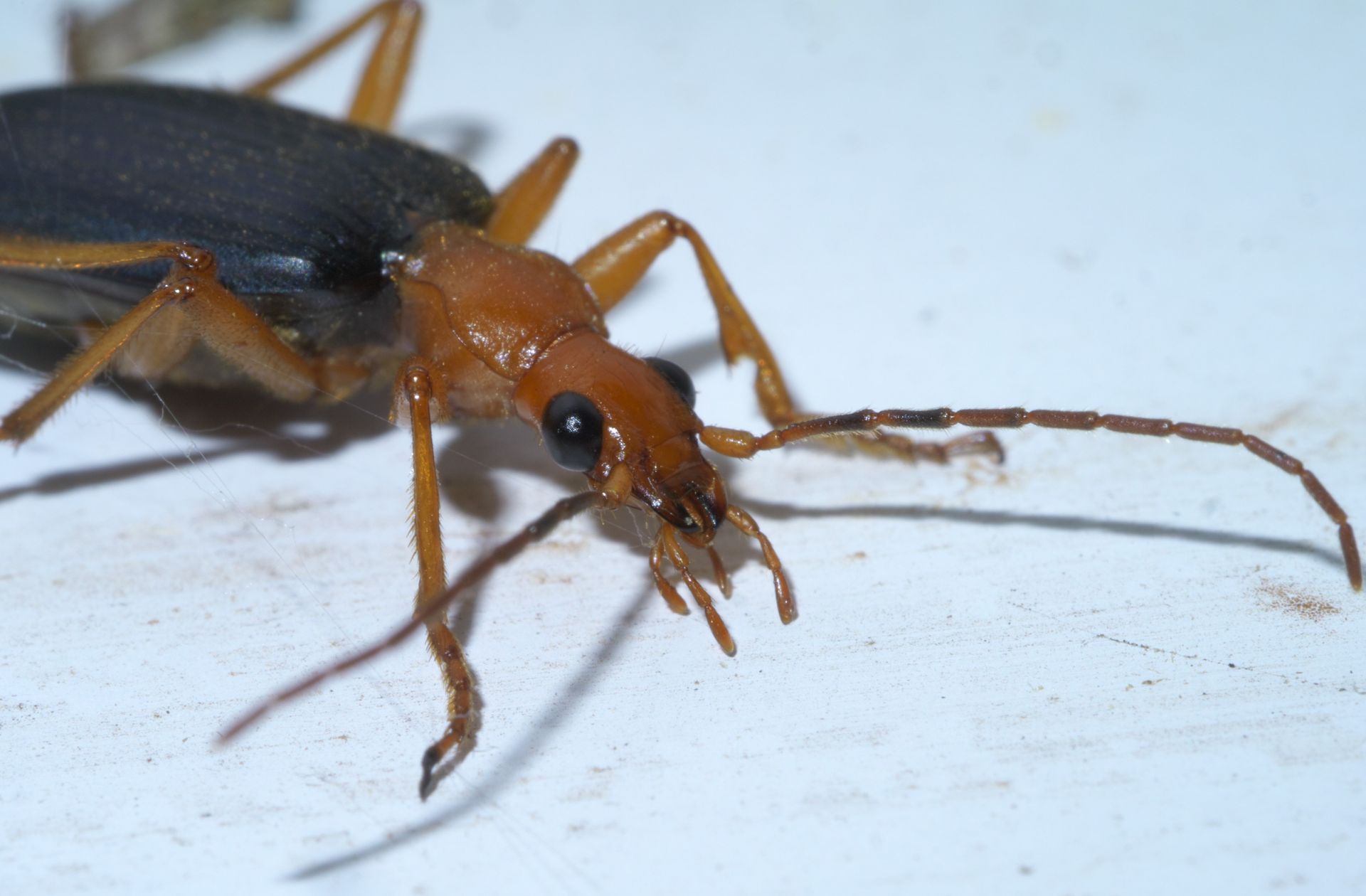
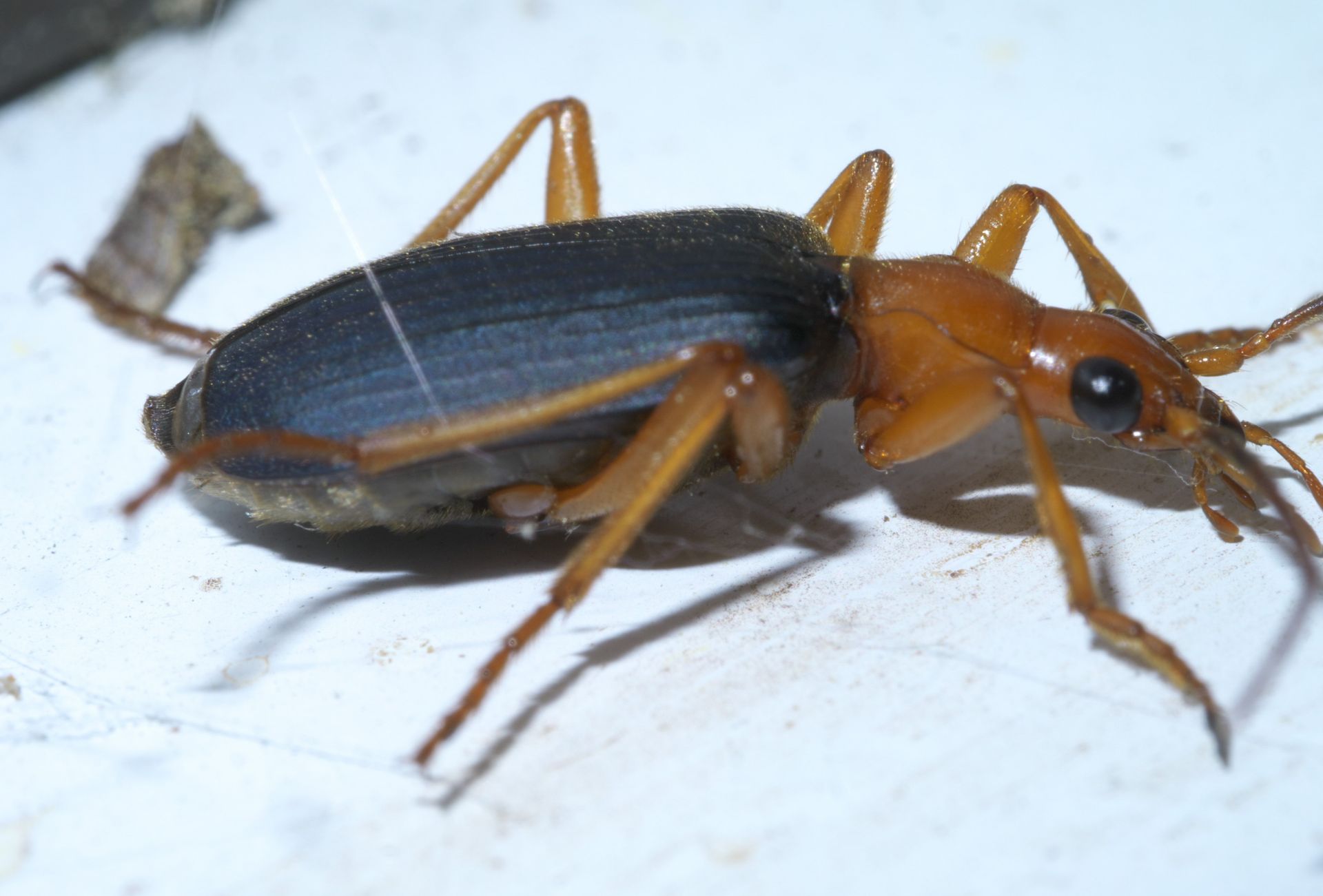
Brachinus tenuicollis is a Nearctic bombardier beetle in the subgenus Neobrachinus, characterized by explosive defensive chemistry producing hot benzoquinone clouds. Molecular phylogenetic analysis placed this in the newly erected tenuicollis species group, separated from Erwin's historically polyphyletic fumans group. The species shares with other Neobrachinus members a larval strategy targeting aquatic pupae and tendency toward multispecies .
Pronunciation
How to pronounce Brachinus tenuicollis: //brəˈkaɪnəs ˌtɛnjuˈkɒlɪs//
These audio files are automatically generated. While they are not always 100% accurate, they are a good starting point.
Identification
As a member of the tenuicollis group, this species can be distinguished from other Brachinus species groups through molecular characters and subtle morphological traits. The specific epithet 'tenuicollis' (slender-necked) suggests a relatively narrow pronotum compared to related species, though precise diagnostic features for species-level identification within the group require examination.
Images
Habitat
Riparian environments, particularly in southwestern North America, where aquatic are available for larval development.
Distribution
Nearctic region; recorded from Canada and the United States. GBIF distribution records indicate presence in North America with specific records from Canada and USA.
Host Associations
- aquatic beetle pupa - Larvae are idiobiont ectoparasitoids that consume a single pupal during development
Life Cycle
First instar triungulin larvae locate and parasitize pupae of aquatic beetles, consuming only that single throughout development. body size is positively correlated with host pupal size, resulting in significant intraspecific size variation.
Behavior
possess explosive defensive glands that generate 100°C benzoquinone clouds directed at . The participates in multispecies with other carabid beetles, creating well-protected communal spaces.
Ecological Role
Functions as an abundant and scavenger in riparian . The ' aggregative facilitates protection for other carabid species. Potential applications for sustainable pest management in agroecosystems have been suggested.
Human Relevance
Occasional nuisance pest when occur near human structures; potential for applications in agricultural settings.
Similar Taxa
- Brachinus fumansHistorically grouped together in Erwin's fumans group, now separated based on molecular
- Other Neobrachinus speciesShares explosive defensive chemistry, larval strategy, and aggregative with subgenus members; -level identification requires molecular or detailed morphological analysis
More Details
Taxonomic History
Originally described by LeConte in 1844. Fairmaire's 1901 description of Brachinus tenuicollis is now considered a synonym. The was reassigned to the newly erected tenuicollis species group in 2024 based on three-locus molecular (COI, CAD, 28S), separating it from the historically polyphyletic fumans group.
Molecular Phylogenetics
The tenuicollis group is one of eight new species groups established in the 2024 revision of Nearctic Brachinus: cinctipennis, cyanipennis, galactoderus, gebhardis, mexicanus, phaeocerus, quadripennis, and tenuicollis.
Sources and further reading
- BugGuide
- GBIF taxonomy match
- iNaturalist taxon
- Catalogue of Life
- Bug Eric: Red-shouldered Bug
- My, what busy palps you have! | Beetles In The Bush
- Kentucky | Beetles In The Bush
- Orthoptera | Beetles In The Bush | Page 3
- predator avoidance | Beetles In The Bush | Page 2
- Molecular phylogeny and revision of species groups of Nearctic bombardier beetles (Carabidae, Brachininae, Brachinus ( Neobrachinus))