
Brachinus adustipennis
Erwin, 1969
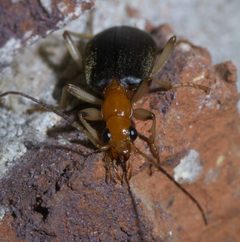
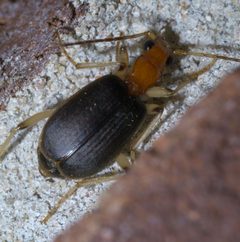
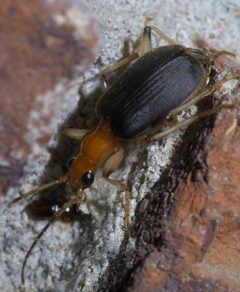
Brachinus adustipennis is a of bombardier beetle in the Carabidae, first described by Terry Erwin in 1969. It belongs to the Brachinus, which is renowned for its remarkable chemical defense mechanism—producing a hot, noxious spray from the when disturbed. The species occurs across a broad geographic range spanning the Caribbean, Central America, and North America, with confirmed records from Cuba, Mexico, Panama, and the United States.
Pronunciation
How to pronounce Brachinus adustipennis: //brəˈkaɪnəs əˌdʌstɪˈpɛnɪs//
These audio files are automatically generated. While they are not always 100% accurate, they are a good starting point.
Identification
Members of Brachinus are distinguished from other carabid beetles by their ability to explosively discharge benzoquinones from the , accompanied by a distinct popping sound. Within the , B. adustipennis can be recognized by its specific elytral coloration and pattern, though precise diagnostic features require examination of the original description (Erwin 1969). The name "adustipennis" (Latin: "adustus" = burned, scorched; "pennis" = wing) likely refers to darkened or scorched-appearing wing covers. Like other Brachinus species, are relatively small ground beetles with elongated bodies and thread-like .
Images
Distribution
Confirmed records from Cuba, Mexico, Panama, and the United States. The occurs in the Caribbean region, Central America, and North America. GBIF distribution records indicate presence in: Cuba; Mexico; Panama; USA; Caribbean (present).
Behavior
As a member of the bombardier beetle Brachinus, B. adustipennis possesses the characteristic defensive of producing a hot, noxious chemical spray from abdominal glands when threatened. This reaction involves the catalytic decomposition of hydroquinones and hydrogen peroxide into benzoquinones, water, and oxygen, generating temperatures near 100°C and creating a distinct audible discharge.
Ecological Role
As a ground beetle, likely functions as a in soil and leaf litter . The chemical defense system serves as an effective deterrent against vertebrate and predators, potentially influencing local community dynamics through predator avoidance and competitive interactions.
Similar Taxa
- Brachinus crepitansEuropean bombardier beetle with similar explosive chemical defense; distinguished by geographic range (Palearctic vs. Neotropical/Nearctic for B. adustipennis)
- Brachinus sclopetaAnother New World bombardier beetle; specific differences in elytral pattern and body proportions require detailed morphological comparison
- Other Carabidae genera (e.g., Pheropsophus)Some other ground beetles also possess chemical defenses, but Brachinus is distinguished by the unique combination of benzoquinone production, high-temperature discharge, and audible detonation
More Details
Taxonomic Authority
The was formally described by Terry L. Erwin in 1969. Erwin is a prominent carabidologist known for extensive work on Neotropical ground beetles, particularly from the Caribbean and Central America.
Etymology
The specific epithet "adustipennis" combines Latin "adustus" (burned, scorched, or sunburned) with "pennis" (wing), likely alluding to the darkened or burnt appearance of the .