
Reticulitermes tibialis
Banks, 1920
Arid-land Subterranean Termite, Arid Land Subterranean Termite
Reticulitermes tibialis, commonly known as the arid-land subterranean , is a native North American termite adapted to dry environments. It is distinguished from congeneric species primarily by its preferences and genetic characteristics, as morphological differences are minimal. The species occurs across the western and north-central United States, where it serves as an important decomposer of cellulose in arid . Unlike some other Reticulitermes species, it causes relatively limited structural damage due to its preference for areas with low human .
Pronunciation
How to pronounce Reticulitermes tibialis: //rɛˌtɪkjʊləˈtɜrmiːz tɪˈbaɪəlɪs//
These audio files are automatically generated. While they are not always 100% accurate, they are a good starting point.
Identification
Definitive identification requires gene sequencing, as morphological overlap with Reticulitermes flavipes, R. virginicus, R. hageni, and R. hesperus is substantial. can be tentatively distinguished by their black coloration and broad prothorax, but these traits are not diagnostic. Cuticular hydrocarbon profiling and mitochondrial sequencing (particularly COI and COII genes) are standard methods for accurate identification.
Images
Appearance
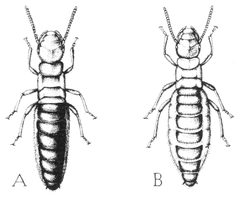
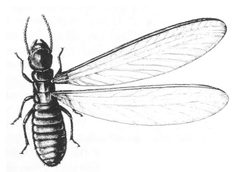
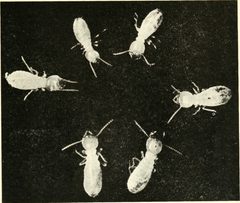
Winged reproductive () measure approximately 10 mm in length. The body and legs are black. The prothorax is broad relative to body width. Soldiers have large, rectangular with oversized . are pale and soft-bodied. The is morphologically similar to other Reticulitermes species, making visual identification to species level difficult without genetic analysis.
Habitat
Occupies arid and semi-arid environments including deserts, prairies with hard-packed or alkaline soils, canyons, river valleys, and sand dune systems. Found at elevations up to 2,200 m in the Rocky Mountains. Requires contact with soil for nesting. In natural settings, colonizes logs, fallen timber, and living woody vegetation including creosote bush and greasewood.
Distribution
Native to North America. Range extends across most of the western and north-central United States, from the Pacific coast eastward to Illinois. Distribution is broader than any other member of its . Range overlaps with R. flavipes, R. virginicus, and R. hageni in the eastern portion of its distribution, and with R. arenincola south of Lake Michigan. Absent from the southeastern United States.
Seasonality
emerge for in fall, winter, or spring depending on geographic location and elevation. At elevations below 1,200 m (4,000 ft), swarming typically occurs January through March; above this elevation, swarming shifts to June or July. Timing varies with local climate conditions and soil moisture.
Diet
Feeds on cellulose material including dead wood, fallen timber, and living woody plants. In desert environments, has been observed feeding on creosote bush (Larrea tridentata) and greasewood (Sarcobatus vermiculatus). Attacks wooden structures when available, though less frequently than other Reticulitermes due to preferences.
Life Cycle
Colonies are founded by a mated pair of that excavate an underground chamber after shedding wings. The initiates -laying; first- offspring develop into that expand the nest and forage. Soldiers differentiate from workers as colony size increases. Supplementary non-winged reproductives may develop in mature colonies to assist or replace the primary queen. Alate production begins only after several years of colony establishment. Mature colonies may contain hundreds of thousands of individuals.
Behavior
Constructs underground tunnels and foraging tubes to access food sources. Foraging return food to the nest. Colony defense is performed by soldier using . emerge in synchronized swarms for mating. Proctodeal (transfer of fluids between individuals) facilitates nutrient sharing and microbial transfer among colony members.
Ecological Role
Human Relevance
Causes relatively minor structural damage compared to other Reticulitermes due to preference for arid regions with sparse human development. May infest wooden structures in rural and agricultural settings. Presence in an area indicates mature colony establishment. Management requires professional inspection and treatment; not suitable for DIY control.
Similar Taxa
- Reticulitermes flavipesOverlapping range in eastern portion of distribution; distinguished primarily by preference (mesic vs. arid) and genetic characteristics
- Reticulitermes virginicusOccurs in same geographic areas; morphologically similar; requires genetic or chemical analysis for separation
- Reticulitermes hageniSympatric in parts of range; no reliable morphological distinguishing features; identification requires molecular methods
- Reticulitermes hesperusWestern coastal previously confused with R. tibialis; now recognized as distinct with different preferences and seasonal swarming patterns
More Details
Taxonomic History
placement has shifted between and Heterotermitidae in recent literature, reflecting ongoing revision of higher classification. The was described by Nathan Banks in 1920.
Genetic Identification
Mitochondrial genes COI, COII, and 16S are standard markers for distinguishing R. tibialis from congeneric . Cuticular hydrocarbon profiling provides additional diagnostic characters.
Sources and further reading
- BugGuide
- Wikipedia
- GBIF taxonomy match
- iNaturalist taxon
- NCBI Taxonomy
- Catalogue of Life
- How Termites 'Looking for Love' Landed in the News | Bug Squad
- Bug Eric: Termite Swarms
- And Then There Were Three: New Termite Species Identified in California
- Western U.S. Has More Subterranean Termite Species Than Previously Thought, Study Shows
- New Method Makes for Faster Genetic ID of Eastern U.S. Termites
- Ice dams, wet wood, and termites - Reticulitermes flavipes — Bug of the Week