
Luridiblatta trivittata
(Serville, 1838)
Three-lined Cockroach, Tiny Cockroach
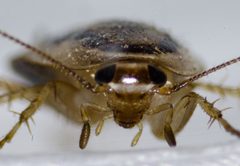
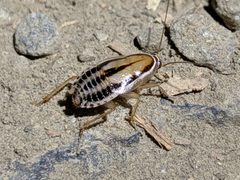
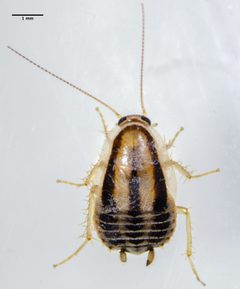
Luridiblatta trivittata is a small native to the Mediterranean region, belonging to the Ectobiidae. It is one of ten species in the Luridiblatta, which has an almost circum-Mediterranean distribution. The species is part of the trivittata species-group along with L. habbachii. It has been introduced to California, where it is recognized as one of eight cockroach species present in the state. Unlike major indoor pest cockroaches, this species is primarily an outdoor inhabitant that occasionally enters buildings but does not normally reproduce indoors.
Pronunciation
How to pronounce Luridiblatta trivittata: //luːˈrɪdɪˌblætə traɪˈvɪtətə//
These audio files are automatically generated. While they are not always 100% accurate, they are a good starting point.
Identification
A small distinguished by three longitudinal stripes running along the body, referenced in its specific epithet 'trivittata' (meaning 'three-banded'). Males can be identified using the taxonomic key provided in the revision, which focuses on abdominal tergite , particularly the shape and structure of tergites T6, T7, and T8. The shows less derived abdominal tergite structures compared to members of the longitubulata species-group, which possess elaborate 'drainage system' structures on T6.
Images
Habitat
Native to Mediterranean climates. In introduced ranges such as California, occurs as an outdoor in natural and urban environments. Does not normally establish reproducing indoor , unlike major pest such as the German cockroach or American cockroach.
Distribution
Native: Mediterranean region including Algeria, Libya, Morocco, Palestine, and Sardinia (Italy). Introduced: California, USA, where it is established as one of eight in the state.
Behavior
Primarily an outdoor that occasionally enters buildings but does not normally reproduce indoors. In California, classified among outdoor that are not significant indoor pests.
Human Relevance
Considered a minor nuisance in California where it has been introduced. Listed among in the state but distinguished from major indoor pests. Does not require the same level of pest management intervention as species like the German cockroach, American cockroach, or brown-banded cockroach.
Similar Taxa
- Luridiblatta habbachiiSister in the trivittata species-group; distinguished by male genitalia and abdominal tergite per taxonomic key.
- Blattella germanica (German cockroach)Similar small size but L. trivittata is primarily outdoor, lacks established indoor , and shows different abdominal tergite structure.
- Blatta lateralis (Turkestan cockroach)Another outdoor-oriented in California; Turkestan cockroach is larger with different coloration (males have yellowish-beige wings with cream stripes) and occupies different microhabitats such as water meter boxes and compost piles.