
Hymenaphorura
Bagnall, 1948
Species Guides
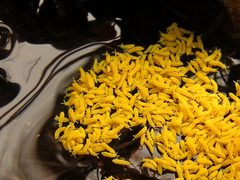
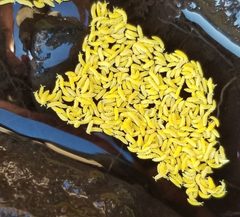
1- Hymenaphorura cocklei(Golden Snow Flea)
Hymenaphorura is a of springtails (Collembola) in the Onychiuridae, established by Bagnall in 1948. Members of this genus are eyeless, euedaphic (soil-dwelling) or troglobitic (cave-dwelling) with reduced pigmentation. The genus has been recorded from caves and subterranean across Europe, with some species showing narrow distributions restricted to single cave systems.
Pronunciation
How to pronounce Hymenaphorura: /haɪˌmɛnəfəˈrʊrə/
These audio files are automatically generated. While they are not always 100% accurate, they are a good starting point.
Identification
Hymenaphorura are distinguished from other Onychiuridae by characteristics of the pseudocellar and parapseudocellar arrangements on the body, as well as details of the and tube structure. They lack and body pigment, consistent with subterranean . Species-level identification requires examination of chaetotaxy, particularly the arrangement of setae on the tergites, and the structure of the male genital plate.
Images
Habitat
Subterranean environments including caves, soil, and deep leaf litter; some are strictly troglobitic while others occupy broader .
Distribution
Europe (including Mediterranean region), Arctic and Subarctic regions, northeastern Eurasia, and northern North America. Specific may have highly restricted ranges; for example, Hymenaphorura uzicensis is known only from Potpećska Pećina Cave in West Serbia.
Similar Taxa
- OnychiurusBoth belong to Onychiuridae and share eyeless, reduced-pigment ; Hymenaphorura is distinguished by pseudocellar patterns and tribal assignment to Hymenaphorurini.
- Hymenaphorura polonicaPhenetically similar to H. uzicensis based on morphological comparison; these share close affinity within the but differ in geographic distribution and subtle chaetotaxic characters.