
Hymenaphorurini
Pomorski RJ, 1996
Genus Guides
3Hymenaphorurini is a tribe of springtails (Collembola) in the Onychiuridae, established by Pomorski in 1996. Members are euedaphic (deep soil-dwelling) Collembola characterized by reduced or absent and furcula, adaptations to subterranean life. The tribe is distinguished by specific arrangements of pseudocelli and chaetotaxy patterns on the body. Hymenaphorurini represents a specialized lineage within the diverse soil microarthropod fauna.
Pronunciation
How to pronounce Hymenaphorurini: //ˌhaɪmɛnəˈfɔrjʊˌraɪnaɪ//
These audio files are automatically generated. While they are not always 100% accurate, they are a good starting point.
Identification
Distinguished from other Onychiurinae tribes by the specific arrangement and number of pseudocelli on the and tergites, particularly the pattern on the fourth abdominal segment. Differs from Protaphorurini in details of tibiotarsal chaetotaxy and labial palp structure. Requires microscopic examination of chaetotaxy and pseudocellar formulae for reliable identification; identification to level requires specialized taxonomic keys.
Images
Appearance
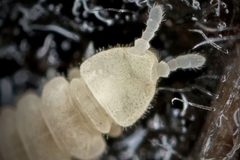
Small, elongate, pale-colored springtails with typical onychiurid body plan. absent or reduced to 1-2 . Furcula reduced or , often non-functional. Body covered with setae arranged in specific patterns; pseudocelli present on and body in diagnostic positions. smooth or finely granulated. shorter than head length, with four segments. Tergal and sternal chaetotaxy provides key diagnostic features at and level.
Habitat
Strictly euedaphic, inhabiting deep soil horizons, often below 10 cm depth. Occurs in mineral soil layers, sometimes in association with root systems. Requires stable soil moisture conditions and is sensitive to soil disturbance. Has been recorded from forest soils, grasslands, and agricultural soils where tillage disturbance is minimal.
Distribution
Recorded from the Holarctic region, with documented occurrences in Europe, North America, and parts of Asia. Distribution follows that of the Onychiuridae, though individual ranges are poorly documented due to taxonomic challenges and undersampling of deep soil fauna.
Ecological Role
Contributes to nutrient cycling in soil through consumption of fungal and particulate organic matter in deep soil horizons. Represents a component of the slow-moving, cryptic fauna that maintains soil structure and function in undisturbed systems.
Similar Taxa
- ProtaphoruriniOverlaps in general body form and subterranean habits; distinguished by pseudocellar formulae and details of mouthpart structure.
- OnychiuriniSimilar preferences and reduced ; differs in arrangement of pseudocelli and presence of specific tergal setae.
More Details
Taxonomic History
Established by Pomorski in 1996 based on chaetotaxic and pseudocellar characters that separated it from previously recognized groupings within Onychiurinae. The tribe has undergone refinement as new descriptions have clarified character boundaries.
Research Challenges
Members are difficult to collect intact due to deep soil and fragility. Many remain undescribed, and geographic ranges are poorly known. Molecular phylogenetic studies of the tribe are lacking.