
Onychiurinae
Börner, 1901
Genus Guides
4- Allonychiurus
- Hymenaphorurini
- Onychiurus(springtails)
- Protaphorura
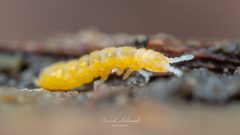
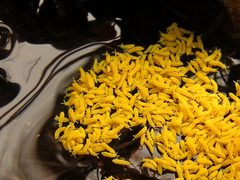
Onychiurinae is a of springtails (Collembola) in the Onychiuridae, established by Börner in 1901. Members are characterized by reduced or absent and the presence of a tube () with distinct structures. The subfamily is primarily soil-dwelling and includes numerous distributed across temperate regions. Many are blind and adapted to subterranean or deep soil .
Pronunciation
How to pronounce Onychiurinae: //ˌɒnɪˈkjʊərɪniː//
These audio files are automatically generated. While they are not always 100% accurate, they are a good starting point.
Identification
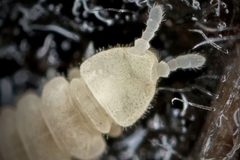
Distinguished from other Onychiuridae by combinations of tergal setal patterns, pseudocelli arrangement, and structure of the tube. Differs from Hypogastrurinae by presence of distinct pseudocelli and generally more elongate body form. Separation from Tullbergiinae requires examination of antennal and mouthpart details. -level identification demands microscopic examination of chaetotaxy, particularly on abdominal tergites.
Images
Appearance
Small, elongate springtails, usually 1-5 mm in length. absent or reduced to 1-2 . with 4 segments. Furca (springing organ) present but often short, or reduced in some . tube () well-developed with paired vesicles. Body often pale or unpigmented, especially in deep-soil species. generally smooth or with fine setae. Tergal setal arrangement and pseudocelli patterns are important diagnostic features at and species level.
Habitat
Primarily euedaphic (deep soil) inhabitants, found in mineral soil horizons, leaf litter, and decaying organic matter. Some occur in caves, moss, and under stones. Moisture requirements are high; most species avoid desiccating surface conditions. depth varies by species, with some restricted to upper soil layers and others occurring 20+ cm below surface.
Distribution
in temperate and regions, with highest diversity in the Palearctic. Recorded from North America, Europe, Asia, and parts of the Southern Hemisphere. Many have restricted distributions due to specific soil requirements.
Seasonality
Activity patterns vary by climate; in temperate regions, peak in spring and autumn when soil moisture is optimal. Some remain active in soil throughout winter. Surface activity rare due to euedaphic habits.
Behavior
Slow-moving, non-jumping in most due to short furca. Negative ; avoids light. have been observed in favorable microhabitats. Response to disturbance typically involves contraction into immobile posture rather than escape jumping.
Ecological Role
Contributes to soil nutrient cycling through consumption of fungal and particulate organic matter. Role in soil structure modification through burrowing activity. Serves as prey for small soil arthropods including mites and predatory beetles.
Human Relevance
Occasional minor pests in mushroom and greenhouses. Indicator value for soil health assessment in ecological studies. No significant economic importance.
Similar Taxa
- TullbergiinaeOverlapping size range and soil ; distinguished by antennal structure and details of mouthparts
- HypogastrurinaeSimilar body form and ; separated by pseudocelli presence and tergal chaetotaxy patterns
More Details
Taxonomic complexity
Onychiurinae contains numerous and with subtle morphological differences. The has undergone extensive revision, and species identification remains challenging without specialized chaetotaxy analysis.
Blindness adaptation
Complete loss in most Onychiurinae reflects evolutionary to permanent soil-dwelling, contrasting with surface-active springtails that retain functional eyes.