
Hargeria rapax
(Harger, 1879)
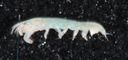
Hargeria rapax is a small estuarine tanaidacean crustacean to the western Atlantic. Originally described as Leptochelia rapax from Massachusetts in 1879, it was later transferred to the Hargeria based on distinctive male morphological characters. The exhibits high intraspecific and was long considered to have a broad distribution from New England to the Mexican Caribbean, though molecular evidence now supports the recognition of a cryptic sister species, H. chetumalensis, in the southern part of this range.
Pronunciation
How to pronounce Hargeria rapax: /hɑɹˈd͡ʒɪəɹiə ˈɹæpæks/
These audio files are automatically generated. While they are not always 100% accurate, they are a good starting point.
Identification
Males distinguished by anal plate less than three times as long as broad, and cheliped carpus five to seven times as long as broad with pointed process on cutting edge. Females recognized by maxillipedal endite bearing three flat spines. Distinguished from H. chetumalensis by morphological and molecular characters ( oxidase subunit I divergence).
Images
Habitat
Estuarine environments with muddy bottoms; associated with seagrass and beds.
Distribution
Northeastern Atlantic coast of North America, from Massachusetts, USA to Chetumal Bay, Mexico. Note: southern previously attributed to this may represent H. chetumalensis.
Life Cycle
Ovigerous females observed carrying ; developmental stages include males, females, and juveniles that can be linked by shared morphological features despite high intraspecific .
Similar Taxa
- Hargeria chetumalensisRecently described cryptic sister from Mexican Caribbean; distinguished by morphological and molecular evidence (COI divergence), though previously confused with H. rapax due to high intraspecific and overlapping geographic range.
- Leptochelia speciesPreviously classified within Leptochelia; Hargeria separated based on unique male anal plate and cheliped , rejecting proposed synonymy.