
Hargeria
Lang, 1973
Species Guides
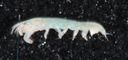
1Hargeria is a of leptocheliid tanaidacean crustaceans established by Lang in 1973. The genus was long considered monospecific, containing only H. rapax, until the description of H. chetumalensis from the Mexican Caribbean in 2019. in this genus exhibit high intraspecific morphological and pronounced .
Pronunciation
How to pronounce Hargeria: //hɑːrˈɡɛr.i.ə//
These audio files are automatically generated. While they are not always 100% accurate, they are a good starting point.
Identification
Diagnostic features for Hargeria include: both sexes with merus of pereopod 1 bearing one ventrodistal and one dorsodistal seta; merus of pereopods 2–3 with two ventrodistal setae; uropodal endopod five-articulate. Females possess two flat spines and one seta on the maxilliped endite. Males are distinguished by presence of an anal plate and a cheliped fixed finger with small process and large distal process.
Images
Habitat
Estuarine environments with muddy bottom substrates; associated with seagrass and .
Distribution
H. rapax: Northwestern Atlantic coast from Massachusetts, USA to Chetumal Bay, Mexico. H. chetumalensis: Mexican Caribbean.
Life Cycle
Ovigerous females have been observed, indicating direct development with maternal of embryos. is pronounced, with distinct male and female morphologies. stages have been linked to through morphological features.
Misconceptions
The was long considered monospecific with H. rapax thought to have a wide distribution from the Northwestern Atlantic to the Mexican Caribbean. Molecular and morphological evidence demonstrated this represented two distinct , with H. chetumalensis described as new from the Mexican Caribbean.