
Tanaidacea
Dana, 1849
Tanaids
Family Guides
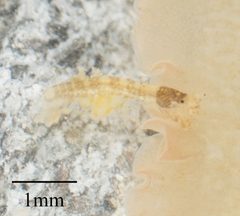
2Tanaidacea is a minor order of small, shrimp-like crustaceans within the class Malacostraca. The group contains approximately 940 described , ranging from 0.5 to 120 mm in size. Tanaids are primarily marine benthic organisms that inhabit bottom sediments, with a few species occurring in freshwater. They exhibit direct development without a planktonic larval stage, with young emerging from the maternal marsupium as post-larvae called mancas. The fossil record extends to the Carboniferous period.
Pronunciation
How to pronounce Tanaidacea: //ˌtænəˈɪdeɪsiə//
These audio files are automatically generated. While they are not always 100% accurate, they are a good starting point.
Identification
Tanaids can be distinguished from similar small peracaridan crustaceans by the covering only the first two thoracic segments (versus full thoracic coverage in caridean shrimp), the presence of prominent clawed gnathopods, and the absence of a planktonic larval stage. They differ from cumaceans in body form and from isopods in having a carapace and distinct thoracic limb differentiation.
Images
Appearance
Small, elongate crustaceans with a shrimp-like body plan. size ranges from 0.5 to 120 mm, with most measuring 2–5 mm. The is and covers the first two thoracic segments. Three pairs of thoracic appendages are present: small maxillipeds near the mouth, large clawed gnathopods, and burrowing-adapted pereiopods. Six additional thoracic segments each bear a single pair of pereiopods. The first five abdominal segments typically bear pleopods. The terminal segment is fused with the and bears uropods. Gills are located on the inner surface of the carapace.
Habitat
Predominantly marine, occurring in benthic environments from intertidal zones to abyssal depths. Most inhabit soft-bottom sediments, where they construct simple tubes or burrow into mud and sand. A small number of species have colonized freshwater . They are typically found in fine-grained substrates where they can maintain their burrows or tubes.
Distribution
Global marine distribution with records from Arctic, temperate, and tropical waters. Documented from European waters including Denmark, Norway, and Sweden. Freshwater representatives are geographically restricted.
Diet
Feeding modes include suspension feeding and . Thoracic limbs generate water currents toward the mouth, where small particles are filtered using mouthparts and maxillipeds. Some are exclusively predatory, while others combine filter feeding with active prey capture. Specific prey items are not well documented for most species.
Life Cycle
Direct development without a planktonic larval stage. Embryos develop within a marsupium ( pouch) formed by oostegites. Post-larval young, termed mancas, emerge as benthic forms resembling miniature . Some exhibit hermaphroditism; others are gonochoric with separate sexes.
Behavior
Primarily infaunal, spending most of their lives buried in sediments. Construct and maintain simple tubes or burrows in soft substrates. Thoracic appendages create ventilatory currents for respiration and feeding. Some have been observed to actively capture prey rather than relying solely on suspension feeding.
Ecological Role
Component of marine benthic , contributing to infaunal and sediment bioturbation. Their burrowing activities modify sediment structure and pore water chemistry. Serve as prey for larger benthic and small fish. Filter feeding and link them to both detrital and live in benthic .
Human Relevance
No direct economic importance. Occasionally encountered in marine benthic sampling and environmental monitoring studies. Not known to be pests, of , or subjects of commercial harvest.
Similar Taxa
- CumaceaSimilar small peracaridan crustaceans with ; distinguished by cumaceans' broader carapace covering most of and different body proportions
- CarideaShrimp-like decapods with elongate bodies; distinguished by caridean covering entire and presence of pleocyemate larval development with planktonic stages
- IsopodaSimilar peracaridan body plan; distinguished by isopods' dorsoventrally flattened bodies, lack of , and more uniform thoracic appendages
More Details
Fossil Record
The oldest tanaidacean fossils date to the Carboniferous period, with modern morphologies established by the Mesozoic.
Taxonomic Diversity
The order comprises approximately 940 described , though many deep-sea and cryptic species likely remain undescribed.