
Tylidae
Dana, 1852
Calloused Beach Pillbugs and Heller's Isopod
Genus Guides
1- Tylos(Calloused Beach Pillbugs)
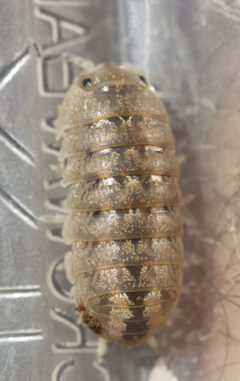
Tylidae is a of terrestrial isopods (woodlice) comprising approximately 27 , with all but one species placed in the Tylos; the sole exception is Helleria brevicornis. Together with Ligiidae, Tylidae represents an early-diverging lineage among families. Members are primarily associated with coastal sandy beach in the supralittoral zone.


Pronunciation
How to pronounce Tylidae: /ˈtɪlɪˌdaɪ/
These audio files are automatically generated. While they are not always 100% accurate, they are a good starting point.
Images
Habitat
Supralittoral zone of sandy beaches; coastal sandy shore environments. The shows broad latitudinal distribution from approximately 25°N to 27°S.
Distribution
in coastal sandy beach ; documented from western coast of Portugal, Taquaras beach in Santa Catarina, Brazil (27°S), and other intertidal and supralittoral zones globally. Latitudinal range spans roughly 25°N to 27°S based on available records.
Seasonality
Reproductive activity observed from April to July in studied .
Life Cycle
(one per year) with seasonal producing one new cohort annually. In Tylos europaeus, females are with approximately 3-year lifespan and two reproductive events; males exhibit cohort-splitting into fast-growing (3-year lifespan) and slow-growing (4-year lifespan) morphs as a possible strategy to cope with male-male competition.
Behavior
Burrowing in sandy beach substrate. Male-male competition for mating observed, with highly male-biased sex ratios in some . Cohort-splitting in males creates distinct growth-rate and body-size morphs.
Ecological Role
Secondary producer with documented P/B̄ ratio of 1.58 and secondary production of 0.082 g.m−2.yr−1 AFDW in studied . Potential bioindicator for environmental quality assessment on sandy shores.
Similar Taxa
- LigiidaeSister that also diverged early from remaining families; both represent basal lineages within Oniscidea. Ligiidae contains the sea slaters ( Ligia), which occupy similar intertidal but are generally larger and more elongate than Tylidae.
- Other Oniscidea familiesTylidae and Ligiidae together form a clade that diverged prior to the diversification of the remaining , making them phylogenetically distinct from more derived terrestrial isopod lineages.
More Details
Phylogenetic position
Molecular and morphological evidence places Tylidae and Ligiidae as sister representing the earliest divergence within Oniscidea, before the major radiation of terrestrial lineages.
Population dynamics
Studies of Tylos europaeus demonstrate complex structure with cohort-splitting in males, creating two distinct morphological and life-history strategies within the same reproductive cohort.
Conservation potential
The has been identified as having potential value as bioindicators for environmental quality assessment in sandy shore due to their ecological role and sensitivity to conditions.
Sources and further reading
- BugGuide
- Wikipedia
- GBIF taxonomy match
- iNaturalist taxon
- NCBI Taxonomy
- Catalogue of Life
- Isopoda | Beetles In The Bush
- Bibliography | Beetles In The Bush
- Biology, population dynamics and secondary production of Tylos europaeus (Isopoda, Tylidae) on the western coast of Portugal
- Tylos niveus Budde-Lund, 1885 (Crustacea: Isopoda: Oniscidea: Tylidae): redescrição e nova ocorrência para a praia de Taquaras, Santa Catarina, Brasil