
Rhyscotidae
Budde-Lund, 1904
Rhyscotid woodlice
Genus Guides
1- Rhyscotus(armadillo woodlice)
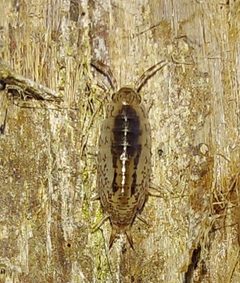
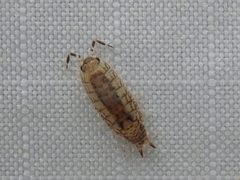
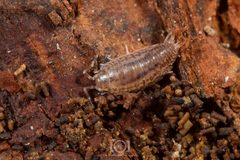
Rhyscotidae is a of terrestrial isopods (woodlice) within the suborder Oniscidea. The family comprises two , Rhyscotus and Rhyscotoides, and is characterized by small to medium-sized woodlice with typical isopod body plans. Members are found in tropical and subtropical regions, particularly in the Americas. The family was established by Budde-Lund in 1904 and represents a distinct lineage within the Crinocheta clade of terrestrial isopods.
Pronunciation
How to pronounce Rhyscotidae: /raɪˈskɑtɪˌdiː/
These audio files are automatically generated. While they are not always 100% accurate, they are a good starting point.
Identification
Identification to level requires examination of pleopodal lungs (pseudotracheae) structure, antennaal segmentation, and uropod . Distinguished from related families in Crinocheta by combinations of these characters. The two within the family (Rhyscotus and Rhyscotoides) are separated based on differences in body shape, antennal structure, and male genitalia.
Images
Habitat
Terrestrial in tropical and subtropical regions. Found in moist microhabitats including leaf litter, soil crevices, and under stones or decaying wood. Specific microhabitat preferences vary by and locality.
Distribution
Primarily distributed in the Neotropical region, with records from Central and South America, the Caribbean, and parts of southern North America. The exact range boundaries are poorly documented due to limited collecting effort.
Ecological Role
As , members of this contribute to decomposition processes in their , breaking down organic matter and recycling nutrients in forest floor and soil .
Human Relevance
No documented direct economic or medical importance. Like other woodlice, they are harmless to humans and may occasionally enter structures in moist conditions but are not considered pests.
Similar Taxa
- PhilosciidaeAnother within Crinocheta with similar general body form; distinguished by differences in pleopodal lung structure and antennal .
- HalophilosciidaeSimilar small woodlice often found in moist ; Rhyscotidae typically lack the pronounced halophilic adaptations seen in this .
- TrichoniscidaeSmall woodlice that may overlap in size range; Trichoniscidae are often more elongate and belong to a different clade (Trichoniscidea vs. Crinocheta).
More Details
Taxonomic History
The was established by Gustav Henrik Andreas Budde-Lund in 1904. The two included , Rhyscotus and Rhyscotoides, have been variously treated in the literature, with some authors historically considering them synonymous or placing them in other families. Modern molecular and morphological studies support their recognition as a distinct family within Crinocheta.
Research Status
Rhyscotidae remains poorly studied compared to more common woodlice like Porcellionidae or Armadillidiidae. Most available information comes from taxonomic revisions and regional faunistic surveys, particularly in Florida and the Caribbean.