
Caecidotea
Packard, 1871
Species Guides
4- Caecidotea communis
- Caecidotea kenki
- Caecidotea racovitzai
- Caecidotea tomalensis(Tomales Bay isopod)
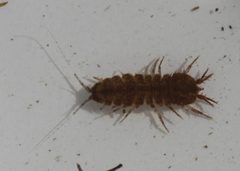
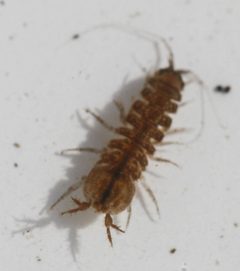
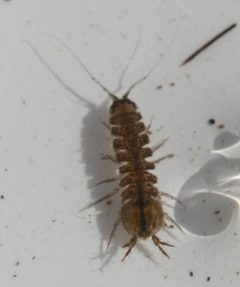
Caecidotea is a of freshwater isopods in the Asellidae, containing over 100 described in North America. Species occupy diverse aquatic including surface waters (ponds, streams) and subterranean environments (caves, aquifers). The genus has been extensively studied for - interactions, particularly involving acanthocephalan parasites that modify host . Some species exhibit morphological adaptations to subterranean life including reduced and pigmentation.
Identification
Caecidotea are distinguished from other asellid by combinations of pleopod characteristics: protopod shape and retinacula number on pleopod I, exopod setation patterns on pleopod III, and spine arrangements on pleopod IV margins. Subterranean species typically show reduced or absent , depigmented bodies, and elongated appendages compared to surface-dwelling relatives. Species-level identification requires examination of male pleopod .
Images
Habitat
Freshwater aquatic environments including ponds, streams, springs, caves, and groundwater aquifers. Some are obligate subterranean inhabitants restricted to cave and karst systems; others are surface-dwelling in lentic and lotic .
Distribution
North America, with records from the United States (including Maryland, Kansas, Vermont) and Mexico (western Trans-Mexican Volcanic Belt, Jalisco).
Diet
; feeds on decaying leaf material and associated microbial .
Host Associations
- Acanthocephalus dirus - intermediate Acanthocephalan ; modifies antipredator , use, and mating behavior
Life Cycle
Direct development without free-living larval stages; females carry in pouch (marsupium). Some exhibit continuous with gravid females present year-round.
Behavior
Antipredator varies among : C. intermedius shows modified use when infected by , while C. communis exhibits cathemeral activity (distributed throughout 24-hour cycle) and insensitivity to predatory fish chemical cues. Subterranean species may track saturated zones below water table.
Ecological Role
Intermediate for acanthocephalan ; parasite-induced behavioral modifications may influence dynamics by altering susceptibility. activity stimulates bacterial abundance and activity in sediment systems.
Human Relevance
Subject of ecological research on manipulation of , subterranean function, and salinization impacts on freshwater . Indicators of groundwater quality and ecosystem integrity.
Similar Taxa
More Details
Parasite-host research significance
Caecidotea intermedius serves as a model system for studying behavioral manipulation by . by Acanthocephalus dirus alters serotonin and dopamine levels in the , with associated changes in mating and use that increase risk and facilitate parasite transmission.
Subterranean adaptations
Obligate cave-dwelling (e.g., C. tridentata, C. pricei, C. franzi, C. holsingeri, C. mausi, C. vandeli, C. nordeni) exhibit convergent morphological adaptations to groundwater : reduced , lack of pigmentation, and elongated appendages.
Sources and further reading
- BugGuide
- Wikipedia
- GBIF taxonomy match
- iNaturalist taxon
- NCBI Taxonomy
- Catalogue of Life
- The ecology of a subterranean isopod, Caecidotea tridentata
- Modification of Antipredator Behavior of Caecidotea Intermedius by Its Parasite Acanthocephalus Dirus
- Cathemerality and Insensitivity to Predatory Fish Cues in Pond Isopods (Caecidotea communis)
- Effects of Acanthocephalus dirus (Acanthocephala) on Morphometrics and Reproduction of Caecidotea intermedius (Crustacea: Isopoda)
- Parasite-related modification of mating behaviour and refuge use in the aquatic isopod Caecidotea intermedius: neurological correlates
- On the ecology of Caecidotea williamsi Escobar-Briones & Alcocer (Crustacea: Isopoda: Asellidae) from Alchichica saline lake, Central Mexico
- A synopsis of the subterranean asellids of Maryland, U.S.A., with description of Caecidotea alleghenyensis, new species (Crustacea: Isopoda: Asellota)
- PARASITE-RELATED PAIRING SUCCESS IN AN INTERMEDIATE HOST, CAECIDOTEA INTERMEDIUS (ISOPODA): EFFECTS OF MALE BEHAVIOR AND REPRODUCTIVE PHYSIOLOGY
- Investigating the effects of increased salinity on leaf litter decomposition and mortality of an aquatic invertebrate detritivore (Caecidotea sp.)
- A new species of Caecidotea (Crustacea: Isopoda: Asellidae) from a well in the western slope of Mexico, with occurrence records of C. alvarezi