
Caecidotea communis
(Say, 1818)
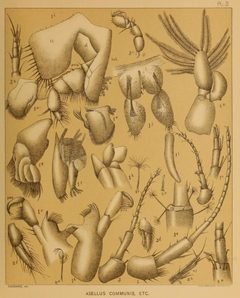
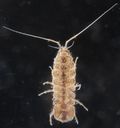
Caecidotea communis is a freshwater isopod in the Asellidae. It inhabits ponds and exhibits cathemeral activity patterns—maintaining consistent movement rates across day and night periods. The shows insensitivity to from predatory fish, representing the first documented case of cathemerality in crustaceans.

Pronunciation
How to pronounce Caecidotea communis: /kaɪsɪˈdoʊtiə kəˈmjuːnɪs/
These audio files are automatically generated. While they are not always 100% accurate, they are a good starting point.
Images
Habitat
Ponds and other freshwater aquatic environments.
Distribution
North America and Europe. Records include the United States (Vermont, Pennsylvania) and Great Britain.
Behavior
Exhibits cathemeral (metaturnal) activity patterns, maintaining consistent movement rates and proportion of time spent moving across day and night periods. Insensitive to from predatory fish—does not alter activity patterns when exposed to cues.
Sources and further reading
- BugGuide
- GBIF taxonomy match
- NCBI Taxonomy
- Catalogue of Life
- A Close Call | Bug Squad
- Tingidae | Beetles In The Bush
- Russian Journal of Economics finds a new publishing home on ARPHA platform | Blog
- How a City-Raised Entomologist Found Her Path in Agricultural Pest Management
- New NeoBiota special issue: tackling invasive forest pests
- Mysterious new moth species discovered in Europe | Blog
- Cathemerality and Insensitivity to Predatory Fish Cues in Pond Isopods (Caecidotea communis)