
Americorchestia megalophthalma
(Spence Bate, 1863)
Northern Big-eyed Sandhopper
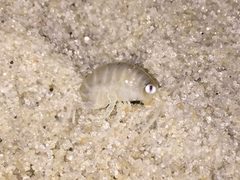
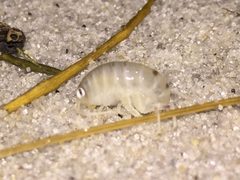
Americorchestia megalophthalma, known as the northern big-eyed sandhopper, is a talitrid amphipod inhabiting coastal sandy beaches. The is distinguished by its notably enlarged , an for and activity in the intertidal zone. Like other beach hoppers, it exhibits saltatory locomotion using a tail-flip escape response and plays a role in processing stranded marine organic matter.
Pronunciation
How to pronounce Americorchestia megalophthalma: /əˌmɛrɪkɔːrˈkɛstiə ˌmɛɡəˌlɒfˈθælmə/
These audio files are automatically generated. While they are not always 100% accurate, they are a good starting point.
Identification
Distinguished from congeneric and other talitrids by the disproportionately large (megalophthalma = 'large-eyed'). The combination of beach , saltatory locomotion, and size separates it from Orchestia and other coastal amphipods. Eyestalk structure and relative eye diameter versus width provide diagnostic characters.
Images
Appearance
Laterally compressed body typical of amphipods, with enlarged relative to body size. Coloration generally pale to mottled, matching sandy substrates. well-developed; second antennae longer than first in mature males. Uropods and form a functional spring for saltatory escape. present in antennae and gnathopod development.
Habitat
Supralittoral zone of sandy ocean beaches; occupies the drift line and upper beach areas where decaying marine vegetation accumulates. Requires moist sand for burrowing and avoids desiccation by remaining in humid microhabitats under wrack or in shallow burrows during daytime.
Distribution
Coastal regions of the northern hemisphere; confirmed records from North Atlantic and North Pacific shores. Precise range boundaries undocumented in available sources.
Seasonality
Activity primarily and ; year-round presence likely in temperate regions with reduced winter activity. Peak surface activity correlates with tidal cycles and wrack deposition.
Diet
; feeds on decaying marine macroalgae and other stranded organic material (wrack). Specific dietary components not documented.
Life Cycle
Direct development without larval stages; brooded in female marsupium. Juveniles resemble and occupy same . Detailed developmental stages and duration undocumented.
Behavior
surface foraging on wrack deposits; burrows in moist sand during daylight hours to avoid desiccation and . Employs tail-flip (saltatory) escape response when disturbed. Aggregates around food sources.
Ecological Role
Decomposer facilitating nutrient cycling from marine-derived organic matter to terrestrial coastal . Prey item for shorebirds, beach-dwelling insects, and other coastal .
Human Relevance
for beach health; sensitive to pollution, beach , and disturbance. No direct economic importance.
Similar Taxa
- Americorchestia longicornisOverlapping distribution and ; distinguished by relatively smaller size and male proportions
- Orchestia gammarellusSympatric talitrid in some regions; has smaller , different body proportions, and often occupies coarser substrates
More Details
Taxonomic History
Originally described as Orchestia megalophthalma by Spence Bate in 1863; transferred to Americorchestia following revision of New World talitrids. Authorship date sometimes cited as 1862 in secondary sources.
Conservation Notes
Vulnerable to beach management practices including mechanical cleaning, vehicle traffic, and sea wall construction that remove wrack and alter sand moisture regimes.