
Ericthonius
H. Milne Edwards, 1830
Species Guides
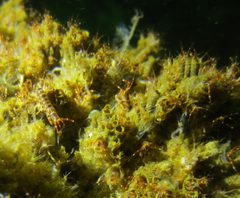
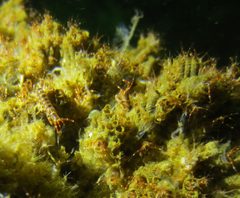
1- Ericthonius rubricornis(Tube-dwelling Sea Flea)
Ericthonius is a of marine amphipod crustaceans in the Ischyroceridae, first described by H. Milne Edwards in 1830. The genus contains at least 20 described , with records from marine coastal waters of northern Europe. These small crustaceans are part of the diverse benthic inhabiting shallow marine environments.
Pronunciation
How to pronounce Ericthonius: /ˌɛrɪkˈθoʊniəs/
These audio files are automatically generated. While they are not always 100% accurate, they are a good starting point.
Identification
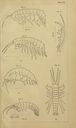
Ericthonius can be distinguished from other ischyrocerid amphipods by characteristics of the gnathopods (appendages used in feeding and grasping) and the structure of the urosome ( body region). Detailed identification to species level requires examination of male secondary sexual characters, particularly the of gnathopod 2. The is placed in the tribe Ericthonini based on shared derived characters with related genera.
Images
Habitat
Marine benthic environments, primarily in shallow coastal waters. Records indicate presence in subtidal zones. Specific microhabitat preferences within this range are not well documented for the as a whole.
Distribution
Documented from northern European marine waters including Denmark, Norway (particularly the Norwegian West Coast), and Sweden. The full geographic range of the likely extends more broadly in the North Atlantic and adjacent seas, but precise limits require further verification.
Ecological Role
As benthic amphipods, Ericthonius contribute to marine detrital and serve as prey for larger and fish. Their specific ecological functions within benthic have not been separately documented from those of co-occurring amphipod .
Similar Taxa
- JassaBoth are ischyrocerid amphipods with similar body plans and marine benthic habits. Jassa are distinguished by differences in gnathopod structure and antennal .
- IschyrocerusCongeneric in the same ; Ischyrocerus differ in details of pereopod and uropod , requiring careful examination of appendage setation and proportions.
More Details
Taxonomic history
The was established by Henri Milne Edwards in 1830 and has remained a stable taxonomic entity within the Ischyroceridae. The tribe Ericthonini was erected to accommodate this genus and its closest relatives.
Species diversity
At least 20 are currently recognized, though the exact number varies between sources (Catalogue of Life lists 23 species). Species-level relies heavily on male gnathopod and may be revised with molecular data.