Jassa
Leach, 1814
Species Guides
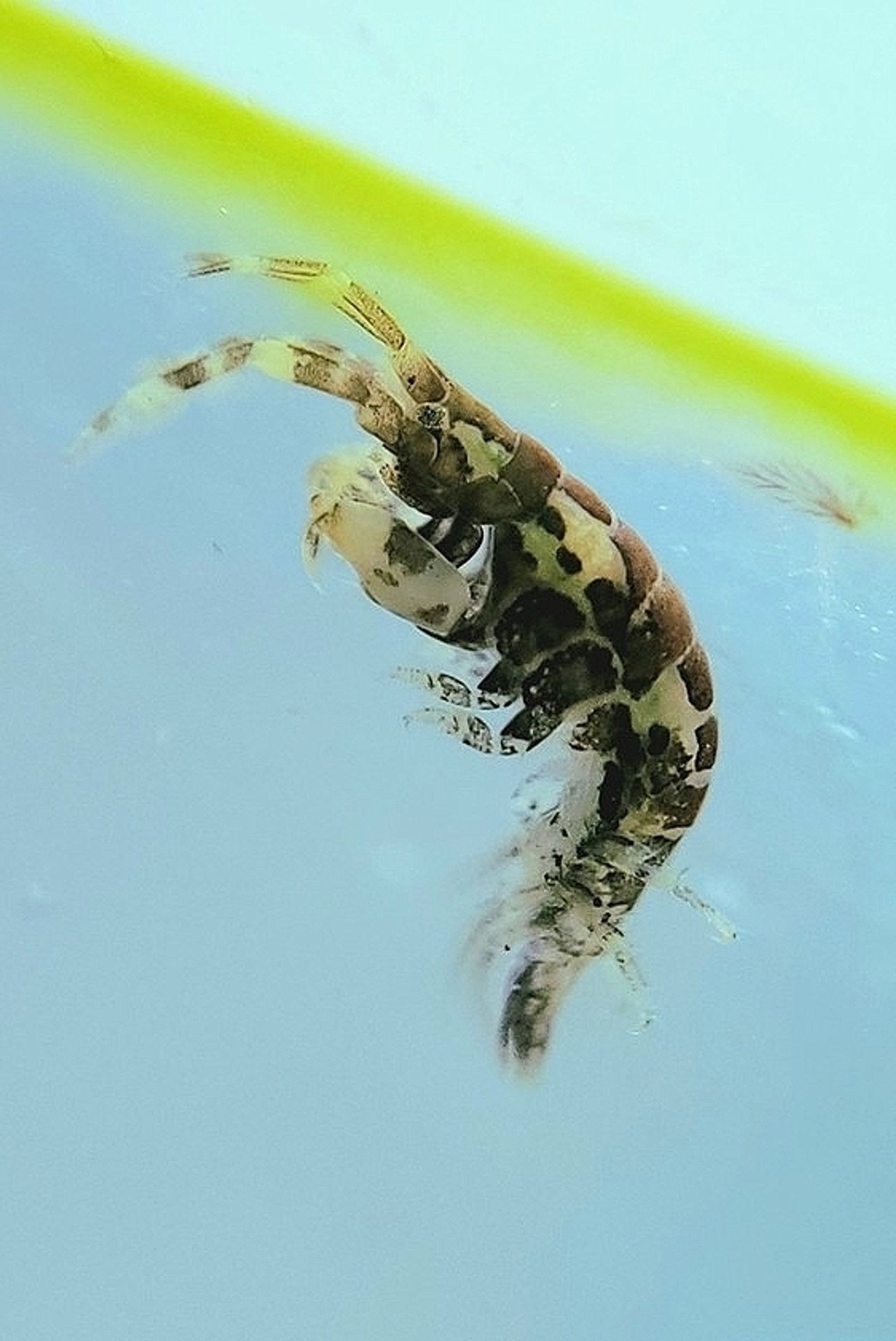
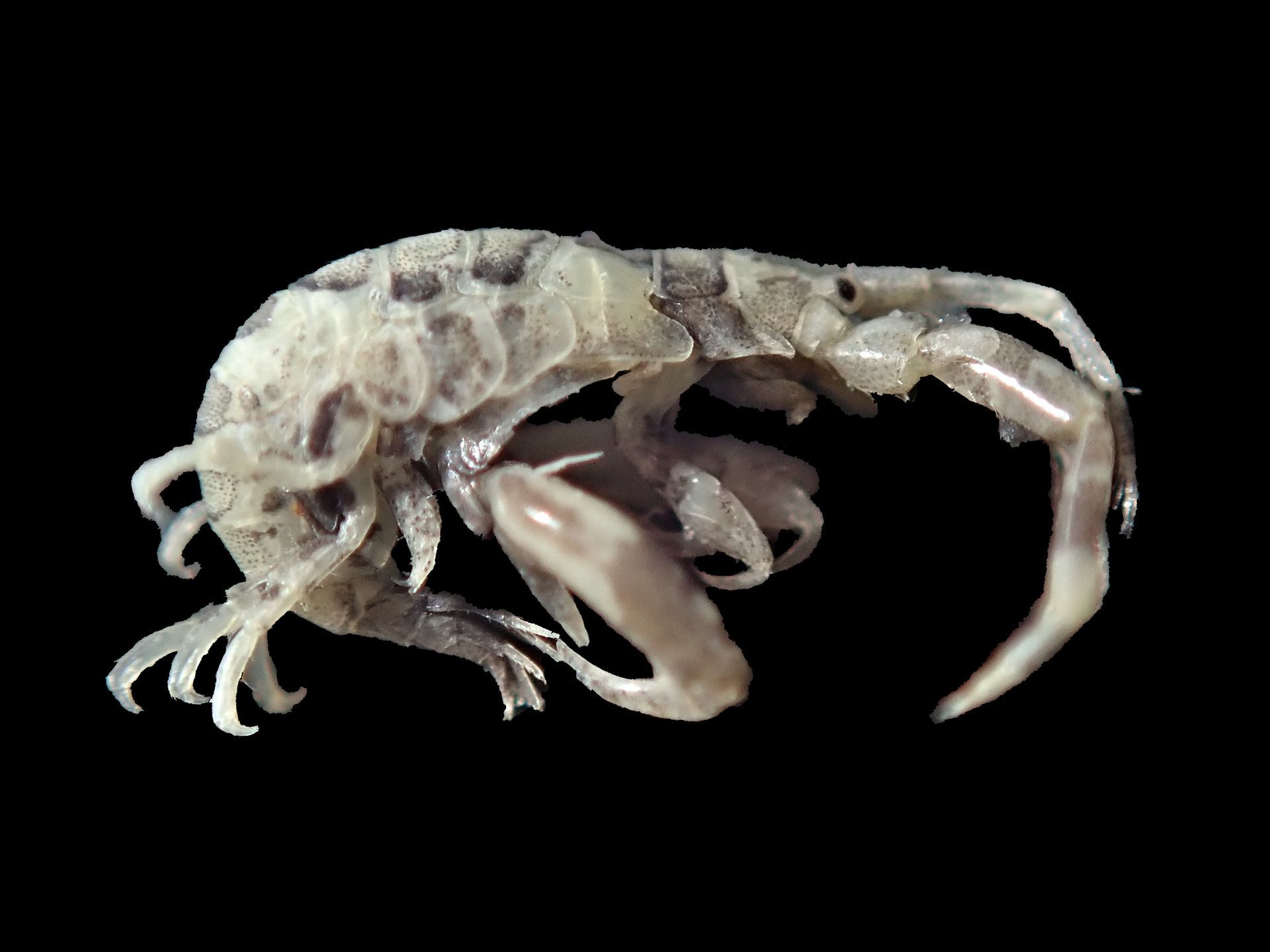
1- Jassa marmorata(Marbled Scud)
Jassa is a of tube-dwelling amphipods comprising 24 distributed in temperate marine waters of both hemispheres. Species inhabit solid substrates from the lower intertidal zone to 500 m depth, with some forming dense colonies on artificial structures. Multiple species frequently coexist on hard substrates through differentiation in microhabitat selection and resource utilization. The genus has been transported globally by human since at least the 19th century due to its colonial, tube-living habit.
Pronunciation
How to pronounce Jassa: //ˈjæ.sə//
These audio files are automatically generated. While they are not always 100% accurate, they are a good starting point.
Identification
discrimination within Jassa has historically been problematic, requiring detailed morphological examination. The is distinguished from related amphipods by its tube-building and specific gnathopod and uropod . Two new species (J. laurieae and J. kimi) were recently described, while J. monodon and J. valida were resurrected from synonymy. J. falcata and J. marmorata can be differentiated by and current preference, with J. marmorata being and superior in rapid of new habitats.
Images
Habitat
Solid substrates from lower intertidal zone to 500 m depth in temperate marine waters. Natural substrates include algal thalli (with differential use of peripheral versus central parts), logs, drift , and larger crustaceans. Artificial substrates include ships, buoys, offshore platforms, portable water systems, and water intake structures.
Distribution
Temperate regions of both hemispheres. Documented from: Canadian Pacific waters (Southeast Alaska, British Columbia), Denmark, Norway, Sweden, and Helgoland (North Sea, German Bight). Some (e.g., J. marmorata) are due to human-mediated transport since at least the 19th century; others (e.g., J. falcata, J. herdmani) are restricted to northwestern Europe.
Behavior
Forms dense colonies on artificial structures, creating significant biofouling. Exhibits differentiation among coexisting through differential microhabitat selection on algal thalli and differential behavioral responses to mechanical disturbance. J. marmorata demonstrates superior ability in rapid of new . Colonial tube-living habit facilitates passive transport on movable substrates. J. falcata exhibits two distinct male morphs with differences in reproductive .
Ecological Role
Important element of marine fouling . Functions as a biofouling organism on artificial structures including water intake systems and offshore platforms. Coexisting partition resources through microhabitat differentiation, facilitating local biodiversity.
Human Relevance
Significant biofouling pest on water intake structures and offshore platforms. Transported globally by human since at least the 19th century via ships, buoys, and portable water systems. Correct identification is required to differentiate from introductions.
More Details
Taxonomic revisions
Recent monographic work examined approximately 25,000 specimens from 1,100 collections, resulting in description of J. laurieae and J. kimi as new , resurrection of J. monodon and J. valida, and synonymization of J. mendozai under J. valida and of J. cadetta and J. trinacriae under J. slatteryi.
Evolutionary history
CO1 analysis suggests Southern Hemisphere origin with subsequent northward diversification and evolutionary trend toward greater physiological plasticity, explaining success in long-distance transport and establishment in locations.
Sources and further reading
- BugGuide
- Wikipedia
- GBIF taxonomy match
- iNaturalist taxon
- NCBI Taxonomy
- Catalogue of Life
- Niche differentiation in habitat and current preference corroborates taxonomic distinction of Jassa falcata and Jassa marmorata (Amphipoda, Crustacea)
- Differences in resource utilization and behaviour between coexisting Jassa species (Crustacea, Amphipoda)
- Jassa (Crustacea: Amphipoda): a new morphological and molecular assessment of the genus
- Differences in Reproductive Behavior between Two Male Morphs of the Amphipod Crustacean Jassa falcata Montagu