
Ericthonius rubricornis
(Stimpson, 1853)
Tube-dwelling Sea Flea
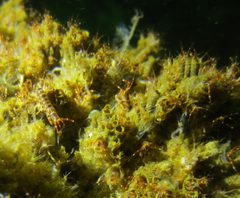
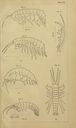
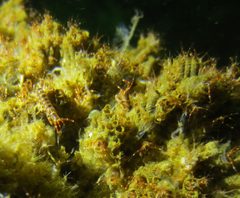
Ericthonius rubricornis is a tube-dwelling amphipod in the Ischyroceridae. It constructs and inhabits protective tubes in marine environments. The species has been recorded across three continents, indicating a broad transatlantic distribution.
Pronunciation
How to pronounce Ericthonius rubricornis: /ɛˈrɪkθoʊniəs ruːbɪˈkɔrnɪs/
These audio files are automatically generated. While they are not always 100% accurate, they are a good starting point.
Identification
The name rubricornis (meaning red-horned) suggests reddish coloration on the or cephalic appendages, though specific diagnostic features for field identification are not documented in available sources. Members of the Ericthonius are characterized by their tube-dwelling habit and associated morphological adaptations.
Images
Habitat
Marine benthic environments. As a tube-dwelling amphipod, it constructs and inhabits protective tubes, likely on hard substrates or among and debris.
Distribution
Recorded from South America, North America, and Europe. The sparse GBIF distribution records suggest documentation remains limited despite the broad geographic range.
Behavior
Constructs and inhabits protective tubes, a defining characteristic of the and .
Ecological Role
As a tube-dwelling benthic amphipod, likely contributes to marine detritus processing and serves as prey for larger and fish.
Similar Taxa
- Ericthonius difformisCongeneric with similar tube-dwelling ; separation requires detailed examination of morphological characters not summarized in available sources.
- Other Ischyroceridae members share tube-dwelling habits; generic assignment distinguishes Ericthonius based on specific morphological features of mouthparts and pereiopods.
More Details
Nomenclatural history
Originally described as Cerapus rubricornis by Stimpson in 1853, later transferred to the Ericthonius.
Research status
The appears poorly documented in modern literature; iNaturalist records (22 observations) and sparse GBIF distribution data suggest it is infrequently encountered or underreported relative to its broad geographic range.