
Crangonyx
Spence Bate, 1859
cave amphipods, spring amphipods
Species Guides
2- Crangonyx gracilis(Northern Lake Crangonyctid)
- Crangonyx richmondensis(Ellis Bog Crangonyctid)
Crangonyx is a of freshwater amphipod crustaceans in the Crangonyctidae. inhabit diverse aquatic environments including surface waters (marshes, swamps, lakes, rivers) and subterranean (caves, springs, groundwater systems). The genus includes both native and highly , with some exhibiting troglobitic adaptations such as reduced and elongated appendages. Several species have been introduced outside their native ranges, notably Crangonyx pseudogracilis and C. floridanus in Europe and Asia, where they interact competitively and predatorily with native amphipods.
Pronunciation
How to pronounce Crangonyx: /kræŋˈɡoʊ.nɪks/
These audio files are automatically generated. While they are not always 100% accurate, they are a good starting point.
Identification
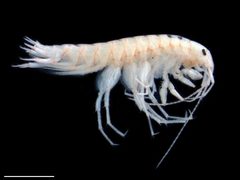
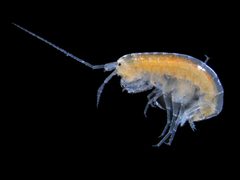
Distinguished from similar amphipod (particularly Gammarus) by: laterally compressed body with distinct body regions; reduced or absent in cave-dwelling ; elongated , particularly the second pair; gnathopods of moderate size; uropods with distinct ; and typically smaller body size than most Gammarus species. Troglobitic species show elongation of appendages and loss of pigmentation. Species-level identification requires examination of male gnathopod morphology and uropod structure.
Images
Habitat
Diverse freshwater including: surface waters (lakes, ponds, marshes, swamps, slow rivers, temporary streams); and subterranean systems (caves, springs, groundwater, hypogean habitats). Some are troglobitic (obligate cave-dwellers) while others are eurytopic. Specific microhabitats include mud-bottom pools, gravel-bottom streams, and vegetated .
Distribution
Holarctic distribution. Native to North America with highest diversity in eastern and central regions. Introduced established in Europe (United Kingdom, Portugal, Ireland, elsewhere) and Asia (Japan). Cave-dwelling restricted to karst regions, particularly southern Appalachians (Virginia, Tennessee, West Virginia) and other limestone areas.
Seasonality
Varies by and . Surface-dwelling species: typically spring through autumn with peak activity in warmer months; some reproduce year-round in stable thermal environments. Cave-dwelling species: reduced seasonality with year-round reproduction due to stable subterranean temperatures. C. pseudogracilis: reproduces most of year in temporary rivers, March–July in lakes.
Diet
and detritivorous; specific dietary components include: decaying plant material, , biofilm, and small . Some engage in intraguild and . C. pseudogracilis has been observed as prey for native Gammarus species.
Life Cycle
Direct development without free-living larval stages. brooded in female marsupium ( pouch) until hatching. Juveniles emerge as miniature . Growth through successive . Sexual maturity reached after several molts; in some at 6–7 mm body length. Lifespan approximately one year in surface species, potentially longer in cave-dwelling species with slower metabolism. Overlapping common. Brood size ranges from 10–30 eggs in studied species.
Behavior
Negative (light avoidance) in cave-dwelling . Thigmotactic (contact-seeking with substrates) observed in stream-dwelling . Cryptic behavior more pronounced in lotic-adapted populations compared to pool-dwelling conspecifics. Limited seasonal movement within cave systems. Some species exhibit -specific behavioral adaptations to flow conditions.
Ecological Role
Important component of freshwater macroinvertebrate ; serves as prey for fish and other in surface waters. macroinvertebrate in some cave stream systems, likely supporting cave-dwelling vertebrate predators. can alter community structure through competition and as prey for native predators (biotic resistance). Contributes to detritus processing in aquatic .
Human Relevance
Several are outside native range, notably Crangonyx pseudogracilis and C. floridanus, with documented ecological and potential economic impacts. Used as model organisms in studies of: subterranean , invasion , biotic resistance, and freshwater dynamics. Some cave-dwelling species of conservation interest due to restricted ranges and vulnerability.
Similar Taxa
- GammarusCo-occurs in many freshwater ; distinguished by larger body size, more prominent , different gnathopod and uropod , and typically greater predatory capability. Gammarus have been documented to prey on Crangonyx.
- StygobromusAnother crangonyctid with troglobitic ; distinguished by more extreme troglomorphic features and different geographic distribution (also North American caves).
- NiphargusEuropean crangonyctid morphologically convergent with Crangonyx; distinguished by geographic distribution and subtle morphological differences in mouthparts and appendages.
Sources and further reading
- BugGuide
- Wikipedia
- GBIF taxonomy match
- iNaturalist taxon
- NCBI Taxonomy
- Catalogue of Life
- Uncategorized | Blog - Part 31
- Predators vs. alien: European shrimps win predatory battles with an American invader | Blog
- Observations on the Life History of Crangonyx richmondensis richmondensis Ellis
- THE LIFE CYCLE OF CRANGONYX RICHMONDENSIS LAURENTIANUS BOUSFIELD (CRUSTACEA: AMPHIPODA)
- Behavioral adaptation of the troglobitic amphipod crustacean Crangonyx antennatus to stream habitats
- First detection of a highly invasive freshwater amphipod ( Crangonyx floridanus ) in the United Kingdom
- Observations on the Life History of the Freshwater Amphipod, Crangonyx forbesi (Hubricht and Mackin), in a Spring-fed Cistern in West Virginia
- Variation among populations of the troglobitic amphipod crustacean Crangonyx Antennatus Packard (Crangonyctidae) living in different habitats II. Population distribution
- Variation among populations of the troglobitic amphipod crustaceanCrangonyx antennatusPackard living in different habitats I. Morphology
- Differential microdistributions and interspecific interactions in coexisting Gammarus and Crangonyx amphipods
- Utilization of Lotic, Lentic, and Temporary Habitats by the AmphipodCrangonyx gracilis
- Population dynamics and expansion of Crangonyx pseudogracilis, a potentially invasive amphipod
- Distribution and ecology of the subterranean amphipod Crangonyx chlebnikovi Borutzky, 1928 (Crustacea: Crangonyctidae), with lectotype designation and comments on morphology of the lateral cephalic lobe
- Reproductive Biology and Adaptability of the Invasive Alien Freshwater AmphipodCrangonyx floridanus(Crustacea: Amphipoda, Crangonyctidae)
- Variation among populations of the troglobitic amphipod crustaceanCrangonyx antennatusPackard (Crangonyctidae) living in different habitats, III: Population dynamics and stability
- Rapid expansion of the distributional range and the population genetic structure of the freshwater amphipod Crangonyx floridanus in Japan