
Streptocephalus
Baird, 1852
Rams-horn Fairy Shrimps
Species Guides
1- Streptocephalus sealii(spiny-tail fairy shrimp)
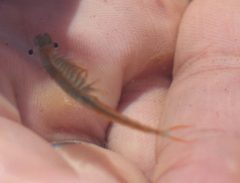
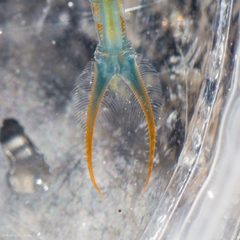
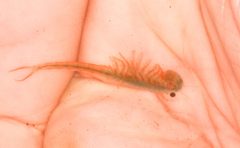
Streptocephalus is a of fairy shrimp (Anostraca) found in temporary freshwater across Africa, Australia, Eurasia, and the Americas. Its distribution reflects an ancient Gondwanan origin. The genus is characterized by distinctive mandibular adapted for processing diverse food sources. in this genus are obligate inhabitants of ephemeral aquatic environments, with synchronized to the temporary nature of their habitats.
Pronunciation
How to pronounce Streptocephalus: //ˌstrɛptoʊˈsɛfələs//
These audio files are automatically generated. While they are not always 100% accurate, they are a good starting point.
Identification
Distinguished from other fairy shrimp by mandibular : the perforated thickened cuticular plate in the central molar region is unique among anostracans examined. The asymmetric tooth arrangement between left and right (single row stout teeth versus double row slender branched teeth) provides additional diagnostic characters. Antennal morphology, particularly in males, may also aid -level identification.
Images
Habitat
Temporary freshwater including rain pools, floodplain pools, and other ephemeral aquatic environments that undergo periodic drying. Habitats are characterized by unpredictable hydroperiods.
Distribution
Africa, Australia, Eurasia, Central America, and North America. Distribution pattern reflects ancient Gondwanan origin with subsequent range expansion.
Seasonality
Activity constrained to wet phases of temporary ; and synchronized with rainfall and pool filling. during dry periods as encysted embryos.
Diet
filter-feeder and grazer. The diversified molar surface in at least some (e.g., S. coomansi) suggests capacity to exploit a wide trophic spectrum, including particulate organic matter, microalgae, and detritus. Specific dietary composition varies by species and .
Life Cycle
adapted to temporary waters: (cysts) deposited in substrate remain during dry periods, hatching upon rehydration. Rapid growth and maturation followed by before desiccation. Embryonic ensures persistence across dry intervals.
Behavior
Active swimmer using metachronal beating of phyllopod appendages. Feeding involves continuous filtration of water through setae on appendages, with food particles transferred to mouthparts. Mating involves males grasping females with modified .
Ecological Role
Primary consumer and in temporary aquatic . Serves as prey for various aquatic and terrestrial including birds, amphibians, and insects. Contributes to nutrient cycling in ephemeral wetlands.
Human Relevance
Used as live food in aquaculture, particularly for larval fish. Some cultured commercially (e.g., Streptocephalus sirindhornae). Potential for temporary wetland conservation. Subject of scientific research on crustacean , reproductive , and evolutionary .
Similar Taxa
- BranchinectaAnother anostracan in fairy shrimps; distinguished by different antennal in males and mandibular structure lacking the unique perforated central plate of Streptocephalus
- ArtemiaBrine shrimp in Artemiidae; inhabits saline rather than freshwater and possesses distinct morphological and physiological adaptations to hypersaline conditions
More Details
Morphological Specialization
The unique perforated thickened cuticular plate in the central molar region of S. coomansi may reflect a distinct feeding compared to other anostracans. Whether this trait is -wide requires further investigation.
Biogeographic Significance
Streptocephalus distribution across former Gondwanan landmasses provides a classic example of vicariance in freshwater , though some transoceanic may also have occurred.
Sources and further reading
- BugGuide
- Wikipedia
- GBIF taxonomy match
- iNaturalist taxon
- NCBI Taxonomy
- Catalogue of Life
- Molar surface morphology in Streptocephalus coomansi (Crustacea: Branchiopoda: Anostraca)
- Contributions To the Study of the Reproductive Biology of Streptocephalus Proboscideus (Anostraca, Streptocephalidae)
- FEEDING IN THE FAIRY SHRIMP STREPTOCEPHALUS PROBOSCIDEUS (FRAUENFELD) (BRANCHIOPODA: ANOSTRACA). I. ASPECTS OF THE FEEDING BIOLOGY
- Growth Performance and Biochemical Profiles of Fairy Shrimp (Streptocephalus sirindhornae) Fed Natural Diets at Low and High Stocking Densities.