
Serradigitus
Stahnke, 1974
Sawfinger Scorpions
Species Guides
3- Serradigitus gertschi(sawfinger scorpion)
- Serradigitus joshuaensis
- Serradigitus wupatkiensis
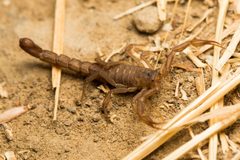
Serradigitus is a of small scorpions in the Vaejovidae, commonly known as sawfinger scorpions. The genus contains more than 25 described distributed across arid regions of the southwestern United States and northwestern Mexico. These scorpions are lithophilous, inhabiting rocky crevices and stone . The venom of Serradigitus gertschi has been characterized through transcriptomic and proteomic analysis, revealing a complex mixture of ion channel toxins, , and other bioactive .

Pronunciation
How to pronounce Serradigitus: /ˌsɛrəˈdɪdʒɪtəs/
These audio files are automatically generated. While they are not always 100% accurate, they are a good starting point.
Identification
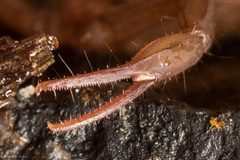
Distinguished from other vaejovid by the serrated cutting edges on the fingers. The combination of small size, lithophilous preference, and geographic range (California and Baja California) helps separate Serradigitus from sympatric genera. -level identification requires examination of pedipalp and metasomal segment .
Images
Habitat
Lithophilous; exclusively associated with rocky environments including cliff , rock walls, and stone crevices. Also found under logs and small ground objects in arid areas. preference restricts activity to areas with suitable rock or stone substrate.
Distribution
California, United States and Baja California Peninsula, Mexico.
Diet
Small arthropods.
Behavior
forager that emerges from shelter in early evening. While foraging, exposes sensory receptors until stimulated by prey. Encounters with humans are rare due to specialized rocky preferences. No documented cases of human envenomation have been reported, though this may reflect habitat inaccessibility rather than venom non-.
Human Relevance
Minimal direct interaction with humans due to restricted rocky preferences. Venom composition has been studied in S. gertschi, contributing to understanding of non-buthid venom diversity. Not considered a public health concern.
Similar Taxa
- ParuroctonusOverlaps in geographic range and preference; distinguished by finger serration pattern and male genital structure.
- VaejovisSympatric vaejovid ; Serradigitus separated by serrated fingers and more specialized lithophilous .
- Buthidae generaMorphologically distinct with different structure (thickened, non-serrated fingers) and often more robust metasoma; Serradigitus has slender, serrated pedipalps typical of Vaejovidae.
More Details
Venom Composition
Transcriptomic analysis of S. gertschi venom glands identified 119 encoding putative venom components: 37 ion channel toxins (targeting Na+, K+, and Ca2+ channels), 17 defense , 28 (phospholipases, hyaluronidases, metalloproteases, serine ), 9 protease inhibitors, 10 CAP superfamily proteins, 7 La1-like peptides, and 11 other components. Mass spectrometry confirmed 24 peptides in the venom. This represents the first characterization of venom components from the .
Species Diversity
More than 25 described are currently recognized in the , though species boundaries and distributions remain incompletely documented.