
Hubbardia belkini
(McDonald & Hogue, 1957)
Belkin's Short-tailed Whipscorpion
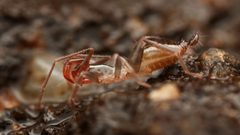
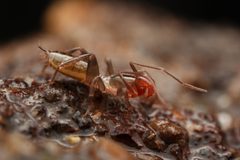
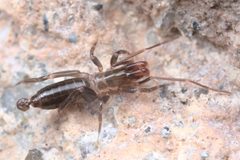
Hubbardia belkini is a of short-tailed whipscorpion in the Hubbardiidae. It is one of several species in the Hubbardia, which is to the southwestern United States and Mexico. The species was described in 1957 and is known from limited collection records. Short-tailed whipscorpions are small, cryptic arachnids that inhabit moist microhabitats in arid and semi-arid regions.
Pronunciation
How to pronounce Hubbardia belkini: //hʌˈbɑːr.di.ə bɛlˈkiː.naɪ//
These audio files are automatically generated. While they are not always 100% accurate, they are a good starting point.
Images
Habitat
Moist microhabitats in arid and semi-arid environments, including under rocks, in leaf litter, and within soil crevices. Like other schizomids, it requires humid conditions to avoid desiccation.
Distribution
North America; specifically recorded from the southwestern United States (California) and potentially adjacent regions of Mexico. The Hubbardia has a restricted distribution in this region.
Ecological Role
of small in soil and leaf litter ; contributes to nutrient cycling through on microarthropods.
Human Relevance
No significant direct interaction with humans. Occasionally encountered by arachnologists and cavers during surveys of subterranean and surface .
Similar Taxa
- Hubbardia pentapeltisOverlapping geographic range in California; distinguished by subtle differences in structure and , requiring examination of or detailed morphological analysis.
- Other Schizomida genera (e.g., Stenochrus, Rowlandius)Similar general body plan and preferences; distinguished by structure, armature, and geographic distribution—Hubbardia is restricted to the southwestern United States and Mexico.
More Details
Taxonomic note
The Hubbardia was established by Cook in 1899 and contains approximately 10 described . Hubbardia belkini was described by McDonald and Hogue in 1957 based on specimens from California. The specific epithet honors an individual with the surname Belkin, likely a collector or colleague of the describing authors.
Conservation status
Not evaluated by IUCN. Like many microarthropods, trends and threats are poorly documented due to cryptic habits and limited survey effort.