
Stenochrus
Chamberlin, 1922
short-tailed whipscorpions
Species Guides
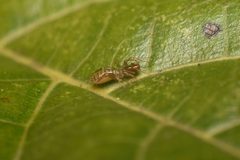
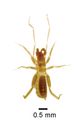
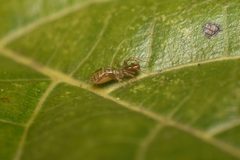
1- Stenochrus portoricensis(short-tailed whipscorpion)
Stenochrus is a of hubbardiid short-tailed whipscorpions (order Schizomida) first described by Ralph Vary Chamberlin in 1922. The genus was historically considered a 'junkyard' containing morphologically disparate , but integrative using molecular and morphological data has redefined its boundaries. As currently circumscribed, Stenochrus comprises approximately ten species distributed primarily in Mexico, Central America, and the Caribbean. The most widespread species, Stenochrus portoricensis, exhibits exceptional geographic range due to parthenogenetic and ecological , with introduced established in South America and Europe.
Pronunciation
How to pronounce Stenochrus: //stɛˈnɒk.rʊs//
These audio files are automatically generated. While they are not always 100% accurate, they are a good starting point.
Identification
Distinguished from related schizomid by genitalic characters, particularly female spermathecae . Historical 'Stenochrus' was polyphyletic and has been split into eight genera; true Stenochrus requires molecular confirmation alongside morphology. S. portoricensis was originally defined by a single spermathecal character. Small arachnids with compact body and short, segmented (whip-like tail).
Images
Habitat
Leaf litter, caves, under stones, and tree bark in forested environments. S. portoricensis occupies diverse microhabitats including bromeliads on trees at 1–3 meters height, abandoned arboreal nests, and anthropized areas. Introduced occur in greenhouses and urban settings.
Distribution
Native range: Mexico, Guatemala, Honduras, Nicaragua, Puerto Rico, and other Caribbean islands. S. portoricensis has the broadest distribution: native to Central America, Mexico, Caribbean, and southern USA; introduced and established in South America (Brazil, Colombia, Rica, Ecuador including Galápagos, Venezuela) and Europe (Czech Republic, England, Germany, Poland, Slovakia, Switzerland, Spain including Canary Islands).
Behavior
S. portoricensis co-occurs with woodlice (Ethelum americanum) under stones in anthropized areas. The ' widespread distribution contrasts sharply with the typically short-range nature of most schizomids.
Human Relevance
S. portoricensis is considered a potential due to its establishment in multiple continents via human-mediated transport, particularly in greenhouses. Its parthenogenetic facilitates of new areas.
Similar Taxa
- HeteroschizomusRevalidated from synonymy with Stenochrus; historically confused due to morphological similarity but now recognized as distinct based on phylogenomic data
- RowlandiusRelated hubbardiid occurring in similar ; distinguished by genitalic and molecular characters
More Details
Taxonomic Revision
Stenochrus was historically polyphyletic, containing 27 . Phylogenomic analysis reclassified it into eight , with Heteroschizomus revalidated from synonymy.
Parthenogenesis
S. portoricensis in introduced ranges reproduce parthenogenetically, enabling successful without mates. Sexual populations persist in native .
Research Significance
The doctoral dissertation of Rodrigo Monjaraz-Ruedas focused on of Stenochrus, contributing to major revisions in schizomid .
Sources and further reading
- BugGuide
- Wikipedia
- GBIF taxonomy match
- iNaturalist taxon
- NCBI Taxonomy
- Catalogue of Life
- Gotta Love Those Spiders | Bug Squad
- The alien species Stenochrus portoricensis (Schizomida: Hubbardiidae): decreasing the Wallacean shortfall in the New World
- Stenochrus portoricensis neu für Nordrhein-Westfalen, mit Anmerkungen zur Verbreitung und Habitaten weiterer eingeschleppter Zwerggeißelskorpionarten in Europa (Arachnida: Schizomida)
- Integrative systematics untangles the evolutionary history ofStenochrus(Schizomida: Hubbardiidae), a neglected junkyard genus of North American short-tailed whipscorpions
- The arachnid order Schizomida in the Brazilian Atlantic Forest: a new species of Rowlandius and new records of Stenochrus portoricensis (Schizomida: Hubbardiidae)
- World Travelers: Parthenogenesis and Ecological Tolerance Enable Multiple Colonization Events by the Widespread Short-Tailed Whipscorpion, Stenochrus portoricensis (Schizomida: Hubbardiidae)