
Sitalcina
Banks, 1911
Species Guides
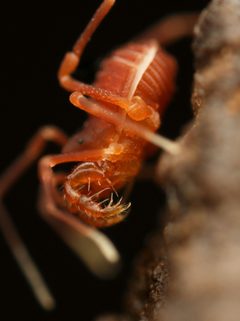
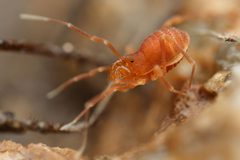
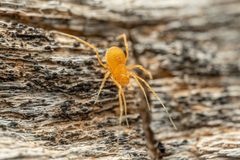
7Sitalcina is a of armoured harvestmen (Opiliones) in the Phalangodidae, established by Nathan Banks in 1911. The genus contains approximately 10 described , all to western North America, primarily distributed in California and adjacent regions. These harvestmen belong to the suborder Laniatores, a group characterized by relatively short legs and heavily sclerotized body armor. Most species have been described from cave or deep-soil , reflecting a troglomorphic or endogean lifestyle.
Pronunciation
How to pronounce Sitalcina: //ˌsɪtælˈsiːnə//
These audio files are automatically generated. While they are not always 100% accurate, they are a good starting point.
Identification
Identification to requires examination of male genitalia, specifically the structure of the distitarsus and truncus of the . External alone is generally insufficient for reliable species determination. The can be distinguished from other Phalangodidae by genitalic characters and the arrangement of body plates. Cave-dwelling species show troglomorphic traits including reduced , elongated appendages, and depigmentation.
Images
Habitat
include caves, deep soil, and mesic surface environments in arid regions. Many are troglobites (cave-obligate) or endogean (deep soil dwellers). Surface-dwelling species occur in rocky areas, under stones, and in leaf litter in chaparral and woodland habitats.
Distribution
to western North America. Primary range is California, with documented from southern California (including Channel Islands), the Sierra Nevada, Coast Ranges, and desert mountain ranges. Some species occur in adjacent regions of Nevada and Baja California.
Behavior
Most are slow-moving, secretive, and restricted to dark, humid microhabitats. Cave-dwelling species are obligate inhabitants of cave systems, showing no circadian activity patterns. Surface species are or , seeking under cover during daylight hours.
Ecological Role
and scavengers in subterranean and soil . Likely contribute to nutrient cycling in cave systems through consumption of organic matter and small . Serve as indicators of groundwater and cave ecosystem health due to their restricted distributions and specificity.
Human Relevance
Of interest to arachnologists and cave biologists as subjects for studies of subterranean and . Some are of conservation concern due to restricted ranges and vulnerability of cave to disturbance, groundwater extraction, and climate change. No direct economic impact.
Similar Taxa
- TexellaAnother of Phalangodidae with overlapping distribution in western North America; distinguished by differences in male genitalia and body plate .
- CalicinaSympatric of Phalangodidae in California; differs in genitalic structure and typically has more pronounced surface sculpturing on body plates.
- Phalangodidae (other genera)General resemblance as armoured harvestmen; Sitalcina is distinguished by specific genitalic characters and geographic distribution.
More Details
Taxonomic History
The was revised by Briggs (1968) and later by Ubick and Briggs (2008), who described multiple new from cave systems. Several species were transferred from other genera, including S. californica originally described as Phalangodes californicus by Banks in 1893.
Conservation Status
Multiple have highly restricted ranges limited to single cave systems or mountain ranges, making them vulnerable to disturbance. However, formal conservation assessments are lacking for most species.
Research Needs
and of most remain poorly known. , feeding ecology, and have not been studied. Additional undescribed species likely exist in unsurveyed cave systems.