
Globipedidae
Kury & Cokendolpher, 2020
Globipedid Harvestmen
Genus Guides
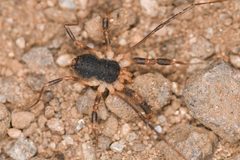
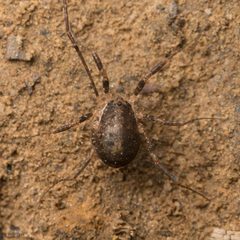
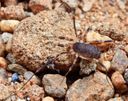
3Globipedidae is a small of harvestmen (Opiliones) comprising six and approximately 33 . The family was elevated from status within Sclerosomatidae in 2020. Its members are distributed across North America and Central America, with the genus Metopilio containing the majority of species (18). The family includes both temperate and tropical representatives.
Pronunciation
How to pronounce Globipedidae: /ˌɡloʊ.bɪˈpɛ.dɪˌdi/
These audio files are automatically generated. While they are not always 100% accurate, they are a good starting point.
Identification
Globipedidae can be distinguished from related harvestman by a combination of genitalic and somatic characters, though specific diagnostic features require examination of and detailed morphological study. The family was historically classified within Sclerosomatidae, and separation requires attention to characters used in the 2020 reclassification. Identification to level is facilitated by geographic distribution: Dalquestia and Eurybunus occur in the USA and Mexico; Diguetinus is restricted to Jalisco, Mexico; Lanthanopilio is known only from Rica; Metopilio ranges across Mexico and Central America; and Globipes occurs in the USA and Mexico.
Images
Distribution
North America and Central America. Specific records exist for: USA (western states), Mexico (Aguascalientes, Jalisco, Guanajuato, Querétaro, Michoacán, Estado de México, Ciudad de México, Hidalgo, Puebla), and Rica. The Diguetinus has been documented across multiple Mexican states including Aguascalientes, Jalisco, Guanajuato, Querétaro, Michoacán, Estado de México, Ciudad de México, Hidalgo, and Puebla.
Similar Taxa
- SclerosomatidaeGlobipedidae was formerly classified as a within Sclerosomatidae. The 2020 elevation to status was based on phylogenetic and morphological distinctions, though specific differentiating characters require detailed examination.
More Details
Taxonomic history
Globipedidae was established as a by Kury & Cokendolpher in 2020, having previously been treated as the Globipedinae within Sclerosomatidae. This reclassification reflects advances in harvestman .
Genus-level diversity
The contains six with markedly uneven : Metopilio (18 ), Dalquestia (6 species), Eurybunus (4 species), Globipes (3 species), and two genera (Diguetinus and Lanthanopilio).