
Tliltocatl
Mendoza & Francke, 2020
Red Rump Tarantula (for T. vagans)
Species Guides
1- Tliltocatl vagans(Mexican red-rump tarantula)
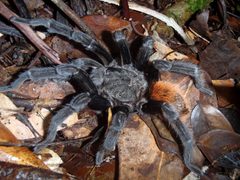
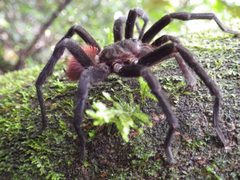
Tliltocatl is a of large burrowing tarantulas in the Theraphosidae, erected in 2020 when molecular phylogenetic studies demonstrated that the genus Brachypelma comprised two distinct clades. are found predominantly in Mexico and Central America. The genus name derives from Nahuatl words meaning 'black spider.' Unlike Brachypelma species, Tliltocatl lacks striking red leg markings, instead displaying more subdued coloration with long red or yellowish abdominal hairs. Several species are threatened by destruction and collection for the pet trade, leading to CITES protection.

Pronunciation
How to pronounce Tliltocatl: //tɬil.toˈkatl//
These audio files are automatically generated. While they are not always 100% accurate, they are a good starting point.
Identification
Distinguished from the closely related Brachypelma primarily by coloration: Tliltocatl lack the red rings on legs and red markings that characterize Brachypelma. The genitalia also differ in structure, with Tliltocatl females possessing a single spermatheca versus the paired structure in Brachypelma. Molecular phylogenetic analysis confirms the separation of these genera.
Images
Habitat
Inhabit diverse environments including deciduous forests, evergreen rainforests, and grasslands. Construct burrows, typically located under rocks, logs, and tree roots. Some excavate burrows in agricultural settings such as farmlands and gardens. Species occur on both Pacific and Atlantic coasts as well as the Gulf of Mexico.
Distribution
Native to Mexico and Central America. Confirmed distribution includes Mexico, Guatemala, Belize, Nicaragua, and Rica, with additional records from Honduras and El Salvador. Three western Mexican (T. schroederi, T. kahlenbergi, T. verdezi) are separated from remaining species found in eastern Mexico and Central America. Precise distribution is complicated by widespread pet trade traffic; T. kahlenbergi is known only from specimens sent from Veracruz to Germany for the pet trade.
Seasonality
hunters. Activity patterns not explicitly documented, but as tropical and subtropical , likely active year-round with possible seasonal variations related to rainfall.
Life Cycle
Females lay several hundred in a silken ball, which are stored in the burrow and guarded until hatching. Long-lived; individuals can survive more than 30 years. Males are substantially smaller than females and risk being consumed during courtship.
Behavior
Construct and occupy burrows, emerging to hunt at night. When disturbed, may raise the and rub hind legs against it to dislodge as a defensive mechanism. Males perform elaborate involving drumming, leg waggling, and other movements to identify themselves to females and avoid being mistaken for prey.
Ecological Role
of small in forest and grassland . Their burrowing activity may contribute to soil aeration and nutrient cycling.
Human Relevance
Collected extensively for the pet trade, contributing to declines and CITES protection. Bites are not highly venomous to humans, typically causing localized pain, swelling, and itching. can irritate and nasal passages. Subject of ecotourism interest in their native range.
Similar Taxa
- BrachypelmaClosely related from which Tliltocatl was separated in 2020; distinguished by presence of red leg rings and red markings, plus differences in female genitalia structure.
Misconceptions
The name 'tarantula' originates from Italian folklore involving wolf spiders (Lycosa tarantula, Lycosidae) and the supposed condition of 'tarantism,' not from the Theraphosidae family to which Tliltocatl belongs. Despite their size, bites are not lethal to humans.
More Details
Etymology
The name combines two Nahuatl words: 'tlil' meaning 'black' and 'tocatl' meaning 'spider.'
Conservation Status
Protected under CITES (Convention on International Trade in of Wild Fauna and Flora) regulations due to destruction and collection for the pet trade. International trade is prohibited or restricted.
Taxonomic History
Originally classified within Brachypelma based on coloration patterns. Molecular phylogenetic studies in 2020 demonstrated two distinct clades, leading to the erection of Tliltocatl for lacking red leg markings.