
Aphonopelma gabeli
Smith, 1995
Chiricahuan Gray Tarantula
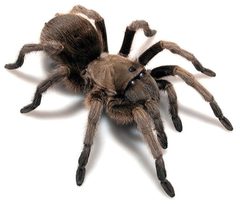
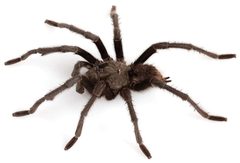
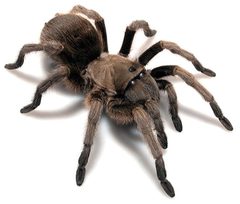
Aphonopelma gabeli is a medium-sized tarantula in the Theraphosidae, native to the Chihuahuan Desert region of the southwestern United States. It is commonly known as the Chiricahuan Gray Tarantula due to its occurrence in the Chiricahua Mountains area of southeastern Arizona and adjacent regions. The species was described by Andrew M. Smith in 1995 and is considered less commonly encountered than the sympatric Texas brown tarantula (Aphonopelma hentzi).
Pronunciation
How to pronounce Aphonopelma gabeli: //æ.fə.noʊˈpɛl.mə ˈɡæb.ɛ.laɪ//
These audio files are automatically generated. While they are not always 100% accurate, they are a good starting point.
Identification
Distinguished from the sympatric and more common Aphonopelma hentzi (Texas brown tarantula) by its gray rather than brown coloration. The two occur together in parts of New Mexico and west Texas, with A. gabeli being described as 'much less commonly encountered' in field observations. Accurate identification may require examination of genitalic characters or other subtle morphological features.
Images
Habitat
Saltbush-mesquite chaparral and adjacent desert scrub . Found in canyon bottoms and rocky slopes within Chihuahuan Desert vegetation. The constructs burrows in suitable soil substrates, with occupied burrows marked by webbed entrances.
Distribution
United States: Arizona (Chiricahua Mountains region), southern New Mexico, and west Texas. The occupies the Chihuahuan Desert and adjacent transition zones.
Seasonality
are active from late spring through summer, with peak surface activity occurring after summer rains. Males are most frequently observed wandering at night, particularly following precipitation events. A field observation from late June documented a male active after rain at night.
Life Cycle
Presumed to have a multi-year typical of temperate tarantula , with females living substantially longer than males. Females construct and occupy permanent burrows. Males reach maturity and wander in search of females, after which they die. Specific details of developmental stages and longevity are not documented in available sources.
Behavior
and . Constructs burrows with webbed entrances. Males exhibit wandering at night, particularly after rains, when they may be encountered on roads and other open surfaces. When disturbed, individuals may flee rapidly and then 'hunker down' in the open, apparently adopting a defensive posture after initial escape. One observed individual showed this pattern: fleeing when disturbed, then stopping in the open and remaining stationary.
Ecological Role
in desert . Specific ecological interactions documented in available sources are limited.
Human Relevance
Occasionally encountered by field biologists and naturalists in its native range. Not known to be of significant medical or economic importance. Like other Aphonopelma , it possesses that can be used defensively.
Similar Taxa
- Aphonopelma hentziSympatric throughout much of range; distinguished by brown versus gray coloration and more frequent occurrence in field observations
More Details
Taxonomic history
Described by Andrew M. Smith in 1995 as part of his revisionary work on the Aphonopelma. The specific epithet honors a collector or colleague (exact etymology not specified in available sources).
Field observation notes
A detailed field observation from Bottomless Lakes State Park, New Mexico in late June 2024 documented a male individual active at night after rain. The observer noted this was only the fourth wild tarantula they had encountered, highlighting the species' relative rarity in field experience. The individual was initially uncooperative for photography, moving continuously along a road, but eventually stopped when disturbed and adopted a stationary posture that allowed frontal photographs.