
Aphonopelma hentzi
(Girard, 1852)
Texas Brown Tarantula, Oklahoma Brown Tarantula, Missouri Tarantula
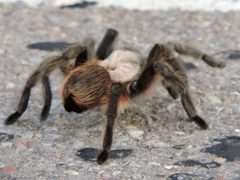
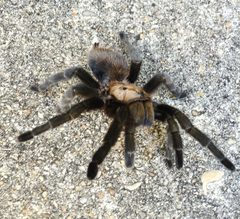
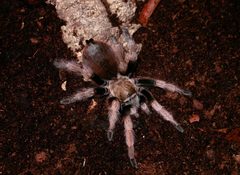
Aphonopelma hentzi is one of the most common tarantula in the southern United States, with a broad distribution across the south-central region. typically exceed a four-inch leg span and weigh more than 3 ounces. The body is uniformly dark brown, with coloration becoming more distinct following molting. This species is notable for its male wandering during late summer and fall, when mature males travel substantial distances searching for females. The species serves as to spider wasps, including Pepsis mildei.
Pronunciation
How to pronounce Aphonopelma hentzi: /əˌfoʊnoʊˈpɛlmə ˈhɛntzi/
These audio files are automatically generated. While they are not always 100% accurate, they are a good starting point.
Identification
Distinguished from similar Aphonopelma by its uniform dark brown coloration lacking distinctive patterns. Mature males are identified by tibial hooks on the front legs. The species is often confused with other brown or black Aphonopelma species in Oklahoma and surrounding states, but is generally the only tarantula species documented in Oklahoma. Accurate species identification within the is complicated by simple genitalia and reliance on variable characters.
Images
Habitat
Inhabits grasslands, desert grasslands, and open woodland areas. Found in self-made ground burrows, typically hidden among grass tufts or in open sandy areas. Burrows are covered with a thin film of silk during daytime. In Missouri, occurs in dolomite glades at the northeastern edge of its range. In Colorado, found in desert grassland vegetation.
Distribution
South-central United States: primarily Texas, Oklahoma, Missouri, and surrounding states. Western limit approximately at the 100th meridian. Northeastern limit in Missouri near St. Louis. Documented in Colorado (Pueblo County).
Seasonality
males wander during late summer and fall (August-October), presumably searching for females. Females and immatures remain in burrows year-round. Males have been documented traveling up to 1.3 km over 2-3 weeks during wandering phase.
Host Associations
- Pepsis mildei - Spider wasp that parasitizes Aphonopelma hentzi; documented in Missouri
Life Cycle
Takes a minimum of seven years to reach sexual maturity under optimal captive conditions; wild specimens likely take longer. Males die within weeks or months after final and mating. Females continue molting after reaching adulthood and may live considerably longer; captive females have lived up to 30 years. Tarantulas are among the few spiders that molt after reaching adulthood.
Behavior
Females and immatures are sedentary, remaining in burrows during daytime and emerging at night to hunt. Mature males exhibit pronounced wandering during late summer and fall, abandoning burrows to search for females. When disturbed, may assume defensive posture. Males engage in agonistic (combative) interactions with other males; brain monoamine levels (serotonin, dopamine, octopamine) correlate with these aggressive encounters. Defensive behavior includes kicking from the using hind legs.
Ecological Role
in grassland and open woodland . Serves as for spider wasps. Burrowing activity may contribute to soil aeration.
Human Relevance
Collected for the pet trade. Subject of scientific research on neurochemistry and . Occasionally encountered by humans during male fall wanderings. Bites are not dangerous to humans, though can cause irritation. Educational value in outreach programs.
Similar Taxa
- Aphonopelma chalcodesSimilar size and preference; distinguished by lighter coloration with blonde or tan hairs, earning it the 'Arizona Blonde'
- Other Aphonopelma speciesMany are similarly brown or black with minimal distinctive coloration; accurate identification often requires examination of genitalia or molecular data
More Details
Taxonomic challenges
identification within Aphonopelma is complicated by primitive genitalia that do not allow easy comparison, and reliance on variable, often artificial characters. Many historical species descriptions were based on limited material or single specimens.
Conservation concerns
in Missouri glades may be vulnerable to fire management practices. loss and potential collection for pet trade pose threats to localized populations.
Sources and further reading
- BugGuide
- GBIF taxonomy match
- iNaturalist taxon
- NCBI Taxonomy
- Catalogue of Life
- Bug Eric: The Tarantula Hunt
- 9th Annual Fall Tiger Beetle Trip: Day 1 | Beetles In The Bush
- Tuesday Tarantula | Beetles In The Bush
- Bug Eric: Spider Sunday: Arizona Blonde Tarantula
- tarantula | Blog
- MONOAMINES IN THE BRAIN OF TARANTULAS (APHONOPELMA HENTZI) (ARANEAE, THERAPHOSIDAE): DIFFERENCES ASSOCIATED WITH MALE AGONISTIC INTERACTIONS
- Parasitoidism of Aphonopelma hentzi (Girard, 1852) (Araneae: Theraphosidae) and first records of Pepsis mildei Stål, 1857 (Hymenoptera: Pompilidae) in Missouri, U.S.A.