
Aphonopelma catalina
Hamilton, Hendrixson & Bond, 2016
Santa Catalina Mountain Tarantula
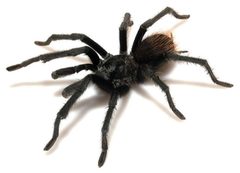
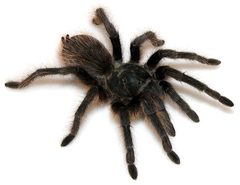
Aphonopelma catalina is a tarantula described in 2016 from the Santa Catalina Mountains of southeastern Arizona. It belongs to a of large-bodied, ground-dwelling spiders native to the southwestern United States and Mexico. Like other Aphonopelma species, it exhibits characteristics typical of primitive mygalomorph spiders, including simple genitalia that complicate species identification. The species is to a single mountain range, making it vulnerable to loss.
Pronunciation
How to pronounce Aphonopelma catalina: /ˌæfəˈnoʊpəlmə ˌkætəˈliːnə/
These audio files are automatically generated. While they are not always 100% accurate, they are a good starting point.
Identification
Aphonopelma catalina is one of several small, dark-colored tarantula confined to single mountain ranges in southeastern Arizona. Species-level identification within Aphonopelma is complicated by morphological similarity; reliable determination requires integrative analysis incorporating anatomical, genetic, distributional, and ecological data rather than visual characteristics alone. The species is distinguished from other Aphonopelma by its restricted geographic range in the Santa Catalina Mountains and its specific combination of morphological and molecular traits.
Images
Habitat
The is to the Santa Catalina Mountains in southeastern Arizona, part of the Madrean Sky Islands . These montane forest are characterized by mid- to high-elevation forests isolated from each other by surrounding desert and arid grasslands.
Distribution
Known only from the Santa Catalina Mountains in southeastern Arizona, United States. This restricted distribution is typical of several Aphonopelma to individual mountain ranges in the Madrean Archipelago.
Seasonality
males are most likely to be observed during the warmer months when they abandon burrows to search for mates. Activity patterns follow the general Aphonopelma pattern of summer male , though specific seasonal data for this is limited.
Ecological Role
As a ground-dwelling , the contributes to control within its montane forest . Its restricted range makes it a component of the unique biodiversity characteristic of Madrean Sky Island .
Human Relevance
The has potential vulnerability to collection for the pet trade due to its rarity and restricted distribution. Its discovery highlights the importance of museum collections and field research in documenting biodiversity in underexplored regions.
Similar Taxa
- Aphonopelma jacobiiAlso a small, dark tarantula to a single mountain range in southeastern Arizona (Chiricahua Mountains), requiring integrative taxonomic methods for differentiation
- Other Aphonopelma speciesMany in this are frustratingly similar morphologically, with similarly sized species often indistinguishable by appearance alone across their distributions
More Details
Conservation Concern
The ' confinement to a single mountain range makes it vulnerable to climate change, fragmentation, wildfire, and recreational development. The Madrean Sky Island forests where it occurs are projected to significant habitat loss as warming temperatures push suitable conditions upslope and off mountain peaks.
Taxonomic Significance
Aphonopelma catalina was one of 14 new Aphonopelma described from the United States in 2016, nearly doubling the known species count for the American Southwest. Its description exemplifies the integrative taxonomic approach combining , phylogenomics, , and distribution data necessary to resolve this morphologically conservative .
Sources and further reading
- BugGuide
- Wikipedia
- GBIF taxonomy match
- iNaturalist taxon
- NCBI Taxonomy
- Catalogue of Life
- Meet Awesome Annie, the Scorpion, at UC Davis Biodiversity Museum Day | Bug Squad
- Tarantulas to Grab the Spotlight at UC Davis Seminar on April 21 | Bug Squad
- For peace in Colombia: five new species of pseudoscorpions
- Will climate change be a threat for a new tarantula species?
- New tarantula named after Johnny Cash among 14 spider species found in the United States | Blog
- Bug Eric: Spider Sunday: Arizona Blonde Tarantula