
Aphonopelma anax
(Chamberlin, 1940)
Texas tan tarantula
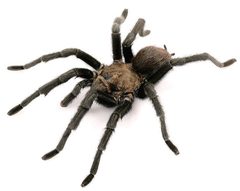
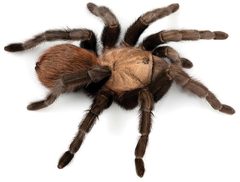
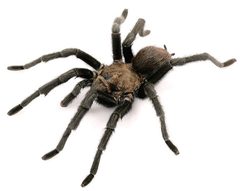
Aphonopelma anax, the Texas tan tarantula, is among the largest tarantula in the United States, with mature individuals reaching leg spans of 5–6 inches. The species exhibits pronounced : females are larger-bodied with shorter legs and can live up to 40 years, while males have longer legs, smaller bodies, and typically survive less than two years after maturity. Males abandon their burrows during the late summer and early fall mating season to actively search for sedentary females, traveling up to 1.2 km in a single night and covering areas up to 29 hectares. The species employs behavioral , retreating into temporary burrows during daytime heat and emerging in the evening when thermal conditions permit sustained activity.
Pronunciation
How to pronounce Aphonopelma anax: /əˌfɒnəʊˈpɛlmə ˈænæks/
These audio files are automatically generated. While they are not always 100% accurate, they are a good starting point.
Identification
Distinguished from the similar Aphonopelma hentzi (Texas brown tarantula) by its darker overall coloration. Females recognized by robust body with shorter legs relative to body size; males by longer legs, smaller , and bulbs at maturity. Among U.S. tarantulas, its large size (5–6 inch leg span) is diagnostic. Defensive kicking of and adoption of threat posture (rearing with forelegs raised) are characteristic when disturbed.
Images
Habitat
Inhabits semiarid grasslands and shrub forests of southern Texas and northern Mexico. Occupies silk-lined burrows, typically modifying preexisting cavities rather than excavating de novo—using rodent burrows, dead tree hollows, wood piles, or natural crevices. Burrows serve as thermal refugia, maintaining temperatures below 40°C when surface conditions exceed this threshold. Found within urban areas as well as natural .
Distribution
Native to southern Texas (documented in Cameron and Kleberg counties) and northern Mexico. Range falls within the semiarid climate zone of the western Gulf Coastal Plain and adjacent Mexican states.
Seasonality
Males surface-active during late summer and early fall mating season. Activity constrained by thermal conditions: males retreat to temporary burrows between approximately 06:47–10:53 CST and resume activity between 16:36–20:53 CST when ambient temperatures permit effective . Year-round occupancy of burrows by females.
Life Cycle
Females produce sacs containing hundreds of eggs, which are aggressively guarded within the burrow. Females turn the egg sac periodically during to prevent deformations. Eggs hatch after several weeks; spiderlings may remain with the female for some period before dispersing. Growth rate is very slow; sexual maturity requires several years minimum. Females may live up to 40 years or longer; males rarely survive more than two years post-maturity.
Behavior
Non-aggressive toward humans, avoiding confrontation when possible. When threatened, exhibits defensive kicking of using hind legs and adopts threat posture (rearing with forelegs raised). Males engage in extensive locomotion during mating season, traveling long distances to locate female burrows. Males demonstrate behavioral by selecting specific microhabitats and using burrows as thermal refugia. Prior to mating, males deposit semen on webs and absorb it into bulbs; courtship involves rhythmic leg drumming to confirm identity.
Human Relevance
Highly valued in the pet trade due to docile temperament. Handling requires caution as can cause mild skin irritation or allergic reactions lasting hours to weeks; hairs contacting mucous cause significant irritation. Defensive are primarily visual displays and hair-kicking rather than biting.
Similar Taxa
- Aphonopelma hentziSimilar size and geographic range, but A. anax is distinctly darker in coloration; the two may occur in proximity and are both common in Texas.
More Details
Thermal ecology
Males exhibit sophisticated behavioral during surface activity. Body temperatures of active males range from 24.7–35.1°C, with preferred temperatures of 22.1–31.3°C. Males cease surface activity and retreat to burrows when environmental temperatures exceed preferred ranges, resuming activity when thermal conditions become favorable.
Movement ecology
Radio-tracking studies demonstrate males can search areas up to 29 hectares and move up to 365 meters per day, with maximum single-night movements of 1.2 km. Despite high activity levels, males maintain constant body condition throughout the breeding season through continued feeding and drinking.
Sources and further reading
- BugGuide
- Wikipedia
- GBIF taxonomy match
- iNaturalist taxon
- NCBI Taxonomy
- Catalogue of Life
- Tarantulas to Grab the Spotlight at UC Davis Seminar on April 21 | Bug Squad
- Mantispidae | Beetles In The Bush
- Will climate change be a threat for a new tarantula species?
- New tarantula named after Johnny Cash among 14 spider species found in the United States | Blog
- ESA Insect Macrophotography Workshop | Beetles In The Bush
- Bug Eric: Spider Sunday: Arizona Blonde Tarantula
- Energy metabolism of male and female tarantulas (Aphonopelma anax) during locomotion
- Metabolic rates and movements of the male tarantula Aphonopelma anax during the mating season
- Thermal ecology of male tarantulas (Aphonopelma anax) during the mating season