
Promyrmekiaphila
Schenkel, 1950
Species Guides
2- Promyrmekiaphila clathrata(wafer-lid trapdoor spider)
- Promyrmekiaphila winnemem
Promyrmekiaphila is a of mygalomorph trapdoor spiders to California. First described by Schenkel in 1950, the genus currently contains three : P. clathrata, P. winnemem, and P. korematsui. These spiders construct silk-lined burrows with wafer-like trapdoor lids and exhibit strong geographic structuring with deep genetic divergence, particularly within P. clathrata. The genus is notable for morphological conservation despite considerable genetic differentiation, representing a cryptic .
Pronunciation
How to pronounce Promyrmekiaphila: //prɒmɪərmɛkiəˈfaɪlə//
These audio files are automatically generated. While they are not always 100% accurate, they are a good starting point.
Identification
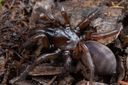
within Promyrmekiaphila are morphologically conserved and difficult to distinguish visually, representing a cryptic . Genetic data reveals deep phylogenetic breaks among . Where species come into close contact, potential phenotypic differentiation may occur, though phenotypic cohesion is maintained among genetically divergent P. clathrata lineages. Simple genitalic structures are characteristic. Accurate identification requires molecular analysis or detailed examination of somatic morphological characters in females.
Images
Habitat
Subterranean silk-lined burrows with wafer-like trapdoor lids, usually decorated with plant material or substrate. Found in coastal ranges and Central Valley regions of California.
Distribution
California . P. clathrata distributed throughout coastal ranges in central and northern California. P. winnemem known from the northern end of the Central Valley. P. korematsui has a more restricted distribution in central and northern California coastal regions.
Life Cycle
Long-lived. Individuals begin excavating burrows as early instars and inhabit the same burrow for their entire lifespan.
Behavior
Low vagility with intense connectivity to landscape. adapted for subterranean life. Potential phenotypic differentiation where come into close contact, though phenotypic cohesion among genetically divergent lineages suggests ongoing or recent among parapatric .
Human Relevance
P. korematsui was named in honor of civil rights activist Fred Toyosaburo Korematsu, who resisted Japanese-American internment during World War II. The has been the subject of extensive research on cryptic delimitation and phylogeography. A new species from this genus was featured in a 2022 public naming contest for students at the Bohart Museum of Entomology.
Similar Taxa
- MyrmekiaphilaSimilar name and also mygalomorph trapdoor spiders in Euctenizidae, but distinct genera with different geographic distributions and morphological characteristics.
- AptostichusAnother California trapdoor spider in Euctenizidae with similar burrow construction, but differs in morphological and genetic characteristics.
More Details
Taxonomic History
The was first described by E. Schenkel-Haas in 1950. As of 2019, only two were recognized (P. clathrata and P. winnemem), but P. korematsui was described in 2022 by Bond et al., bringing the total to three species.
Research Significance
Promyrmekiaphila serves as a model system for studying cryptic , genetic divergence, and the -species interface. Research has employed subgenomic data, multiple species delimitation approaches, and integrative combining genetic, ecological, and morphological data.
Sources and further reading
- BugGuide
- Wikipedia
- GBIF taxonomy match
- iNaturalist taxon
- NCBI Taxonomy
- Catalogue of Life
- Exciting News from Jason Bond Lab About Trapdoor Spiders | Bug Squad
- Name That Spider Species | Bug Squad
- Jumping Jehosphaphat! | Bug Squad
- Congrats to Jason Bond, Executive Associate Dean, UC Davis College of Agricultural and Environmental Sciences | Bug Squad
- Jason Bond: A Deep Appreciation for Arachnids | Bug Squad
- Spiders and Insects, Oh, My! | Bug Squad
- Microgeographic population structuring in a genus of California trapdoor spiders and discovery of an enigmatic new species (Euctenizidae: Promyrmekiaphila korematsui sp. nov.).