
Aliatypus gulosus
Coyle, 1975
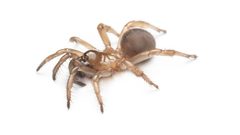
Aliatypus gulosus is a of folding trapdoor spider in the Antrodiaetidae. It was described by arachnologist Frederick A. Coyle in 1975. Like other members of its , it constructs burrows with hinged, camouflaged trapdoors to capture prey. The species is part of a group studied by the Jason Bond laboratory at UC Davis for its and natural history.
Pronunciation
How to pronounce Aliatypus gulosus: /ˌæliˈætɪpəs ˈɡuːloʊsəs/
These audio files are automatically generated. While they are not always 100% accurate, they are a good starting point.
Identification
Members of the Aliatypus can be distinguished from other Antrodiaetidae by the presence of a rastellum—a comb-like row of stout spines on the used for digging. Specific identification of A. gulosus requires examination of genitalic characters and comparison with related such as A. californicus and A. plutonis. The species name "gulosus" (Latin for "gluttonous") may allude to its feeding habits or robust build.
Images
Habitat
Aliatypus typically inhabit well-drained soils in woodland and chaparral environments where they can excavate permanent burrows. They require substrates suitable for constructing structurally sound trapdoors.
Distribution
United States. Distribution records from GBIF indicate occurrence in the USA, with the generally distributed in California and adjacent regions.
Behavior
Constructs and maintains a burrow with a hinged, silk-hinged trapdoor camouflaged with local debris. The spider waits beneath the closed door for vibrations indicating prey, then rapidly emerges to capture it. This sit-and-wait predatory strategy is characteristic of the Antrodiaetidae.
Ecological Role
As a burrowing , it contributes to soil aeration through burrow construction and regulates of ground-dwelling insects and other small arthropods.
Human Relevance
Aliatypus , including related such as A. californicus, have been used in educational and outreach programs at the Bohart Museum of Entomology at UC Davis to illustrate trapdoor spider and arachnid diversity. The has been featured on popular museum merchandise including glow-in-the-dark T-shirts.
Similar Taxa
- Aliatypus californicusOverlapping geographic range and similar burrow construction; distinguished by subtle morphological differences in genitalia and burrow architecture.
- Bothriocyrtum californicumAlso a California trapdoor spider, but in a different (Ctenizidae); differs in burrow structure and cheliceral .
More Details
Research significance
The Aliatypus has been a focus of systematic research by the Bond laboratory at UC Davis, contributing to understanding of trapdoor spider evolution and . Doctoral candidate Lacie Newton has conducted fieldwork on Aliatypus in Napa County, California.