
Xysticus
ground crab spiders
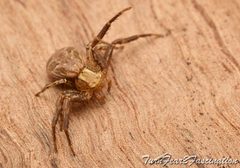
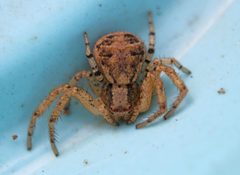
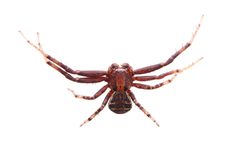
Xysticus is a of ground-dwelling crab spiders ( Thomisidae) known for ambush hunting on the ground rather than in flowers. These spiders possess elongated first and second pairs of legs with spines that help secure prey. They are among the most frequently observed ballooning spiders, using silk threads to disperse via wind currents. The genus is also a documented prey source for spider wasps in the genus Dipogon.
Pronunciation
How to pronounce Xysticus: /ˈzɪstɪkəs ˈspiːʃiz/
These audio files are automatically generated. While they are not always 100% accurate, they are a good starting point.
Identification
Xysticus can be distinguished from flower-dwelling crab spiders (such as Misumena) by their ground-dwelling habits and typically more compact, often mottled coloration suited for substrates like soil and leaf litter. They differ from running crab spiders in the Philodromidae by their shorter, stouter legs and lack of the elongated laterigrade leg posture characteristic of philodromids. Gravid females are notably large and globular in shape.
Images
Habitat
Ground-dwelling including soil surfaces, leaf litter, grass tussocks, and low vegetation. Often found on concrete paths, fence posts, and mailbox posts when preparing to balloon.
Distribution
Documented from Colorado Springs, Colorado and Door County, Wisconsin, USA. The occurs across North America with -level distributions varying.
Seasonality
active in early spring (March) and late fall (November). Ballooning activity observed in spring and late fall, particularly when warm days follow prolonged cold periods creating favorable updrafts.
Life Cycle
Females overwinter as , becoming gravid in early spring. After mating, females construct silken retreats to guard sacs. Spiderlings disperse via ballooning. Some may have two reproductive cycles per year (diplochronous).
Behavior
Ambush that wait motionless for prey to come within reach of their elongated front legs. Highly sensitive to motion; quickly retreat to cracks or cover when disturbed. Regularly observed ballooning: climb vertical objects, stand on tiptoe facing wind with tilted upward, and release silk threads to become airborne. This is particularly common in spiders but also practiced by .
Ecological Role
of ground-dwelling insects and other arthropods. Serve as prey for spider wasps (Dipogon spp.) and likely other predators. Important colonizers of disturbed and new territories via ballooning .
Human Relevance
Occasionally encountered on human structures (fence posts, mailboxes, utility boxes) when ballooning. Documented as prey of spider wasps that may be observed by naturalists. One individual was photographed ballooning from a utility box in Colorado Springs, landing only three feet away.
Similar Taxa
- MisumenaFlower-dwelling crab spiders with similar body plan but typically found on blossoms rather than ground; often brighter colored.
- Philodromidae (running crab spiders)Similar crab-like appearance but with more elongated, laterally-flattened bodies and longer legs adapted for running on vertical surfaces rather than ambush on ground.
- ThanatusRunning crab spiders in Philodromidae that share ground-dwelling habits and striped pattern, but differ in leg proportions and active hunting .
More Details
Ballooning documentation
A Xysticus sp. was photographed by Eric Eaton in Colorado Springs standing on tiptoe on a stucco mailbox post, exhibiting classic pre-ballooning posture with tilted toward the sky when breezes occurred.
Cold hardiness
Contains glycerol in that reduces blood freezing point by approximately 1°C, with additional proteins providing protection up to 20°C below freezing point, enabling winter survival as .