
Xysticus fraternus
Banks, 1895
Brotherly Ground Crab Spider
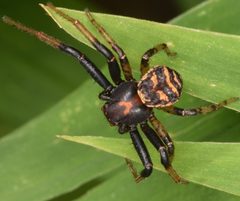
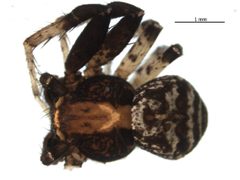
Xysticus fraternus is a of ground crab spider in the Thomisidae. It occurs in the United States and Canada. Like other members of the Xysticus, it is an ambush that does not construct webs to capture prey. The species is part of a diverse genus of crab spiders that includes many .
Pronunciation
How to pronounce Xysticus fraternus: /ˈzɪstɪkəs frəˈtɜrnəs/
These audio files are automatically generated. While they are not always 100% accurate, they are a good starting point.
Identification
Xysticus fraternus can be distinguished from other Xysticus through subtle morphological features, though specific diagnostic characters for this species are not well-documented in the provided sources. Members of the Xysticus generally have a flattened body adapted for living on the ground or low vegetation, with the first two pairs of legs elongated and held crab-like to the sides. The genus is characterized by spines on the inner surfaces of the first two pairs of legs, which help secure prey. Identification to species level typically requires examination of genitalia and other microscopic features.
Images
Habitat
Ground crab spiders in the Xysticus are typically found in ground-level including leaf litter, grasses, and low vegetation. They do not build webs for prey capture, instead relying on ambush hunting. One observation notes a Xysticus sp. (possibly including X. fraternus) on top of a mailbox post, apparently preparing to balloon.
Distribution
United States and Canada. Specific state or provincial records are not detailed in the available sources.
Seasonality
and immatures have been observed active in early spring (March) in temperate regions. Fall activity has also been documented for the , with males wandering in search of mates. The likely overwinters as adults or immatures, as is common for temperate crab spiders.
Life Cycle
Behavior
Ambush that waits motionless for prey to come within reach of its elongated front legs. Highly sensitive to motion; will retreat quickly to cracks or behind foliage if approached. Documented engaging in ballooning for , particularly by spiders.
Ecological Role
of small insects and other arthropods. Serves as prey for spider wasps (Pompilidae), including in the Dipogon which have been documented hunting Xysticus spiders.
Human Relevance
Contributes to of pest insects in gardens and natural areas. Occasionally encountered on human structures such as fence posts and mailboxes when ballooning. Not considered medically significant.
Similar Taxa
- Other Xysticus speciesMany Xysticus are morphologically similar and require detailed examination for accurate identification; they share the ground-dwelling habit and ambush hunting strategy.
- Philodromidae (running crab spiders)Also crab-like in appearance with laterally extended legs, but running crab spiders are typically more slender, often found on vegetation rather than ground, and have different arrangements.
- Misumena/Misumenoides (flower crab spiders)These thomisids are often larger, frequently found on flowers rather than ground, and have different coloration patterns including the ability to change color in some .
More Details
Predation by spider wasps
Xysticus are documented prey of spider wasps in the Dipogon, particularly D. calipterus. These hunt crab spiders on tree trunks, sting them into paralysis, and provision nest with the paralyzed spiders for their larvae.
Ballooning dispersal
The Xysticus is among the spider most known for ballooning, a primary mechanism. Spiderlings and small climb vertical structures, release silk threads, and use wind or electrostatic forces to become airborne. This allows of new including islands and disturbed areas.