
Steatoda castanea
(Clerck, 1757)
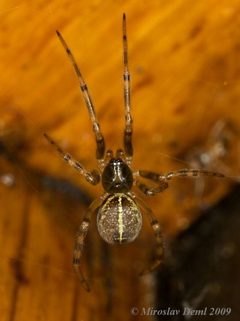
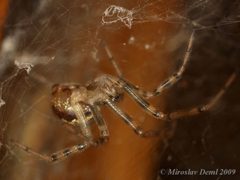
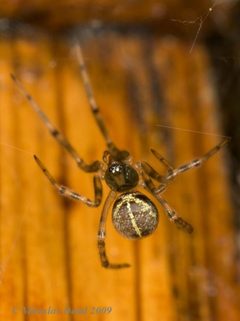
Steatoda castanea is a cobweb spider in the Theridiidae, closely related to black widows and other Steatoda . It is native to the Palearctic region, with distribution records from Europe through Russia, the Caucasus, Iran, Central Asia, and China. The species has been introduced to North America, including Canada. As a member of the cobweb weaver family, it constructs irregular tangled webs and shares the general and habits typical of the Steatoda, though specific behavioral and ecological details for this species remain poorly documented in available literature.
Pronunciation
How to pronounce Steatoda castanea: /stiːəˈtoʊdə kæsˈtæniə/
These audio files are automatically generated. While they are not always 100% accurate, they are a good starting point.
Images
Distribution
Native to the Palearctic region: Europe, Turkey, Russia (extending from Europe to the Far East), Caucasus, Iran, Central Asia, and China. Introduced to North America, with confirmed presence in Canada. Distribution records indicate presence in Europe and Northern Asia (excluding China), and North America.
More Details
Taxonomic Note
Steatoda castanea was originally described as Araneus castanea by Clerck in 1757. It is one of the earlier described in the Steatoda, which now contains numerous species globally. The specific epithet 'castanea' (Latin for chestnut) likely refers to coloration, though original description details are not provided in available sources.
Data Limitations
Available sources provide minimal -specific information for S. castanea beyond taxonomic classification and distribution. Most detailed ecological and behavioral information found in sources pertains to congeneric species such as S. triangulosa, S. grossa, S. nobilis, and S. bipunctata. Direct application of these details to S. castanea without verification would constitute unsupported inference.
Sources and further reading
- BugGuide
- GBIF taxonomy match
- iNaturalist taxon
- NCBI Taxonomy
- Catalogue of Life
- Beetles that go bump in the night: Asiatic Garden Beetles, Maladera Castanea — Bug of the Week
- Chafer madness: Oriental beetle, Anomala orientalis, and Asiatic garden beetle, Maladera castanea — Bug of the Week
- Where is the Noble False Widow settling next? | Blog
- When the American Chestnut Vanished, What Happened to Insects That Fed On It?
- Bug Eric: Spider Sunday: Triangulate Cobweb Weaver
- Do Chestnut, Lemon, or Peppermint Scents Repel Spiders?