
Neospintharus trigonum
(Hentz, 1850)
Horned Parasitic Cobweaver, Dewdrop Spider
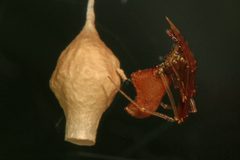
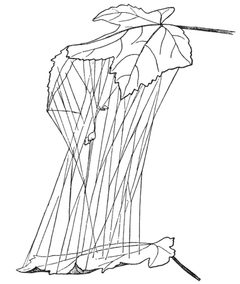
Neospintharus trigonum is a of cobweb spider in the Theridiidae, found in the United States and Canada. This small spider has been documented as a kleptoparasite, living in the webs of larger orb-weaving spiders and stealing their captured prey. Females produce clutches of approximately 42 , each about 0.67 mm in diameter. The species was previously classified in the Argyrodes but has been reclassified to Neospintharus.
Pronunciation
How to pronounce Neospintharus trigonum: //ˌniː.oʊˈspɪn.θər.əs ˈtraɪ.ɡoʊ.nəm//
These audio files are automatically generated. While they are not always 100% accurate, they are a good starting point.
Identification
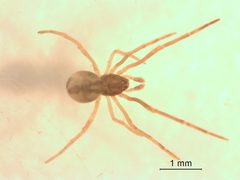
Distinguished from spiders by its extremely small size (2-4 mm body length) relative to the orb weavers it inhabits. The triangular shape is reflected in the epithet "trigonum." Males possess modified . Distinguished from other Neospintharus species by geographic range and host associations; precise morphological distinctions from require examination.
Images
Habitat
Distribution
United States and Canada. Records include Vermont and other North American locations.
Diet
Kleptoparasitic: steals prey captured by orb-weaver spiders. Has been observed taking prey too small for the host to bother with, such as tiny winged ants. Documented to occasionally prey on the host spider itself, particularly smaller male orb weavers.
Host Associations
- Argiope aurantia - kleptoparasiteDocumented living on webs and stealing prey
- Nephila plumipes - kleptoparasite in study by Grostal and Walter 1997
- Metepeira spp. - kleptoparasite/Documented actually preying on spider
Life Cycle
Females produce clutches containing approximately 42 . Each egg measures about 0.67 mm in diameter and weighs around 0.17 mg. Average female body mass is approximately 10.9 mg.
Behavior
Kleptoparasitic : actively removes prey from webs to consume outside the web, sometimes creating holes in the snare. Some individuals have been observed eating silk. Host spiders hosting this have been observed to gain less weight and relocate webs more frequently than non-host specimens.
Ecological Role
Acts as a kleptoparasite in orb-weaver , potentially impacting through food theft and occasional . May serve as a commensal when taking prey too small for hosts to utilize.
Human Relevance
No direct economic or medical significance. Of interest to arachnologists studying - relationships and kleptoparasitism.
Similar Taxa
- Argyrodes elevatusSimilar kleptoparasitic lifestyle and ; historically congeneric and visually similar small theridiids found in orb webs
- Other Neospintharus species with similar ecological habits; require careful morphological examination to distinguish
More Details
Taxonomic history
Previously classified in Argyrodes; reclassified to Neospintharus. The "dewdrop spider" applies to multiple in this group.
Research significance
Subject of experimental studies on kleptoparasitism, including Wise 1982 documenting on spiders and Grostal and Walter 1997 demonstrating impacts on host weight gain and web relocation .