
Argyrodes nephilae
Taczanowski, 1873
dewdrop spider
Argyrodes nephilae is a small cobweb spider in the Theridiidae, commonly known as a dewdrop spider. It lives as a kleptoparasite in the webs of large orb-weaving spiders, particularly those in the Nephila. The ranges from the United States through Central and South America to Argentina and the Galapagos Islands, with introduced in India.

Pronunciation
How to pronounce Argyrodes nephilae: /ˌɑːrɡɪˈroʊdiːz nəˈfɪliˌaɪ/
These audio files are automatically generated. While they are not always 100% accurate, they are a good starting point.
Identification
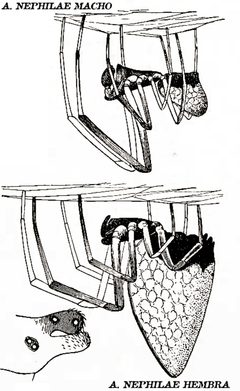
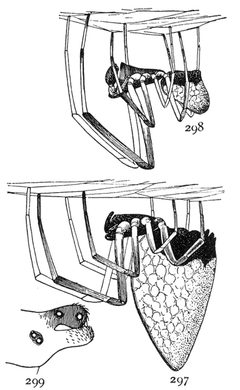
Distinguished from other Argyrodes by association with Nephila webs; males typically larger than females, a reversal of the usual spider pattern. Body length approximately 2–4 mm. Modified in males aid identification. Digital photographs from Kerala, India have been used to redescribe the species, suggesting diagnostic morphological features exist but specific details are not provided in available sources.
Images
Habitat
Found in the webs of large orb-weaving spiders, particularly Nephila . Occupies the perimeter of webs where it can access small prey items and avoid detection.
Distribution
Native range: United States to Argentina and the Galapagos Islands. Introduced to India, with first records from Kerala. Distribution records include Brazil (Espírito Santo, Paraná, Rio de Janeiro), Caribbean region, and Archipiélago de San Andrés, Providencia.
Diet
Kleptoparasitic: steals small prey captured in spider webs. Has been observed taking prey too small for the host to bother with. Some Argyrodes have been recorded eating host web silk, though this specific is not confirmed for A. nephilae.
Host Associations
- Nephila - kleptoparasitePrimary ; lives in webs and steals prey
Behavior
Kleptoparasitic lifestyle: occupies webs, steals food from host's captures. Creates holes in host webs when removing prey to consume outside the web perimeter, potentially avoiding host detection.
Ecological Role
Similar Taxa
- Argyrodes elevatusAlso occurs in North America in orb weaver webs; morphological separation requires detailed examination
- Argyrodes bonadeaSympatric in some regions including Kerala, India; distinguished by morphological features visible in digital photographs