
Neospintharus
Exline, 1950
Species Guides
3- Neospintharus baboquivari
- Neospintharus furcatus
- Neospintharus trigonum(Horned Parasitic Cobweaver)
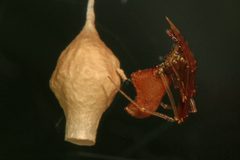
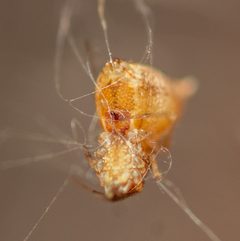
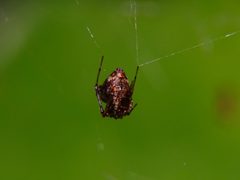
Neospintharus is a of comb-footed spiders in the Theridiidae, Argyrodinae. First described by Exline in 1950, it was synonymized with Argyrodes in 1962 but revalidated in 2004. Phylogenetic studies confirm it as sister group to Rhomphaea within monophyletic Argyrodinae. The genus comprises free-living that are not kleptoparasitic, distinguishing them from other Argyrodinae genera.
Pronunciation
How to pronounce Neospintharus: /ˌniːoʊˈspɪnθərəs/
These audio files are automatically generated. While they are not always 100% accurate, they are a good starting point.
Identification
Distinguished from the closely related Rhomphaea by morphological characters; both genera share the elongated body form typical of 'stick spiders' but differ in specific structural details. Differs from kleptoparasitic Argyrodinae genera (such as Argyrodes) in and . identification requires examination of genitalia and other fine morphological details.
Images
Habitat
Forest ; specimens in Sri Lanka collected by beating vegetation up to approximately two meters above ground.
Distribution
Pantropical and temperate distribution spanning the Caribbean, South America, Central America, North America (USA, Canada, Mexico), Asia (China, Korea, Japan), and the Middle East (Turkey, Lebanon, Israel). Not recorded from Africa or Australasia. Sri Lankan records represent multiple independent events.
Diet
Araneophagy as primary foraging strategy; directly preys upon spiders and other small arthropods.
Behavior
Solitary, free-living hunter; does not engage in kleptoparasitism. Uses araneophagy as main foraging strategy, actively hunting rather than stealing prey from other spiders' webs.
Ecological Role
in forest ; contributes to spider through intraguild .