Leucauge argyrobapta
(White, 1841)
Mabel's orchard orb weaver, Mabel Orchard Orbweaver
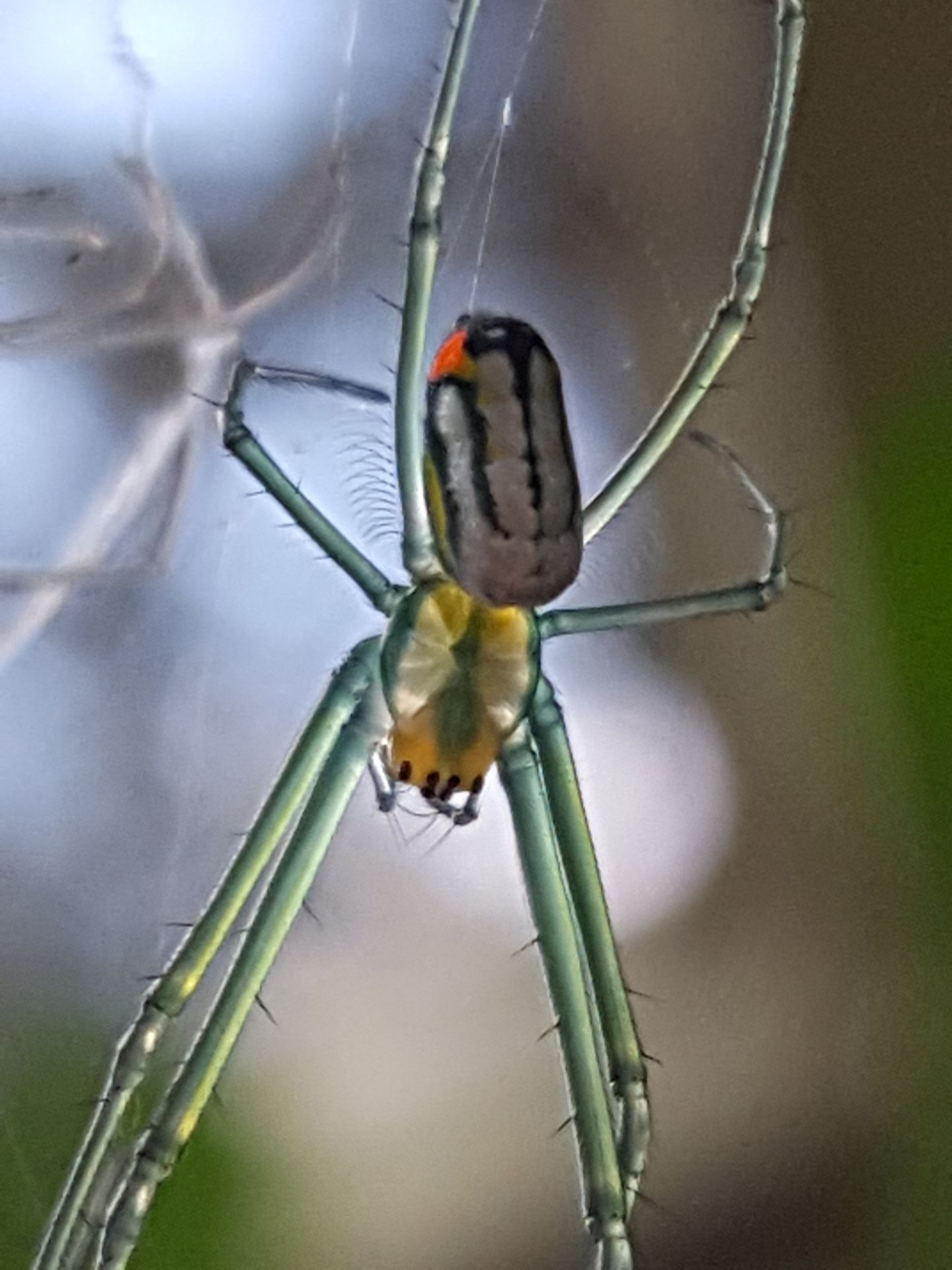
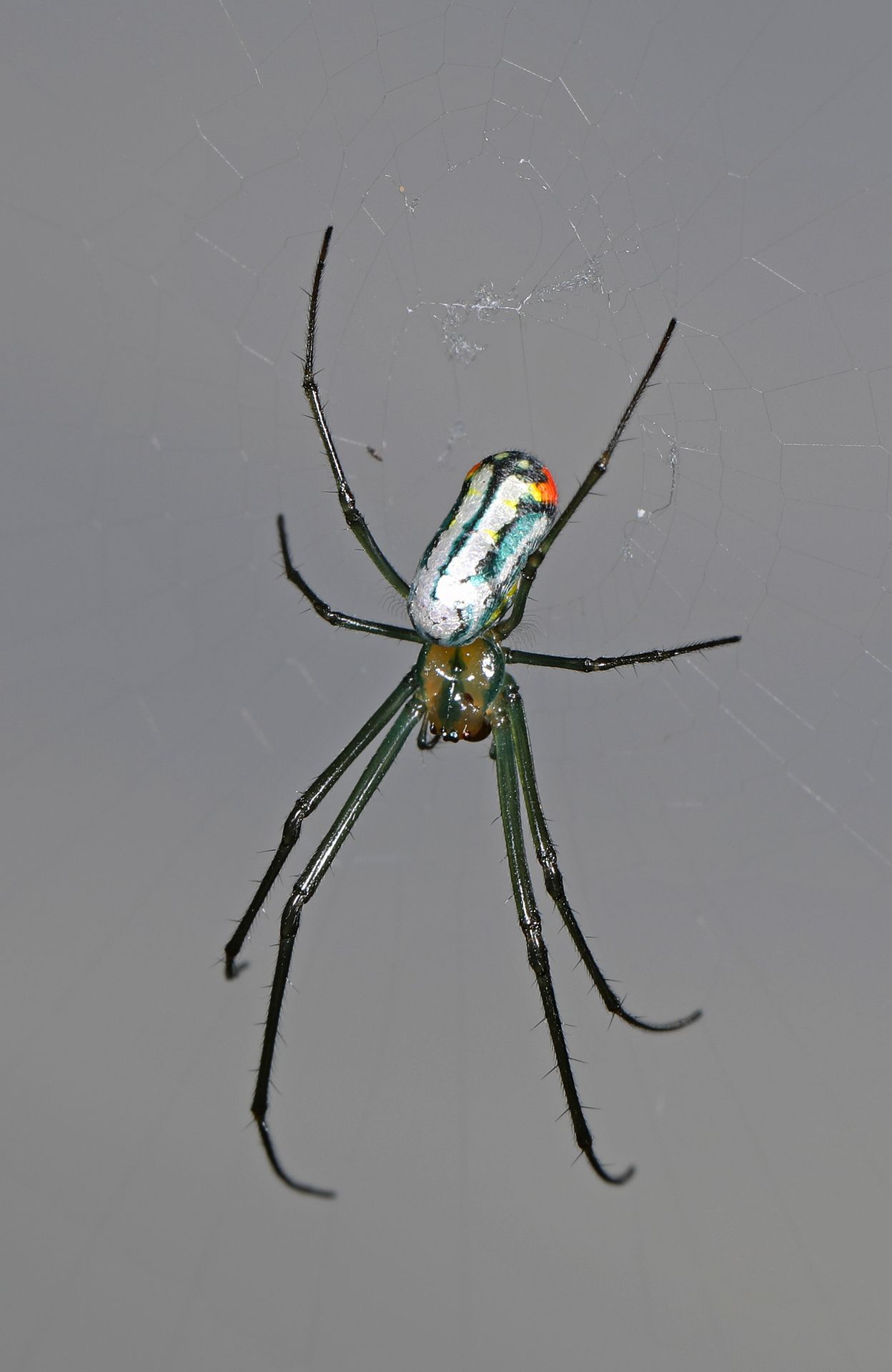
Leucauge argyrobapta is a long-jawed orb-weaving spider in the Tetragnathidae, commonly known as Mabel's orchard orb weaver. The was originally described from a specimen collected by Charles Darwin in Rio de Janeiro in 1832, but its identity remained uncertain until genetic studies in the 2010s distinguished it from the northern L. venusta. The specific epithet derives from Greek words meaning 'silver' and 'to dip,' referring to the spider's silvery appearance.
Pronunciation
How to pronounce Leucauge argyrobapta: /luːˈkaʊɡi ɑːrˌdʒiːroʊˈbæptə/
These audio files are automatically generated. While they are not always 100% accurate, they are a good starting point.
Identification
Males are distinguished from the closely related L. venusta by differences in the male palpal bulb, though some individuals are more easily differentiated than others. Females of L. argyrobapta and L. venusta are practically identical morphologically; the primary means of distinguishing them is geographic distribution. L. argyrobapta occurs from the southern United States through Mexico to Brazil, while L. venusta ranges from northern United States to Canada.
Images
Habitat
Woodland in shrubs and bushes. Younger spiders construct webs closer to the ground, while spin webs approximately 1.5 meters high.
Distribution
Southern United States (primarily Florida), Mexico, and Brazil. The ' range may extend further through Central and South America, though additional survey work is needed to confirm its full distribution.
Behavior
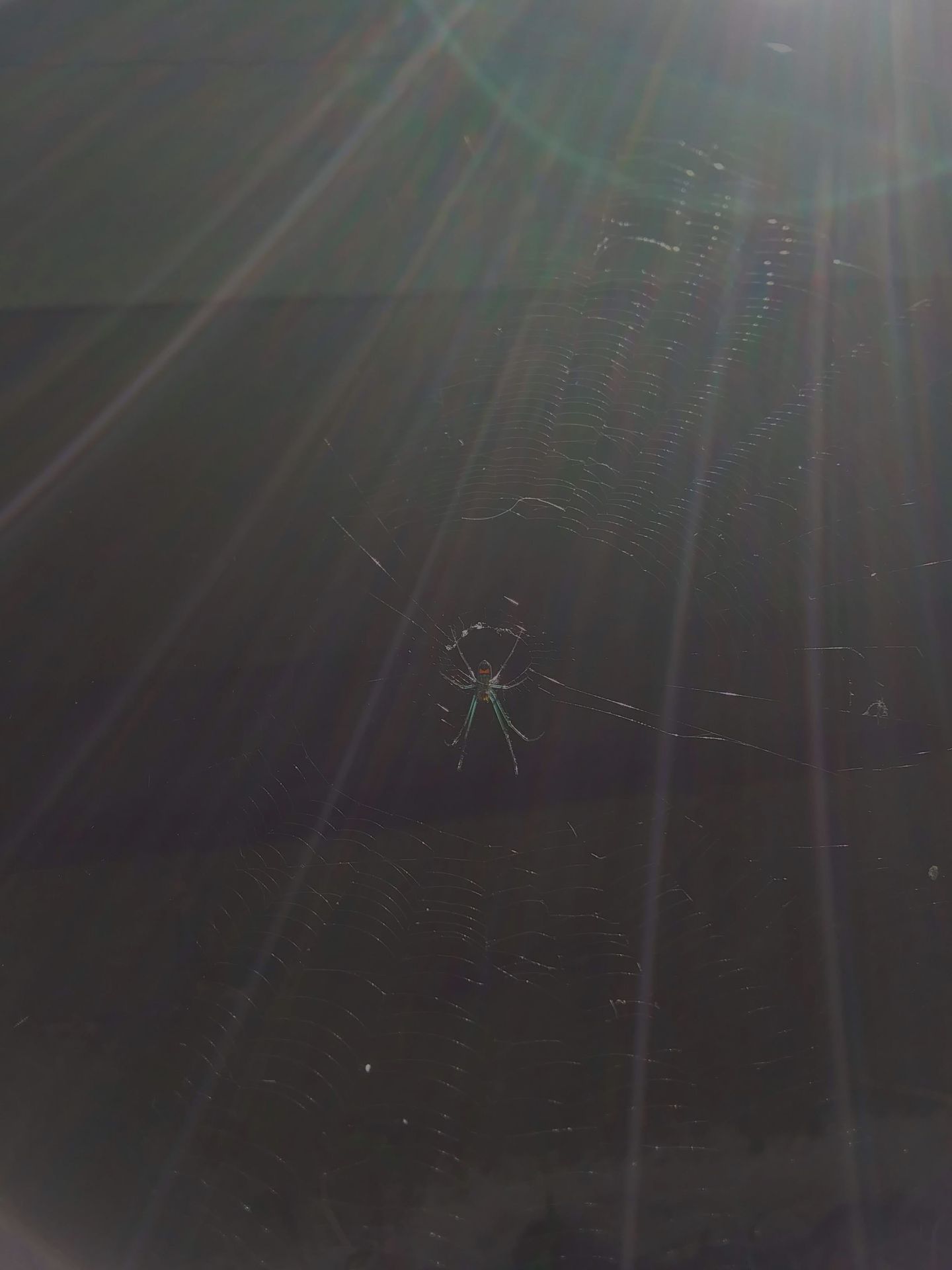
Constructs horizontal orb webs averaging roughly twelve inches in span, with approximately 30 and more than sixty spirals. The spider hangs upside down in the hub of the web. When threatened, drops from the web straight to the ground and disappears into leaf litter and undergrowth.
Similar Taxa
- Leucauge venustaFemales are morphologically nearly identical; distinguished by male palpal bulb structure and by geographic range (L. venusta occurs from northern USA to Canada, with little range overlap).
- Leucauge argyraAnother North American Leucauge ; L. argyra is restricted to Florida.
- Mangora spp.Similar appearance but constructs vertical rather than horizontal orb webs.
- Basilica SpiderConstructs horizontal orb webs but pulls the orb into a dome shape rather than leaving it flat.
- Linyphiidae (sheetweb weavers)Similar body form and coloration but do not construct orb webs.