Scytodes fusca
Walckenaer, 1837
dark common spitting spider, brown spitting spider
Scytodes fusca is a spitting spider in the Scytodidae, native to Central and South America but introduced worldwide. It is notable for exhibiting social unusual among spiders, including of conspecifics and communal living. The hunts by projecting sticky venom from its fangs to immobilize prey, a distinctive trait of the Scytodidae family.
Pronunciation
How to pronounce Scytodes fusca: /sɪˈtoʊdiːz ˈfuːska/
These audio files are automatically generated. While they are not always 100% accurate, they are a good starting point.
Identification
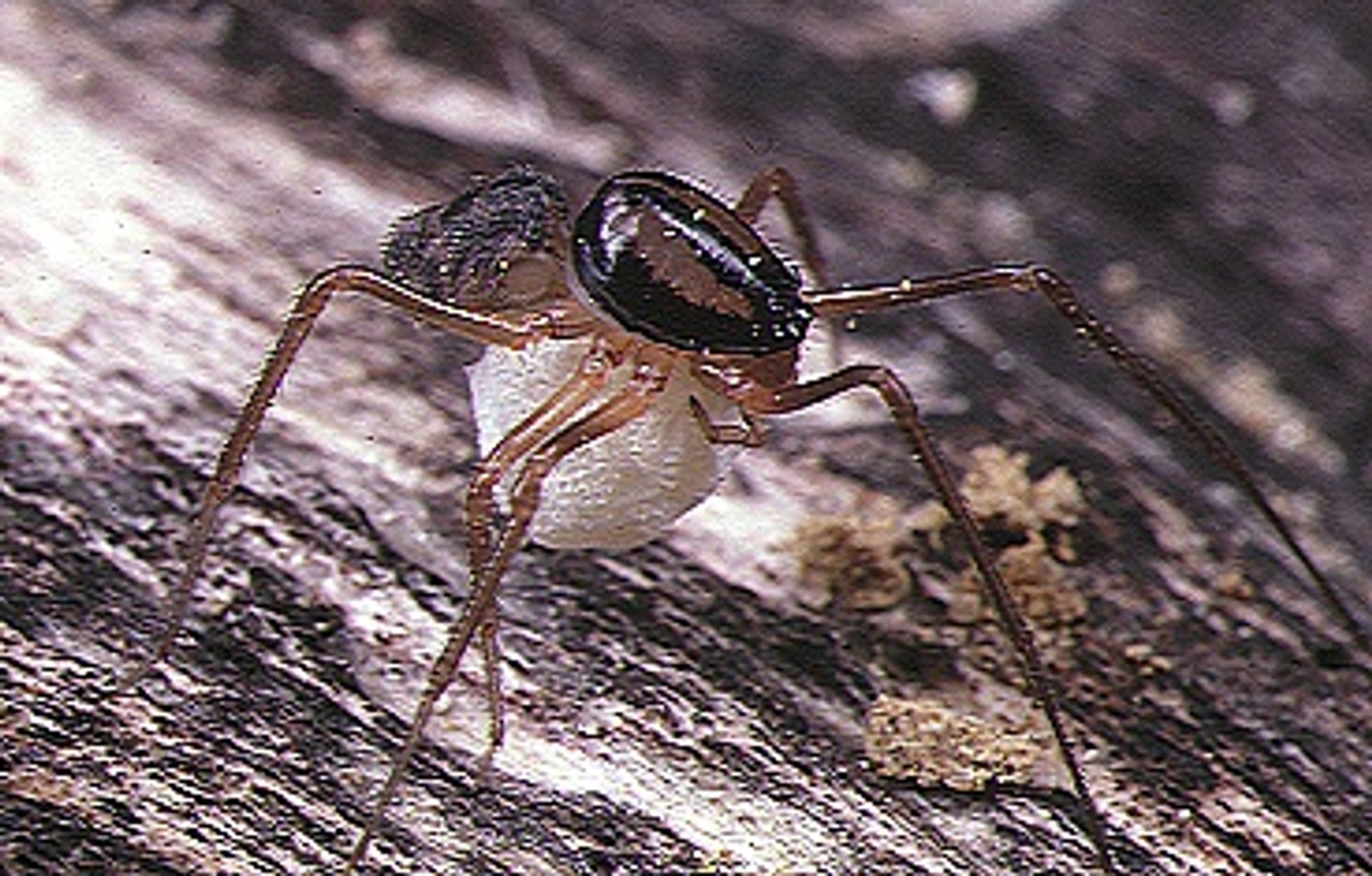
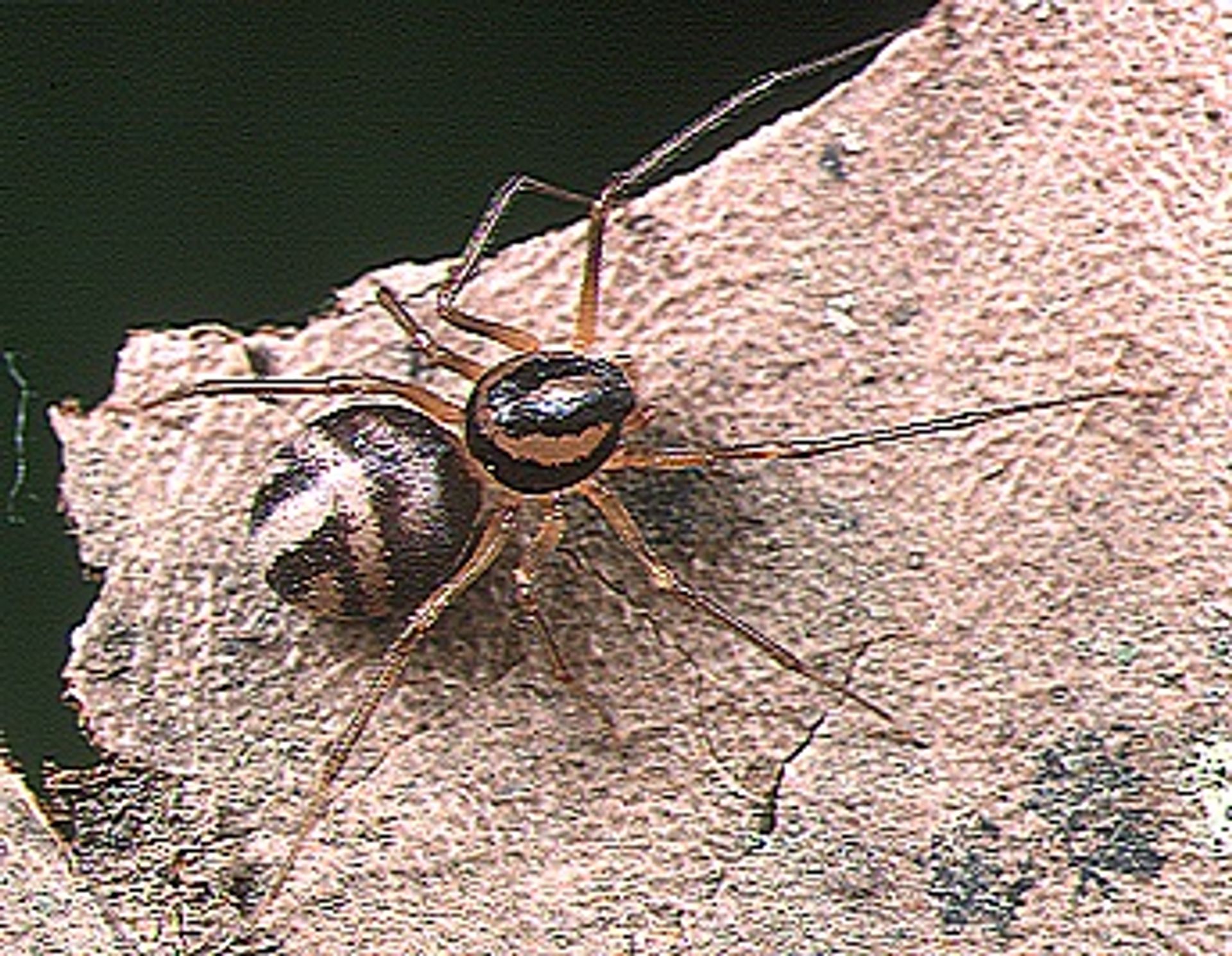
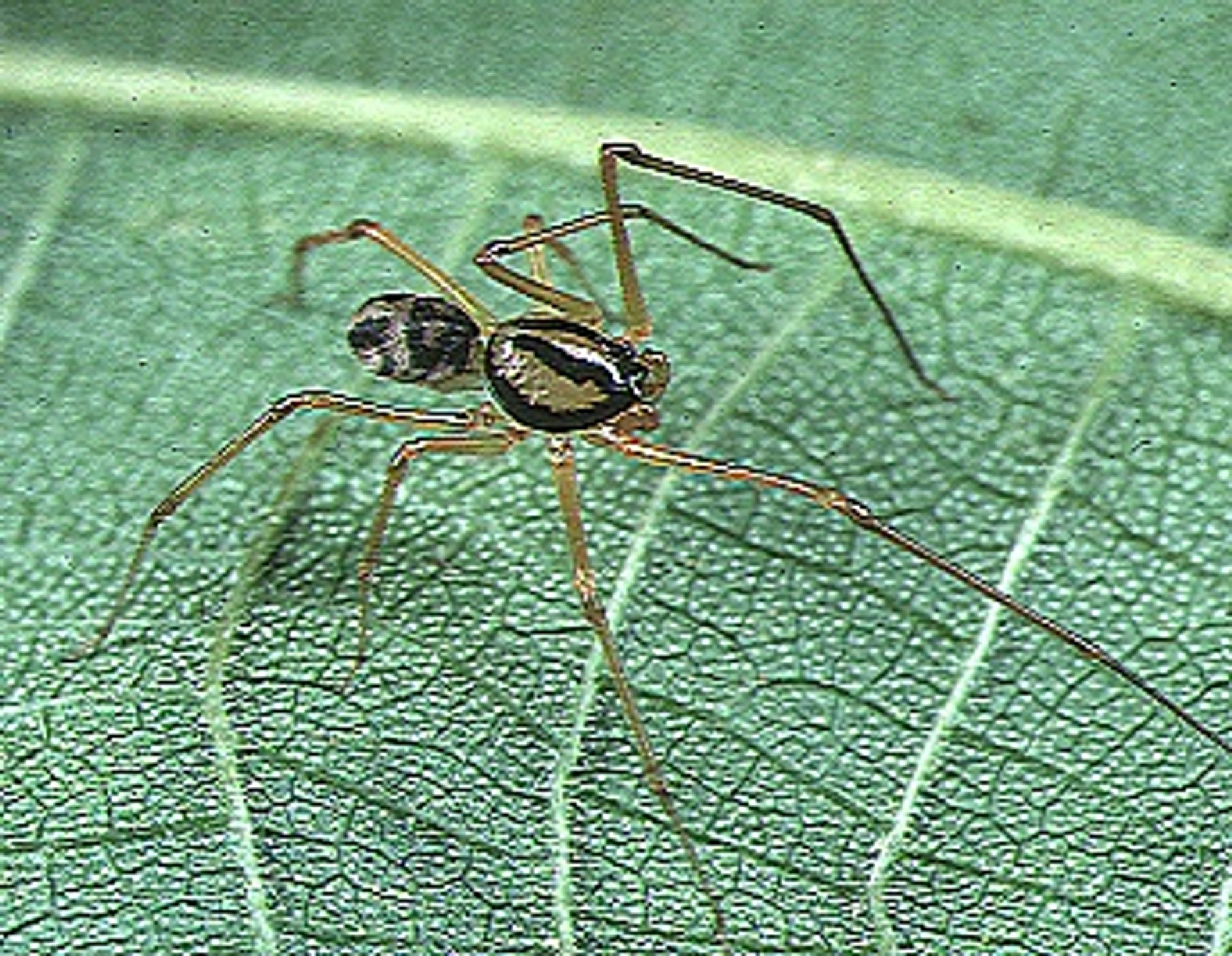
Scytodes fusca can be distinguished from similar by its uniformly dark brown to black coloration (hence 'fusca' and 'dark common spitting spider'). It has six arranged in three pairs, a highly convex to accommodate enlarged venom glands, and long slender legs. The may be confused with brown recluse spiders (Loxosceles spp., Sicariidae), which share the six-eyed condition and similar eye arrangement; however, Scytodes has a more domed cephalothorax, lacks the violin-shaped marking typical of Loxosceles, and has distinctive spitting . Unlike the markings of Scytodes thoracica, S. fusca is relatively plain in coloration.
Images
Habitat
Frequently found in human dwellings, particularly houses. In natural , has been recorded from Fynbos, Grassland, Nama Karoo, Savanna, and Thicket biomes in South Africa, at elevations from 16 to 1,618 meters above sea level.
Distribution
Native to Central and South America; introduced and established in St. Helena, Europe, tropical Africa, Seychelles, India (Tamil Nadu, Karnataka), Myanmar, Indonesia, China, Japan, Hawaii, and numerous Caribbean islands including Cuba, Dominican Republic, Puerto Rico, Saint Martin, Bonaire, St. Eustatius, Saba, Dominica, Martinique, Saint Lucia, Barbados, and Saint Vincent and the Grenadines. Recorded from six provinces in South Africa.
Diet
Preys on insects and other spiders. Hunts by stalking prey cautiously, then projecting sticky venom from the fangs in a rapid-fire barrage that adheres prey to the substrate. The venom solidifies into elastic threads that contract to bind prey tightly.
Life Cycle
Females wrap loosely in a thin sheet of silk and carry the egg sac beneath the body. Average clutch size is 20-40 eggs.
Behavior
hunter. Exhibits unusual social for spiders: tolerant of most intruders on the web, with sometimes living communally. Adults display aggression toward other adults by charging, chasing, and spitting. Courtship involves both sexes tapping on the web. Males often remain with females for a period after mating. Adults show higher toward third instar juveniles than toward first and second instars, suggesting mechanisms of intraspecific recognition related to developmental stage.
Human Relevance
Frequently encountered in houses; not considered dangerous to humans despite enlarged venom glands. Listed as Least Concern in South Africa due to wide range and absence of significant threats. Protected in Karoo National Park and Kruger National Park.
Similar Taxa
- Scytodes thoracicaBoth are spitting spiders with similar hunting and body plan; S. thoracica has markings while S. fusca is uniformly dark
- Loxosceles spp. (brown recluse spiders)Both have six in three pairs and may be confused, but Loxosceles lacks the highly convex and spitting ; S. fusca is not dangerously venomous to humans
- Pholcus phalangioides (cellar spiders)Similar long-legged appearance and tangled web-building in some Scytodes ; distinguished by count (eight in Pholcidae vs. six in Scytodidae) and spitting
More Details
Sources and further reading
- BugGuide
- Wikipedia
- GBIF taxonomy match
- iNaturalist taxon
- NCBI Taxonomy
- Catalogue of Life
- A Buggy New Year! | Bug Squad
- Tobacco Thrips: Tiny Insects With a Big Impact on Georgia Peanut Production
- Bug Eric: Spider Sunday: Spitting Spiders
- The spitting spider, Scytodes fusca Walckenaer (Araneae, Scytodidae): Its distribution in South India and natural history notes
- The evolution of sociality in the spitting spider, Scytodes fusca (Araneae: Scytodidae)—evidence from observations of intraspecific interactions
- On the Antillean spiders of the genus Scytodes Latreille, 1804 (Araneae, Scytodidae)