Phidippus princeps
(G. W. Peckham & E. G. Peckham, 1883)
Grayish Jumping Spider
Species Guides
1Phidippus princeps is a jumping spider in the Salticidae, found in Canada and the eastern United States. It is a visually oriented with exceptional eyesight—exceeding that of by a factor of ten. The species exhibits pronounced , with males displaying striking red, black, and white coloration with metallic blue , while females are larger with more somber coloration, a rounded , and smaller . Research has demonstrated that P. princeps movement is strongly directed by vegetated corridors, which facilitate interpatch movement in fragmented .
Pronunciation
How to pronounce Phidippus princeps: //fɪˈdɪpəs ˈprɪnsɛps//
These audio files are automatically generated. While they are not always 100% accurate, they are a good starting point.
Identification
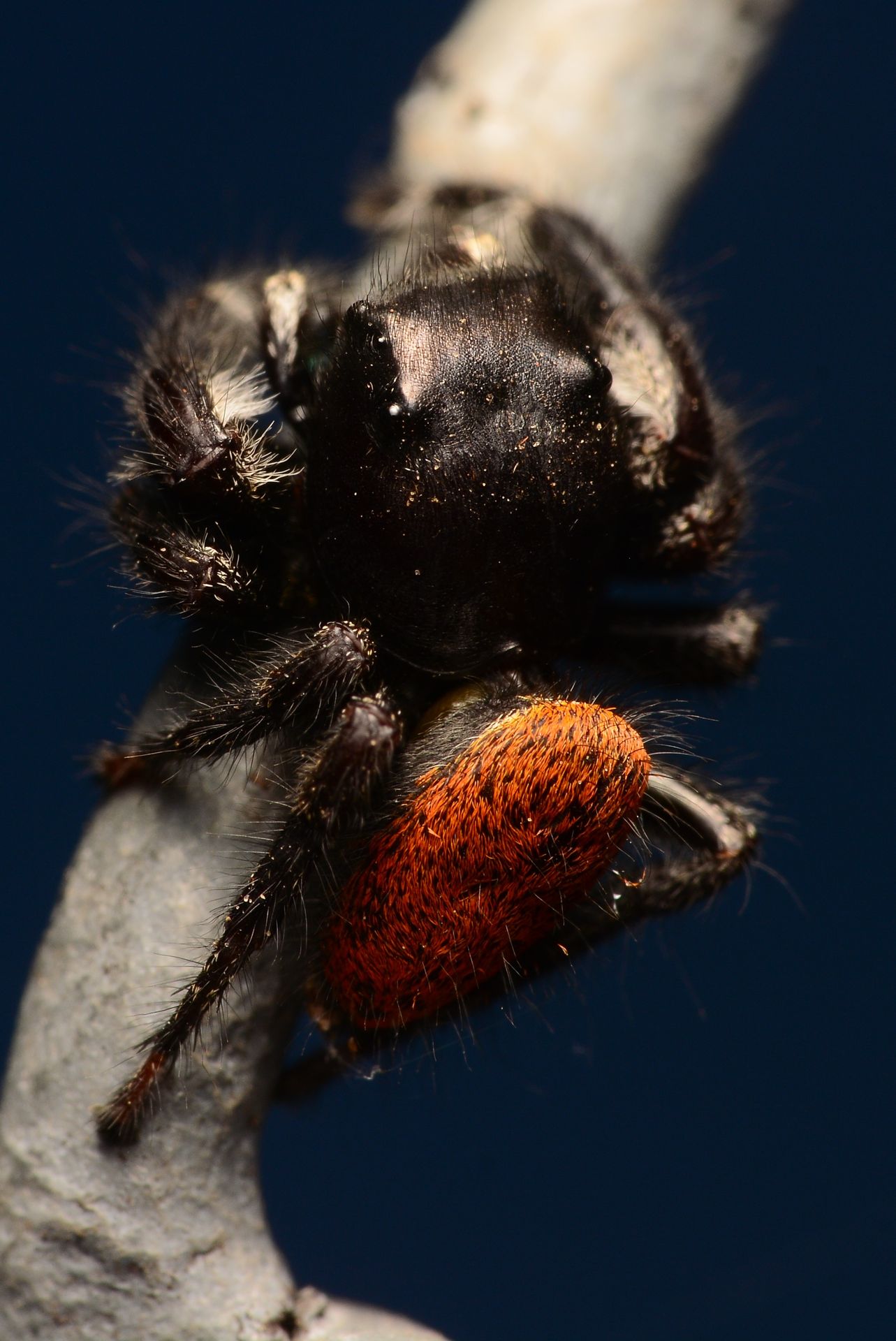
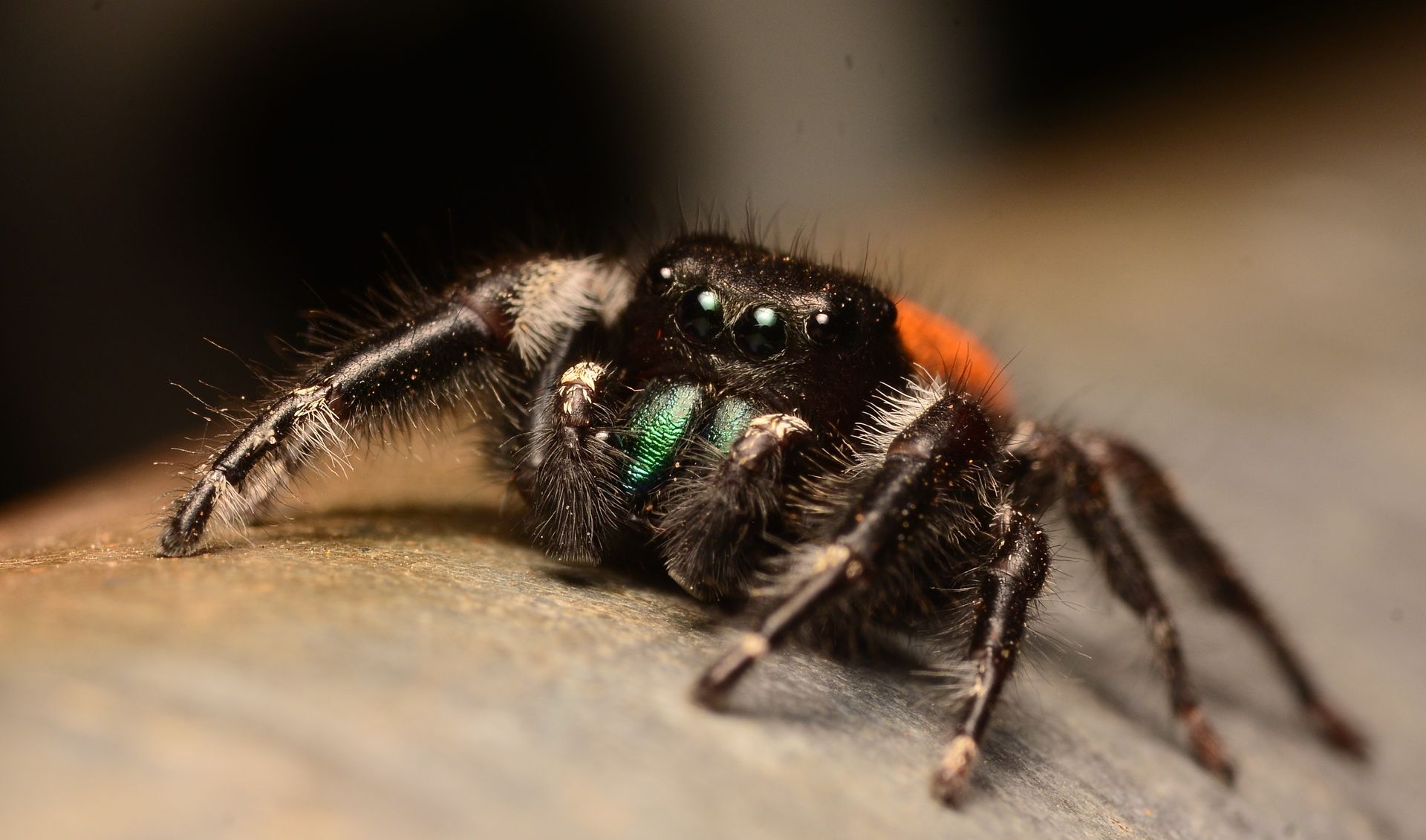
Distinguished from other Phidippus by the combination of grayish overall coloration (especially in females), metallic blue , and specific pattern elements. Males identified by red/black/white coloration with white stripes on . Females identified by large rounded , smaller , and somber coloration contrasting with males. Distinguished from P. octopunctatus by lack of silvery gray coloration and presence of metallic blue rather than non-metallic jaws.
Images
Appearance
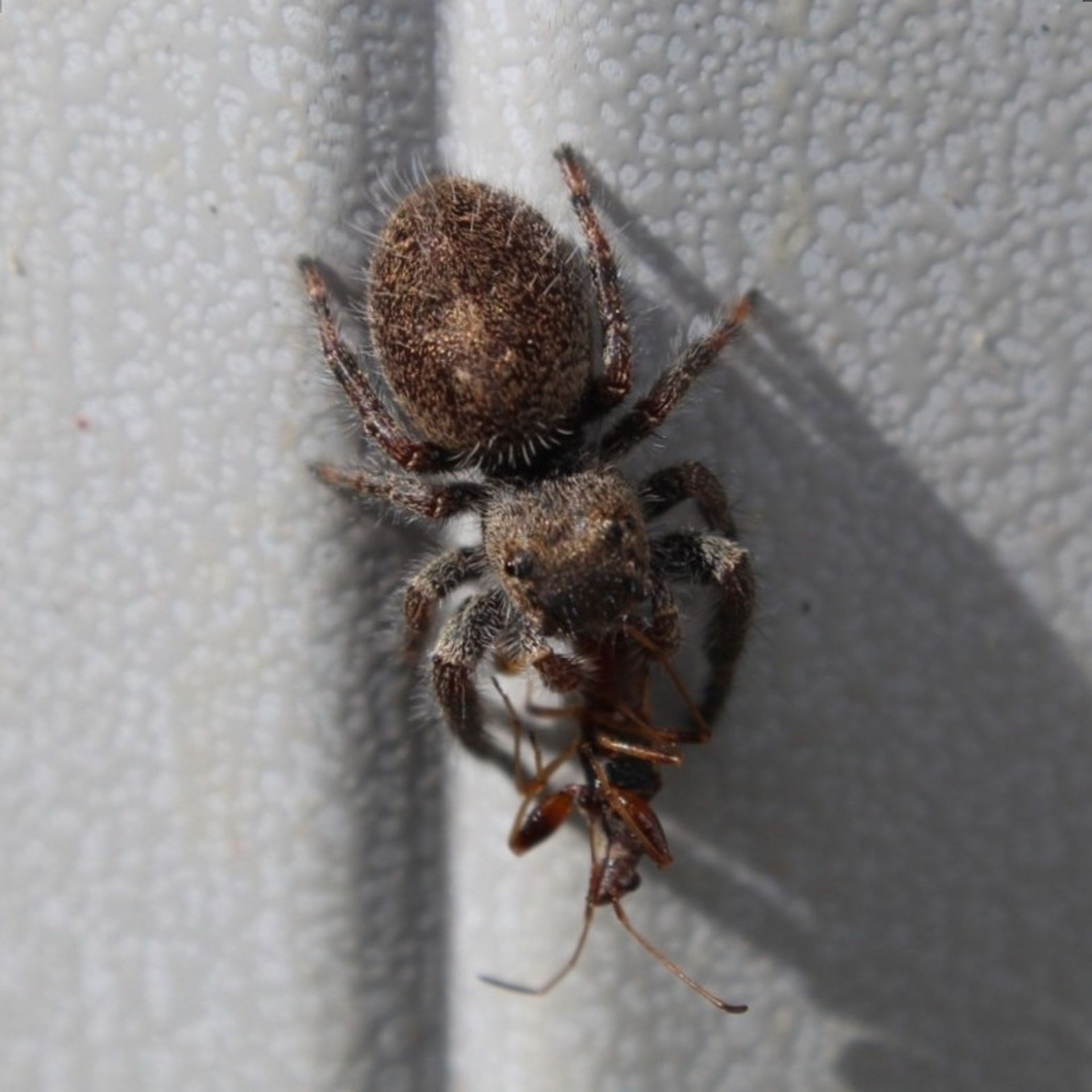
Sexually dimorphic jumping spider with distinct male and female forms. Males exhibit vivid coloration: red and black patterning with white stripes, metallic blue , and a tapered . Females are larger with somber, grayish coloration, a distinctly rounded and enlarged abdomen, smaller relative to body size, and lack the bright patterning of males. Both sexes possess the large characteristic of Salticidae. males average smaller body size than females.
Habitat
Old fields dominated by alsike clover (Trifolium hybridum) and alfalfa (Medicago sativa). Occupies vegetated patches within fragmented landscapes. Requires vegetated corridors for movement between patches; avoids bare ground and open areas.
Distribution
Eastern United States and Canada. Records from Missouri, with specific observations from Howell County in the Ozark region. Eastern North American distribution distinct from western Phidippus .
Seasonality
observed in spring (April-May) based on field records. Activity period likely extends through summer given of related .
Diet
Active of insects and other small arthropods. Observed preying on caterpillars. Hunting strategy involves visual detection and stalking followed by jumping capture.
Life Cycle
Development includes , spiderling, and stages. Spiderlings may exhibit vaguely striped abdominal patterning. Sexual maturity marked by distinct adult coloration and , particularly pronounced in males.
Behavior
Visually oriented with exceptional eyesight. Movement strongly affected by structure: invariably chooses vegetated corridors over bare for and immigration between patches. Rarely moves between patches when only bare pathways available. Will not risk open ground even at high . Reduced skittishness when consuming prey, facilitating closer approach. Males highly active and difficult to photograph due to persistent evasion behavior; females more sedentary when feeding.
Ecological Role
Visual in old field and grassland . Movement suggests role in connecting fragmented through corridor-dependent . Potential prey source for larger predators.
Human Relevance
Subject of ecological research on corridor effects and fragmentation. Popular subject for macrophotography due to striking male coloration, though challenging to photograph due to evasive . No documented agricultural or medical significance.
Similar Taxa
- Phidippus octopunctatusSimilar and body plan, but P. octopunctatus has silvery gray coloration in males, lacks metallic blue (jaws are non-metallic), and occurs in western North America (prairies, grasslands, deserts from Washington to Texas) rather than eastern regions. P. princeps males have red/black/white patterning with metallic blue chelicerae.
- Other Phidippus speciesMany Phidippus share metallic and jumping spider ; identification to species level requires examination of specific color patterns, particularly male markings and overall body coloration. P. princeps specifically identified by grayish tones and distinct male patterning.
More Details
Research significance
P. princeps has been used as a model organism in studies of corridor effectiveness, demonstrating that corridor design fundamentally affects movement in visually hunting arthropods. The ' strict reliance on vegetated corridors for interpatch movement has implications for conservation of fragmented old field habitats.
Photographic notes
Males are exceptionally active and evasive, often requiring collection and studio photography for usable images. Females are more cooperative subjects when encountered feeding. Both sexes display the brilliant metallic blue characteristic of the Phidippus, visible when the spider is oriented toward the camera.
Sources and further reading
- BugGuide
- Wikipedia
- GBIF taxonomy match
- iNaturalist taxon
- NCBI Taxonomy
- Catalogue of Life
- Arachnida | Beetles In The Bush | Page 4
- Araneae | Beetles In The Bush | Page 4
- techniques | Beetles In The Bush | Page 3
- Bug Eric: Spider Sunday: Phidippus octopunctatus
- Effect of corridors on the movement behavior of the jumping spider Phidippus princeps (Araneae, Salticidae)