Phidippus octopunctatus
(Peckham & Peckham, 1883)
Phidippus octopunctatus is a large jumping spider in the Salticidae, occurring in the western United States and northern Mexico. It is among the largest jumping spiders in North America, with body length approaching 25 mm. The exhibits in coloration and builds prominent silk nests among bush branches for protection. It is an active hunter of large prey.
Pronunciation
How to pronounce Phidippus octopunctatus: /ˈfɪdɪpəs ɒktoʊˈpʌŋkteɪtəs/
These audio files are automatically generated. While they are not always 100% accurate, they are a good starting point.
Identification
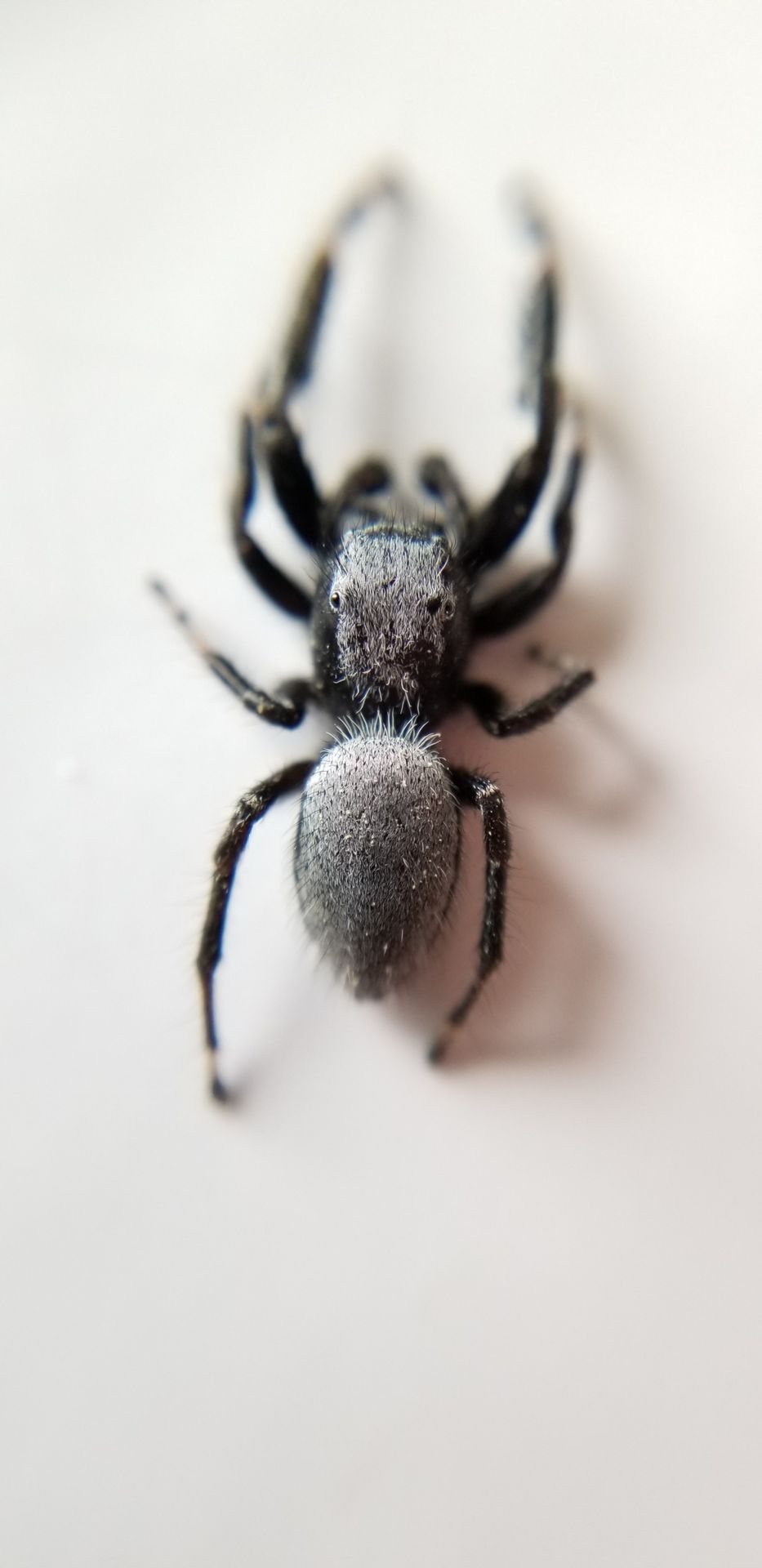
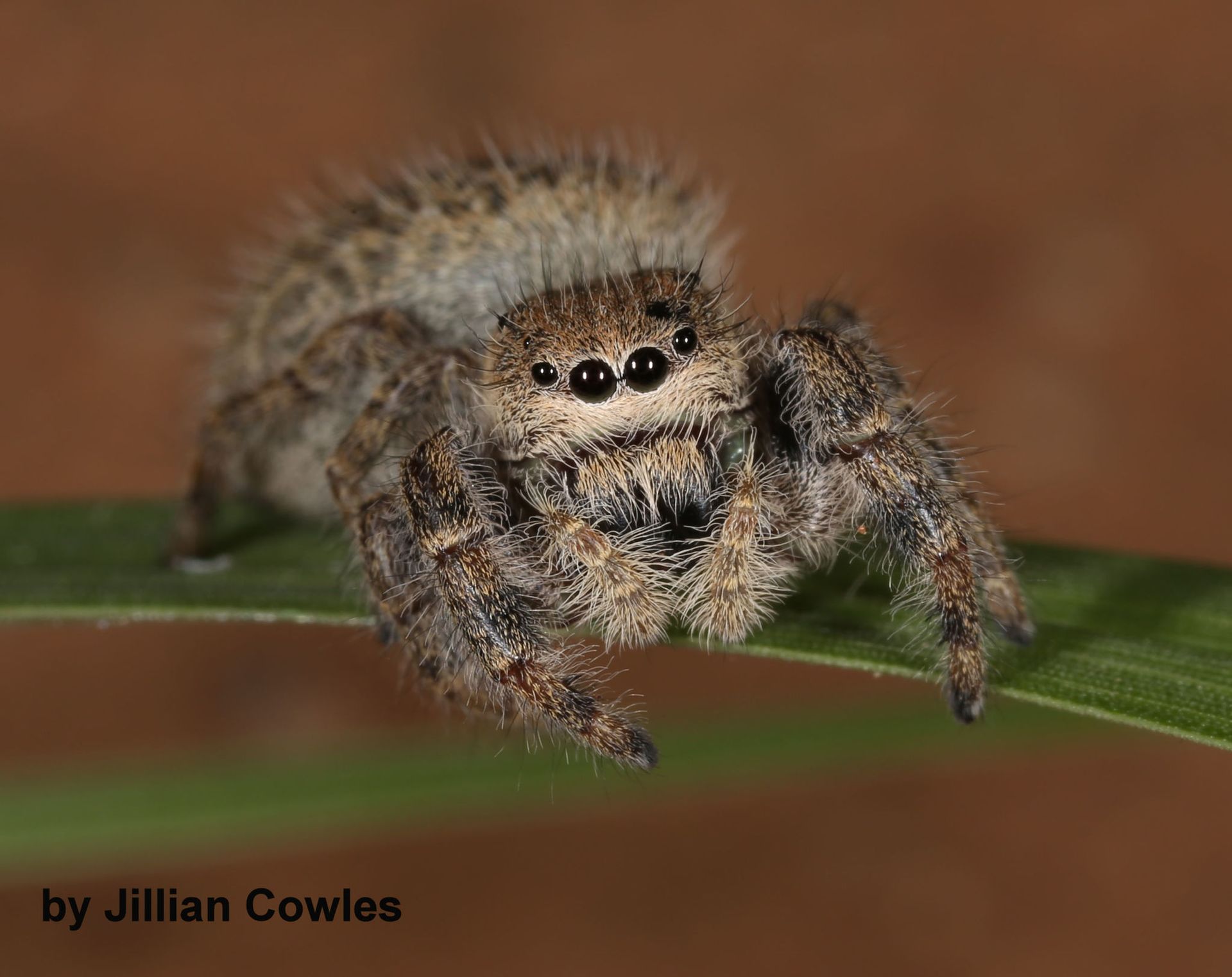
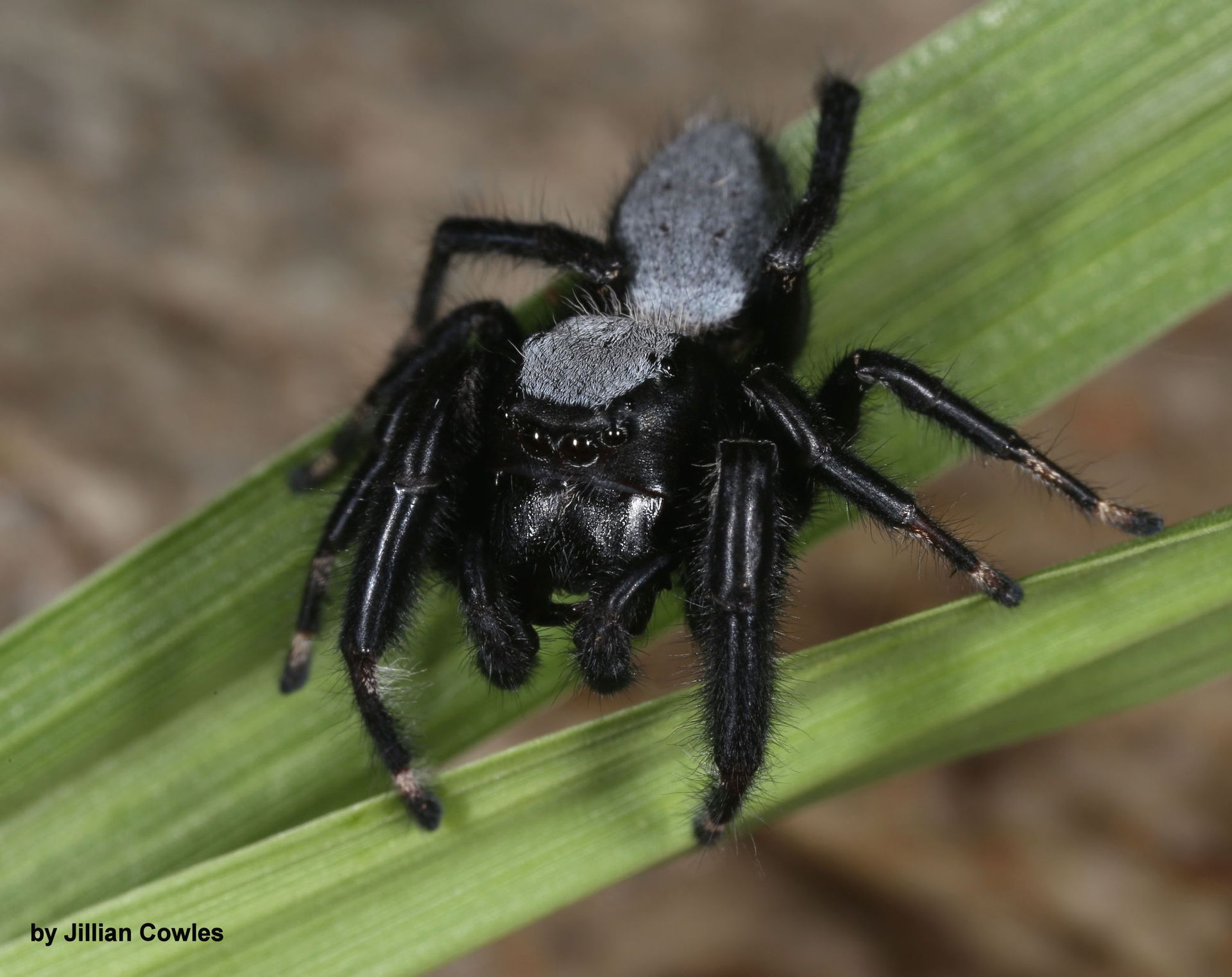
Distinguished from sympatric Phidippus californicus by nest-building —P. octopunctatus constructs large, prominent silk nests among bush branches for cocoons, while P. californicus does not. Non-iridescent separate it from many other Phidippus . Large size and silvery-gray to brownish-gray coloration help distinguish from smaller or more vividly colored salticids. Males show striking silvery pattern against black underside. Definitive identification requires examination of genitalia under magnification.
Images
Appearance
Large, densely hairy jumping spider with robust body. Males average 9.35 mm body length, black underneath with black legs and silvery gray surface. Females slightly larger at 10.19 mm, uniformly gray or beige in color. Spiderlings may show vague abdominal striping. lack the metallic green or red coloration seen in other Phidippus . The species name 'octopunctatus' (eight-spotted) does not reflect actual markings.
Habitat
Prairies, grasslands, deserts, and open fields; specifically associated with the Great Basin Desert. Found on shrubs, yucca, and other vegetation in arid to semi-arid environments. Elevational range not well documented but occurs in lowland desert and adjacent upland areas.
Distribution
Western United States and northern Mexico. Recorded from southeast Washington to California, east to Iowa, Missouri, and Texas. Distribution records sparse for Oregon, Idaho, and Wyoming despite apparently suitable . Most abundant in Great Basin Desert region.
Seasonality
males, unmated adult females, and subadult females observed in late August. Adult activity primarily in summer months. Longevity beyond one year unknown.
Diet
Active of large prey including grasshoppers and bees. Hunting strategy involves stalking and pouncing.
Life Cycle
Females construct large, prominent silk nests among bush branches to house cocoons. Spiderlings emerge from egg sac and disperse. Development from spiderling to includes multiple ; specific instar count undocumented.
Behavior
Wary and elusive; detects approaching observers from several meters and flees by dodging behind vegetation or descending into undergrowth. Males may exhibit territorial displays with intimidating postures toward males. Builds substantial silk retreat for protection, unlike some sympatric Phidippus .
Ecological Role
in grassland and desert . Potential Batesian mimic of velvet ants (Mutillidae) due to similar coloration and shared ; this mimicry may confer protection from predators familiar with velvet ant stings.
Human Relevance
Not considered dangerous to humans; bite unlikely unless spider is restrained. May bite if handled roughly but no serious medical significance. Subject of interest to macrophotographers and arachnologists due to large size and distinctive appearance. Distribution data contributes to understanding of Great Basin arachnofauna.
Similar Taxa
- Phidippus californicusSympatric in same ; distinguished by absence of prominent nest-building and different reproductive
- Phidippus apacheanusOverlapping range in western North America; distinguished by bright orange and black coloration in males versus silvery-gray in P. octopunctatus
- Other Phidippus speciesMost other Phidippus have metallic green or red ; P. octopunctatus lacks this trait
More Details
Taxonomic note
Original description by Peckham & Peckham (1883) as Attus octo-punctatus. Synonymy with P. opifex noted in some literature (Gardner 1965). name misleading—does not have eight spots.
Research needs
Courtship , precise longevity, and complete elevational range remain undocumented. Additional distribution records from Pacific Northwest and Rocky Mountain states needed.
Sources and further reading
- BugGuide
- Wikipedia
- GBIF taxonomy match
- iNaturalist taxon
- NCBI Taxonomy
- Catalogue of Life
- Bug Eric: Spider Sunday: Phidippus octopunctatus
- Bug Eric: Spider Sunday: Phidippus asotus
- Eriopis connexa on soybean in Argentina | Beetles In The Bush
- Bichos Argentinos #6 – Jumping Spider | Beetles In The Bush
- Bug Eric: Spider Sunday: Apache Jumping Spider
- quiz | Beetles In The Bush | Page 2