
Plectreurys
Simon, 1893
Species Guides
1- Plectreurys tristis(primitive hunting spider)
Plectreurys is a of ecribellate, haplogyne spiders in the Plectreuridae, one of only two extant genera in this family. possess eight —unusual among ecribellate haplogynes, which typically have six. They are , sedentary hunters that inhabit silken tubes and rarely leave them. Males develop distinctive coupling spurs on the tibia of leg I, used during mating. The genus comprises 23 described species distributed across the southwestern United States, Mexico, Cuba, Rica, and Guatemala.
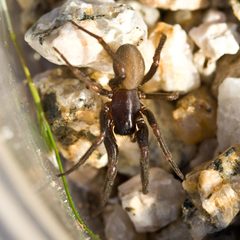
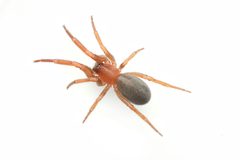
Pronunciation
How to pronounce Plectreurys: /plɛkˈtrʊərɪs/
These audio files are automatically generated. While they are not always 100% accurate, they are a good starting point.
Identification
Males can be distinguished from the related Kibramoa by the presence of a stout retrolateral process on the tibia of leg I, bearing a strong spine (coupling spur); this structure is absent in Kibramoa. Possession of eight distinguishes Plectreuridae from most other ecribellate haplogyne , which typically have six.
Images
Habitat
Constructs and inhabits silken tubes, typically on tree trunks; sedentary, seldom leaving the tube.
Distribution
Southwestern United States, Mexico, Cuba, Rica, and Guatemala. Fossil evidence from Miocene Dominican amber indicates historical presence on Hispaniola.
Life Cycle
Males leave their silken tubes upon maturity to actively search for females; this increases their susceptibility to entrapment in tree resin seeps.
Behavior
; hunting spiders; highly sedentary, remaining within silken tubes for extended periods; males become mobile and search for females upon reaching maturity.
Similar Taxa
- KibramoaOther extant in Plectreuridae; lacks the male coupling spurs on leg I tibia present in Plectreurys; seven described restricted to USA and Mexico.
- SegestriidaeClosely related with similar tube-dwelling and sedentary habits; distinguished by morphological and taxonomic placement.
- PalaeoplectreurysFossil from Eocene Baltic amber; lacks male coupling spurs, questioning its placement within Plectreuridae.