
Kaestneria
Wiehle, 1956
dwarf spiders
Species Guides
1- Kaestneria pullata(Bog Sheet-web Weaver)
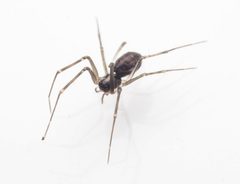
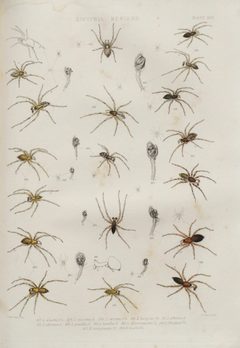
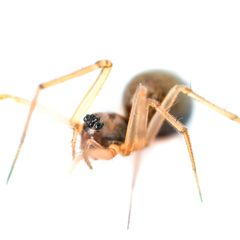
Kaestneria is a of dwarf spiders in the Linyphiidae, first described by H. Wiehle in 1956. The genus contains eight distributed across the Holarctic region and parts of Southeast Asia. Members are small-bodied spiders characteristic of the sheet-web building linyphiids.
Pronunciation
How to pronounce Kaestneria: //kaɪstˈnɛɹɪə//
These audio files are automatically generated. While they are not always 100% accurate, they are a good starting point.
Identification
Kaestneria are small linyphiid spiders, typically under 5 mm in body length. As a , they lack distinctive external morphological features that would allow separation from other linyphiid genera without microscopic examination of genitalia. The epigyne and male provide the primary diagnostic characters for species-level identification.
Images
Distribution
occur in North America (USA, Canada), across Europe from Scandinavia to the Mediterranean, through Russia (European Russia to the Far East and South Siberia), and in East Asia (China, Japan, Mongolia, Malaysia, Indonesia).
Ecological Role
As small predatory spiders, Kaestneria contribute to in ground layer and vegetation . They occupy the intermediate as of small arthropods.
Similar Taxa
- LinyphiaBoth are linyphiid with small body size and sheet-web architecture; distinguished by genitalic and web structure details
- MicrolinyphiaSimilar dwarf spider ; separation requires examination of male embolus structure and female epigynal configuration
More Details
Etymology
The is named in honor of German arachnologist Alfred Kaestner (1901–1978), known for his work on spider and .
Taxonomic History
Wiehle established Kaestneria in 1956 to accommodate previously placed in other linyphiid , particularly those related to Lepthyphantes and Linyphia.