
Centromerus
Dahl, 1886
dwarf spiders
Species Guides
3- Centromerus cornupalpis(Eastern Spurred Sheetweaver)
- Centromerus persolutus
- Centromerus sylvaticus(sheetweb spider)
Centromerus is a of dwarf spiders in the Linyphiidae, containing approximately 88 and two . The genus has a broad distribution spanning the Holarctic region, with species recorded across Europe, North America, Asia, and North Africa. Many species exhibit restricted geographic ranges, while a few such as C. sylvaticus have exceptionally wide distributions. The genus was established by Dahl in 1886.
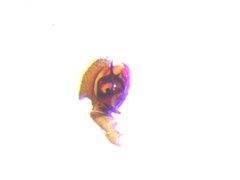
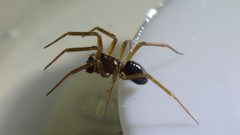
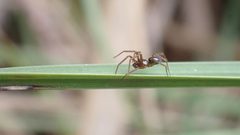
Pronunciation
How to pronounce Centromerus: //ˌsɛntrəˈmɛrəs//
These audio files are automatically generated. While they are not always 100% accurate, they are a good starting point.
Identification
Centromerus are small-bodied linyphiid spiders, typically measuring 2–4 mm in body length. Identification to species level requires examination of male and female under magnification; these structures show species-specific patterns and spine arrangements. The can be distinguished from related linyphiid genera by the structure of the paracymbium and the arrangement of on the . Several species are known only from caves or subterranean and show reduced development.
Images
Habitat
occupy diverse microhabitats including leaf litter, moss, soil crevices, caves, and subalpine scree slopes. A notable number of species are troglobitic or troglophilic, restricted to cave systems in Europe and North America. Subalpine and alpine species occur in montane regions of Europe. Several Mediterranean species inhabit xeric rocky .
Distribution
Holarctic distribution with primary diversity in the Palearctic. Europe the greatest , with additional significant representation in North America (USA, Canada), Russia (extending to Far East), China, Japan, and North Africa (Morocco, Algeria, Tunisia). Disjunct occur on oceanic islands including Madeira, Canary Islands, Sardinia, Corsica, and the Caroline Islands.
Similar Taxa
- LinyphiaBoth are linyphiid with sheet-web building , but Linyphia construct more conspicuous aerial sheet webs while Centromerus species typically build smaller ground-level webs or hunt without webs in leaf litter.
- TegenariaSimilar small body size and ground-dwelling habit, but Tegenaria ( Agelenidae) has a different arrangement with two rows of four eyes and constructs funnel-shaped webs rather than sheet webs.
More Details
Taxonomic history
The was first described by David B. Hirst in 1886 according to some sources, though Catalogue of Life attributes authorship to Dahl, 1886. The type is Centromerus brevipalpus (Menge, 1866).
Conservation status
Many Centromerus have extremely restricted distributions, with several known from single cave systems or isolated mountain ranges. The troglobitic species are potentially vulnerable to disturbance, though formal IUCN assessments are lacking for most species.