
Ctenus exlineae
Peck, 1981
Arkansas wandering spider
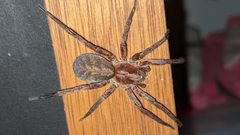
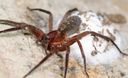
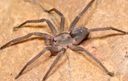
Ctenus exlineae is a wandering spider in the Ctenidae, first described by Peck in 1981. It is to the United States, where it has been documented primarily in Arkansas. The is commonly known as the Arkansas wandering spider. Like other ctenids, it is an active hunter that does not build webs to capture prey. It is among the more frequently observed Ctenus species in North America, with 97 iNaturalist observations as of the source date.
Pronunciation
How to pronounce Ctenus exlineae: /ˈtɛnəs ɛksˈlɪniˌaɪ/
These audio files are automatically generated. While they are not always 100% accurate, they are a good starting point.
Identification
Distinguished from other North American Ctenus by its restricted geographic range centered on Arkansas. Specific diagnostic morphological features are not documented in the provided sources. Separation from likely requires examination of genitalic characters and other fine structural details typical of the .
Images
Distribution
United States, with records concentrated in Arkansas.
Behavior
As a wandering spider ( Ctenidae), it is an active hunter that pursues prey rather than constructing capture webs.
Similar Taxa
- Other Ctenus species share the general body plan and active hunting of wandering spiders; precise identification requires detailed morphological examination.
More Details
Nomenclatural note
The specific epithet 'exlineae' honors someone, likely a person with surname Exline (common in arachnological patronymy), though the exact honoree is not specified in the provided sources.
Observation frequency
With 97 iNaturalist observations, this appears to be relatively well-documented compared to many other Ctenus species, suggesting it may be more conspicuous or more actively sought by observers in its range.